MARGE’S TRAVEL INSIGHTS
Airport Security With Kids: A Practical Guide for Stress-Free Family Travel
Prepare children for airport security with current TSA rules for IDs, formula, medication, strollers, PreCheck and family screening.
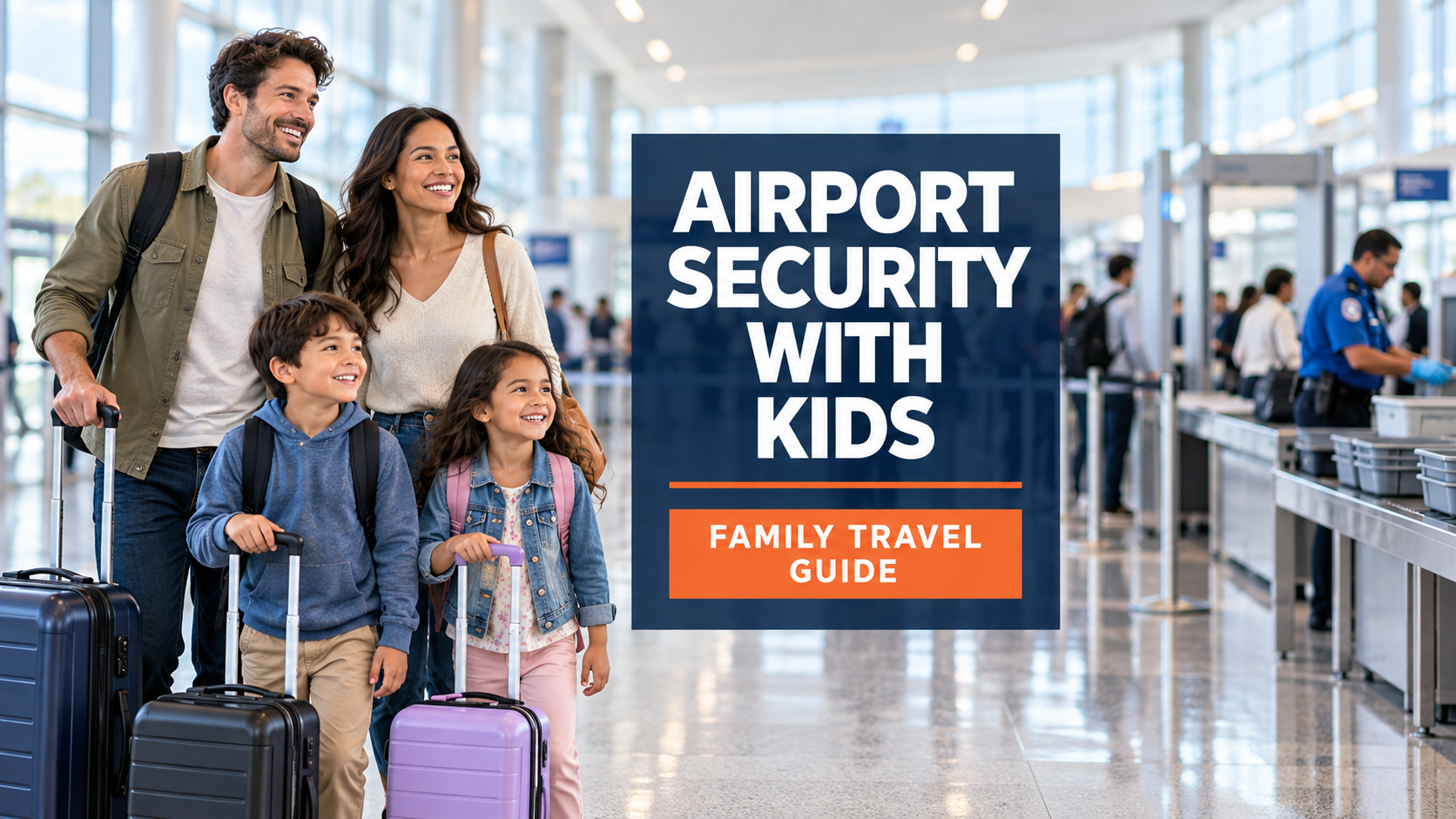
Updated for 2026: This guide has been completely rewritten with current practical guidance for identification, children’s screening, feeding supplies, medications, strollers, TSA PreCheck and family assistance.
Airport security with kids is easier when the family knows what will happen before reaching the checkpoint. The goal is not to rush children through an unfamiliar process. It is to remove avoidable surprises, pack items so officers can inspect them efficiently and give every traveler a simple job.
If you are preparing for the whole trip, pair this guide with our family travel planning tips. The advice below focuses specifically on the security checkpoint for departures in the United States, with a separate section for families leaving Canada.
The Essential Airport Security Rules for Families
Every airport and checkpoint can operate a little differently, but the basic family strategy stays the same: confirm documents, separate items that may need inspection, keep adults’ pockets empty and explain the process to children in calm, concrete language.
Adults should confirm that their identification meets current requirements before travel day.
Children’s identification requirements depend on the itinerary and the airline, even when TSA does not require ID for a domestic trip.
Formula, breast milk, toddler drinks, baby food and medically necessary liquids receive special handling but should be declared for inspection.
Strollers, car seats, child carriers and every carry-on must be screened.
A family may be sent for additional screening even when everything is packed correctly.
Check Every Passenger’s Information Before the Travel Day
For U.S. domestic travel, TSA generally does not require identification from children under 18. Airlines can set their own age-verification or documentation rules, so confirm the carrier’s policy instead of assuming that no document is needed.
Adults age 18 and older should review the current TSA identification requirements. For international travel, every traveler—including infants—normally needs the required passport and may need additional destination-specific documents.
Compare every ticket with the traveler’s identification. A missing middle name is not automatically a problem, but the first and last names should match the identification used for travel. Check passport validity, visas and any consent documents well before departure rather than at the airline counter.
Explain the Checkpoint Without Making It Frightening
Children often handle security better when the sequence is familiar. Explain that bags will ride through a machine, everyone will walk through a scanner or metal detector, and an officer may need to look at an item more closely. Keep the explanation factual and brief.
Avoid promising that a favorite toy will never leave their hands or that nobody will touch their bag. Instead, say that the toy may need to ride through the machine for a moment and will come back on the other side. Let older children know that joking about weapons, bombs or security is never appropriate.
Give each child one manageable responsibility, such as holding a jacket, watching for a specific suitcase after screening or standing beside one named adult. The adult should still control passports, boarding passes, medication and essential feeding supplies.
Pack for the Checkpoint Before Packing for the Flight
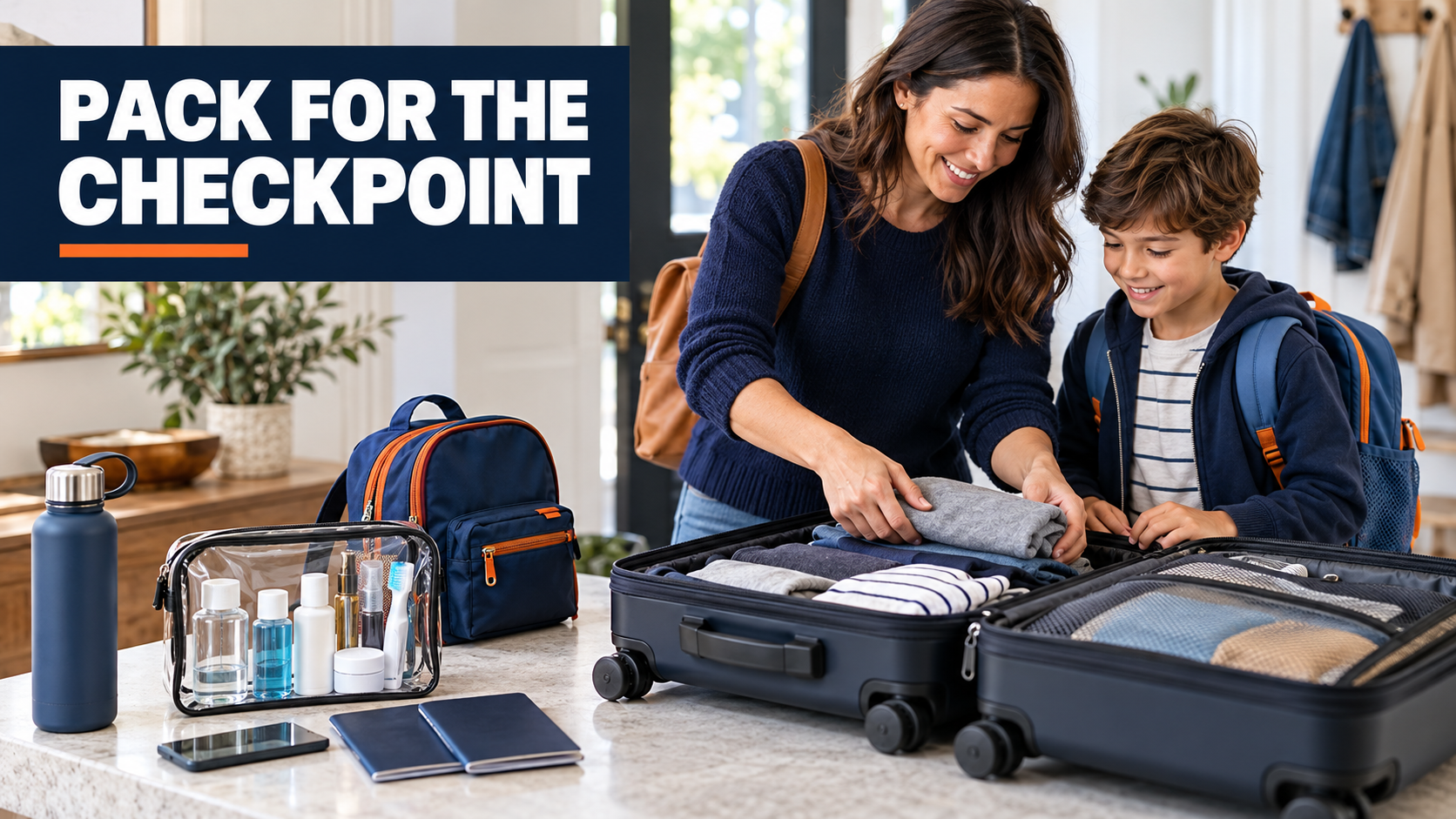
A checkpoint-friendly bag is organized around what may need to come out, not merely around what fits. Place identification and boarding passes in one secure, easy-to-reach location. Keep declared liquids, feeding supplies and medications together, and avoid burying them underneath clothing.
Empty adult and child pockets before entering the line. Put loose coins, keys and small electronics into a zipped compartment. Choose shoes and outer layers that are easy to manage, but follow the officer’s instructions because equipment and procedures vary among checkpoints.
Do not treat the carry-on as an emergency room for every possible need. Bring enough essentials to manage delays, then keep the contents visible and grouped. A well-organized bag makes secondary inspection faster if an officer needs to examine something.
Formula, Breast Milk and Baby Food
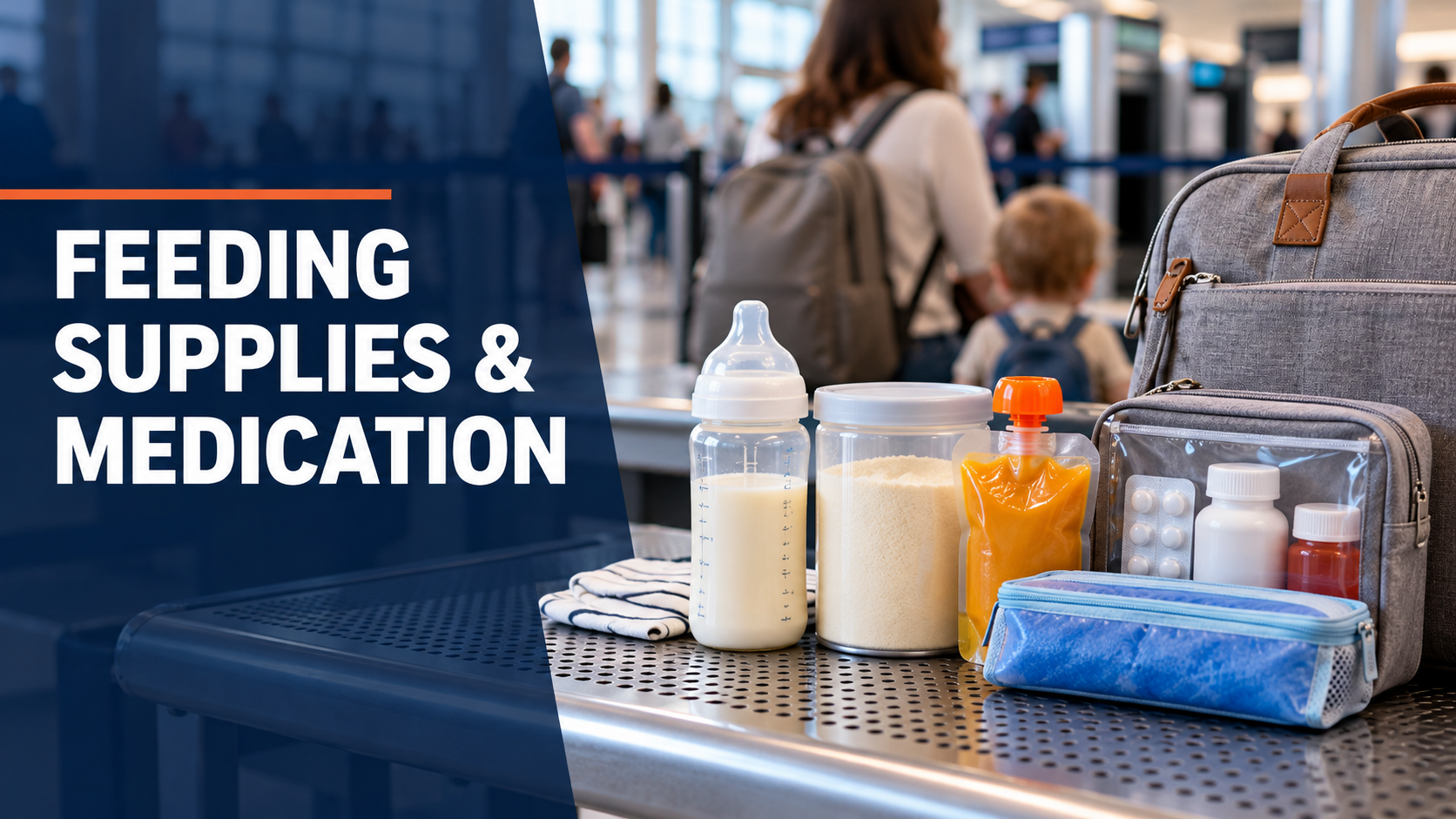
TSA permits formula, breast milk, toddler drinks and baby or toddler food in reasonable quantities greater than the standard liquid limit. These items should be removed from the carry-on and declared for separate screening. Review the current TSA guidance for breast milk and feeding supplies shortly before departure.
A child does not have to be present for a passenger to travel with breast milk. Cooling accessories such as ice packs and freezer packs may also be screened. Officers may test or inspect containers; tell the officer if you do not want a container opened or X-rayed so available alternatives can be discussed.
Label supplies clearly and keep them together. Bring only clean containers, allow extra checkpoint time and do not rely on an unlabeled liquid being treated as self-explanatory. The officer needs to know what is being presented.
Snacks and Drinks for Children
Solid foods such as sandwiches, crackers and fruit are generally easier to screen than liquid or gel foods. Pack snacks in clear, resealable containers when practical and remove anything that an officer asks to inspect.
A reusable water bottle is useful after screening, but take it through the checkpoint empty unless its contents qualify for an exemption. Pouches, yogurt and similar foods may be treated as liquids or gels. Baby and toddler items can qualify for special handling, while snacks for older children usually follow the standard liquids rule.
Medications and Medical Equipment
Keep essential medication in the carry-on, not in checked luggage. Medically necessary liquids can be allowed in quantities greater than the standard limit, but they should be declared to the officer and presented for screening. Clear labeling is helpful, especially when several family members take different medications.
Do not pack medication in a way that makes it difficult to identify. Carry supporting documentation when it may clarify a less familiar medical device or treatment, and check the airline’s rules for batteries, oxygen equipment and other powered devices before the trip.
If a child uses an insulin pump, continuous glucose monitor or other attached device, tell the officer before screening begins and follow guidance from the device manufacturer and screening staff.
Strollers, Car Seats and Child Carriers
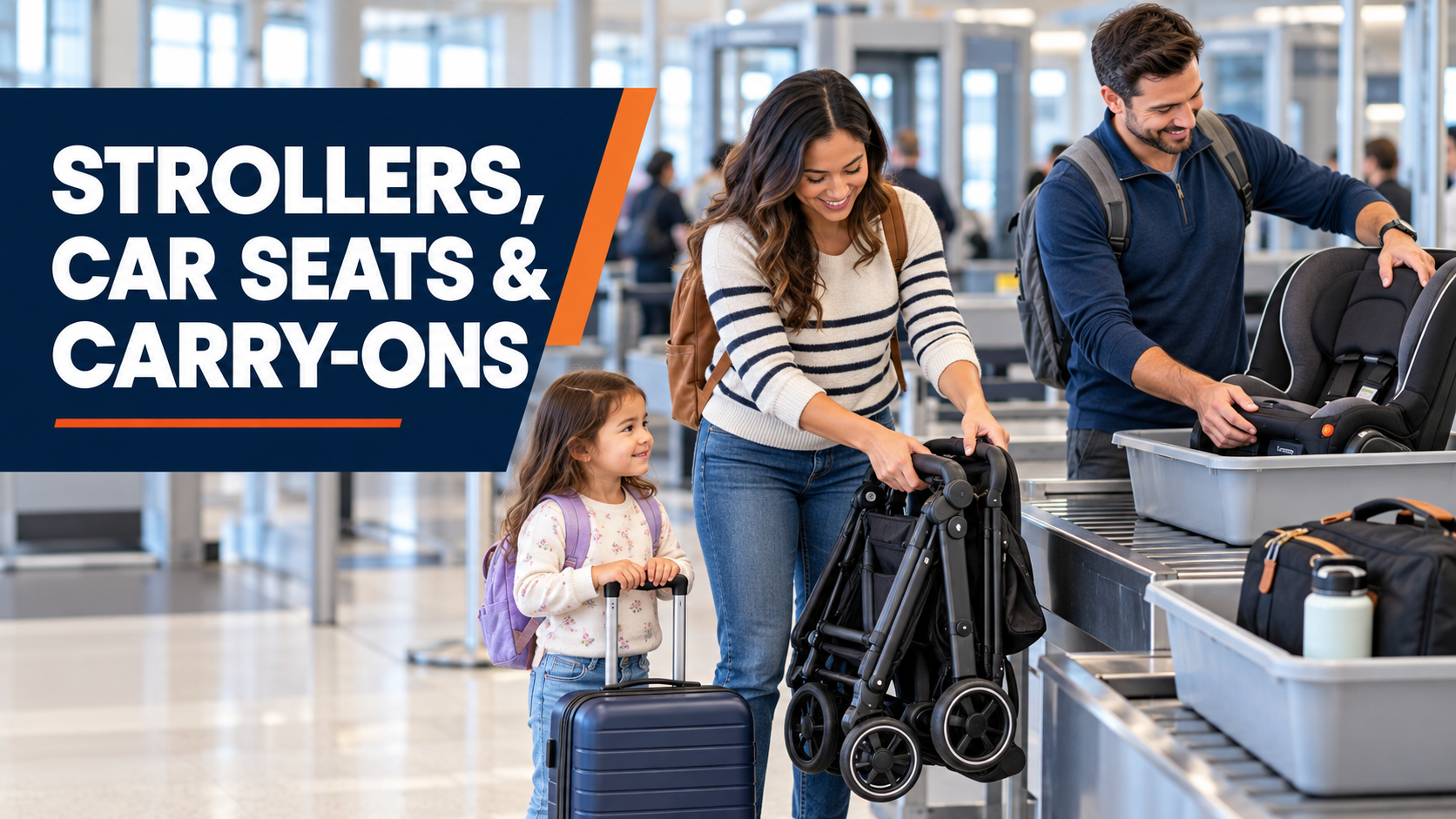
Strollers, car seats and carriers must be screened. Items that fit will usually go through the X-ray machine; larger equipment may require a visual and physical inspection. Remove loose toys, cups, blankets and bags before reaching the belt so nothing falls out or becomes separated.
Know how to fold the stroller before the travel day. If possible, place smaller parts in a labeled bag and take a quick photo of the equipment before travel. That will help if a piece is misplaced or damaged later.
Ask the officer how to proceed before removing a sleeping child from a carrier. Screening methods vary, and following the officer’s directions is safer than trying to predict which equipment the lane uses.
How TSA Screening Works for Children
TSA applies modified procedures to children 12 and younger, but the exact screening method depends on the checkpoint and the circumstances. A child who can walk independently may be asked to pass through the detector alone. A parent or guardian should stay close and follow the officer’s instructions.
Children should never be handed to a screening officer. If a child needs help, tell the officer before the family reaches the detector. Officers may use additional methods when an alarm occurs or an item cannot be cleared by the primary screening process.
Prepare children for the possibility of a brief pause or a second look at a bag. Additional screening is not an accusation, and adults can keep the moment calm by answering questions directly and avoiding visible frustration.
A Better Way to Move Through the Checkpoint
Before the line: verify the terminal, empty pockets and place documents where one adult can reach them.
At the preparation tables: remove only what the officers and posted signs require.
At the belt: load bins in a deliberate order, with one adult managing bags and the other supervising children when two adults are traveling.
At the scanner: keep children together and wait for the officer’s direction.
After screening: move away from the belt before reorganizing shoes, jackets and electronics.
Count people, bags and high-value items before leaving the checkpoint area. A simple verbal check—phones, passports, medication, stroller and the correct number of bags—prevents many avoidable problems.
TSA PreCheck for Families
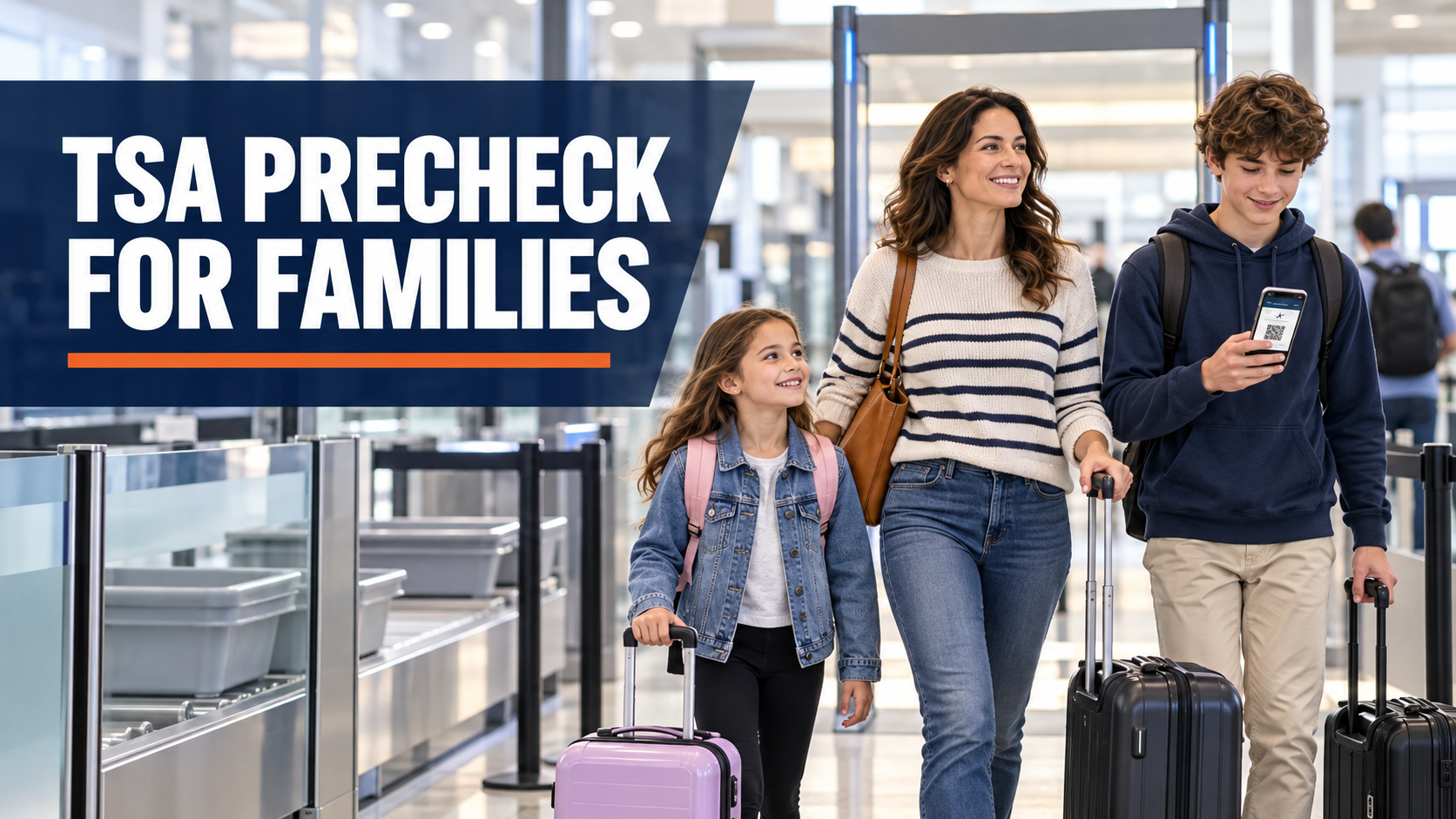
TSA PreCheck can reduce the amount of unpacking and clothing removal required in participating lanes. Family eligibility depends on each traveler’s age, boarding pass and reservation. Read the current TSA PreCheck rules for families before relying on the whole group being admitted to the lane.
Children 12 and younger can generally accompany an enrolled parent or guardian in a TSA PreCheck lane. Rules for travelers ages 13 through 17 are more specific and can depend on whether the TSA PreCheck indicator appears on the child’s boarding pass and whether the family is on the same reservation.
Do not assume another adult in the party can enter the PreCheck lane simply because a child or spouse can. Check every boarding pass before joining the line and use the standard lane if the group’s eligibility is unclear.
Children With Disabilities, Medical Conditions or Sensory Needs
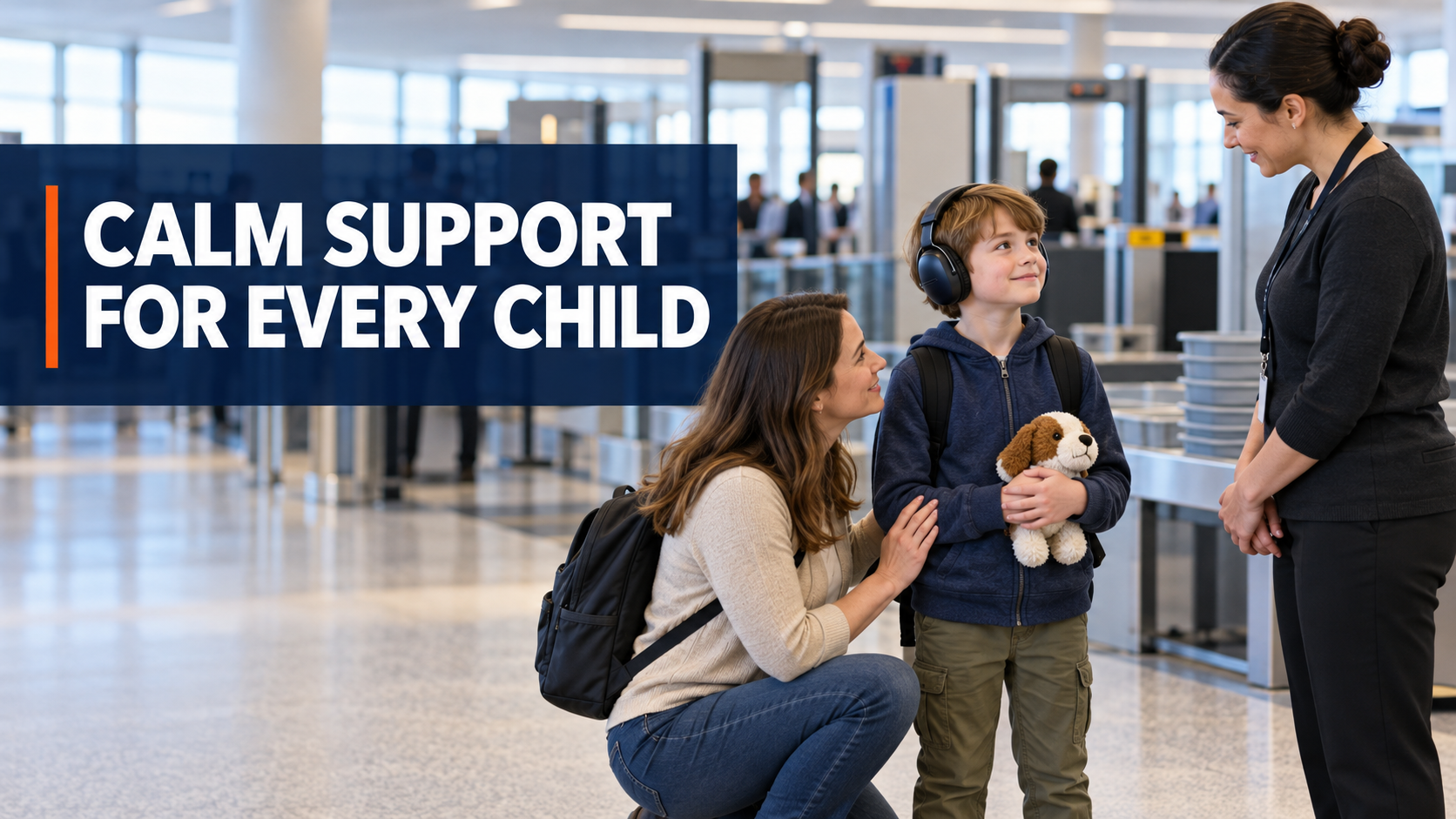
A child may need more time, fewer verbal instructions, a private screening or help keeping medical supplies together. Tell the officer what support is useful without disclosing more than the family wants to share. A short written note can help when speaking in a busy line is difficult.
Families can contact TSA Cares before a U.S. trip to ask questions about screening support. TSA recommends contacting the service at least 72 hours before travel when assistance is requested.
Pack comfort items where they remain accessible. Noise-reducing headphones, a visual sequence card or a familiar object may help, but every item must still be screened. Tell the child which item will go on the belt and when it will be returned.
Airport Security When Departing From Canada
Canadian checkpoints are operated under CATSA rules, which are not identical to TSA procedures. CATSA’s guidance for families explains current allowances for baby food, milk, formula, water, juice, breast milk, cooling packs and family screening.
CATSA states that travelers with an infant younger than two may bring specified baby foods and liquids in quantities greater than 100 milliliters. Breast milk above 100 milliliters may be carried even when the child is not traveling, provided it is presented for inspection. Strollers, infant carriers, car seats, diaper bags and children’s carry-ons must be screened.
Look for a Family and Accessible Line where available. Because rules can change, verify CATSA and airline guidance again close to departure, particularly when connecting through another country.
Common Mistakes That Cause Preventable Delays
Packing feeding supplies or medication underneath everything else.
Leaving drinks in reusable bottles.
Allowing children to fill their pockets with small objects.
Waiting until the belt to fold the stroller.
Assuming every family member has TSA PreCheck because one adult is enrolled.
Putting passports or boarding passes into a bin instead of keeping them secure.
Packing toy weapons or realistic replicas.
Trying to reorganize the entire family directly beside the conveyor belt.
The fix is a five-minute checkpoint reset before joining the line. Use the restroom, discard ordinary liquids, empty pockets, confirm documents and place inspection items together.
If a Bag Requires Additional Screening
Stay with the bag unless an officer directs otherwise, keep children beside the supervising adult and answer questions plainly. Do not reach into the bag while it is being examined. Point out medication, feeding supplies or fragile equipment before the officer handles that area.
If a requested screening method conflicts with a medical or disability-related need, explain the limitation and ask what alternative is available. A private screening can be requested. Build enough time into the airport plan that an additional inspection does not create a missed-flight emergency.
The Family Carry-On Checklist
Boarding passes and acceptable identification for the itinerary
Passports, visas and any required consent documents
Essential medication and supporting information
Formula, breast milk, toddler drinks or baby food grouped for declaration
An empty reusable water bottle
Solid snacks in easy-to-inspect packaging
Diapers, wipes and one change of clothes
Comfort items and child-safe headphones
Charged devices and charging cables
A labeled bag for stroller or car-seat accessories
Airline, airport and transportation contact details
Frequently Asked Questions About Airport Security With Children
Do children need identification for a domestic U.S. flight?
TSA generally does not require ID from travelers under 18 on domestic trips, but the airline may require proof of age or other documentation. Confirm the airline’s policy before departure.
Does a baby need a passport?
For international air travel, infants generally need their own passport. Destination and transit-country rules may require additional documents.
Can parents bring formula or breast milk through security?
Yes. TSA allows formula, breast milk, toddler drinks and related baby or toddler foods in reasonable quantities greater than the standard liquid limit, subject to separate screening. Declare them to the officer.
Can breast milk travel without the child?
Yes. TSA and CATSA both provide procedures for traveling with breast milk when the child is not present. Present it for inspection and review the current official guidance before travel.
Can children keep their shoes on?
TSA uses modified procedures for children 12 and younger, which can include keeping shoes and light outerwear on. Follow the officer’s instructions because the procedure can change after an alarm or at a different checkpoint.
Can a stroller go through airport security?
Yes, but it must be screened. Fold it and remove loose items. If it does not fit through the X-ray machine, officers may inspect it manually.
Can children use TSA PreCheck with a parent?
Children 12 and younger can generally accompany an enrolled parent or guardian. Travelers ages 13 through 17 are subject to additional boarding-pass and reservation requirements. Check the current TSA family rules.
Can families bring snacks through security?
Solid foods are generally permitted, while liquids and gels are subject to restrictions unless they qualify for a baby, toddler or medical exemption. Officers may ask to inspect food separately.
What assistance is available for a child with additional needs?
Families can explain the child’s needs at the checkpoint, request a private screening and contact TSA Cares before a U.S. departure. Some airports also have family or accessible lanes and passenger-assistance programs.
How early should a family arrive?
Follow the airline and airport recommendation for the specific flight, then add time when traveling with a stroller, medical equipment, special feeding supplies or a child who benefits from a slower pace. A fixed rule cannot account for the airport, date, terminal and itinerary.
Plan the Entire Family Travel Experience
A smooth checkpoint starts with a realistic airport plan: correct documents, organized carry-ons, enough time and a clear role for each traveler. Those steps matter more than trying to move at the speed of the people behind you.
Need help planning a family trip with flights, accommodations and age-appropriate details working together? Contact Travel With McNellis to start building a trip around the way your family actually travels.