MARGE’S TRAVEL INSIGHTS
Best Cruises for First-Time Cruisers: How to Choose the Right Cruise Line, Ship, and Itinerary
Planning your first cruise? Learn how to choose the right cruise line, ship, itinerary, stateroom, excursions, dining options, travel documents, and more.
Originally published December 23, 2025, this guide has been fully updated and expanded with current advice to help first-time cruisers confidently choose the right cruise line, ship, itinerary, stateroom, and experiences.
Cruising for the first time should feel exciting—not overwhelming. Yet before you ever step aboard, you will face a surprising number of choices.
Which cruise line matches your personality? Would you enjoy a large, activity-filled ship or a quieter, more intimate experience? Should you begin with the Caribbean, Alaska, the Mediterranean, or another destination? Is a balcony worth the additional cost? What is included in the cruise fare, and which expenses should you plan for separately?
The best first cruise is not necessarily the newest ship, the lowest fare, or the itinerary visiting the most ports. It is the cruise that fits the way you genuinely enjoy traveling.
A couple hoping for sophisticated dining and quiet evenings may feel out of place on a high-energy family ship. Parents traveling with children could be disappointed by a smaller vessel with limited activities. Travelers primarily interested in destinations may prefer a port-intensive itinerary, while others want the ship itself to be the main attraction.
That is why choosing the right cruise line, ship, itinerary, cabin, and sailing length matters so much.
This complete guide will help you understand your options, compare the best cruises for first-time cruisers, avoid common booking mistakes, and confidently choose a vacation that feels right from the moment you board.
Table of Contents
Why cruising appeals to first-time travelers
Is a cruise the right vacation for you?
The main types of cruise experiences
How to identify your cruise personality
Best cruise lines for first-time cruisers
How to choose the right cruise ship
Best destinations for a first cruise
How long should your first cruise be?
Choosing the best cruise itinerary
Selecting the right stateroom
What is included in a cruise fare?
Additional cruise costs to expect
Dining, entertainment, and onboard activities
Shore excursions and port planning
When to book your first cruise
Documents, packing, and embarkation
Common first-time cruise mistakes
First-cruise planning checklist
Frequently asked questions
Why Cruising Appeals to First-Time Travelers
A cruise combines transportation, accommodations, dining, entertainment, and destination experiences into one coordinated vacation. Instead of repeatedly changing hotels, repacking luggage, arranging transportation, and searching for meals, you settle into one stateroom while the ship carries you from place to place.
That convenience is one of cruising’s greatest advantages.
Unpack Once and Visit Multiple Destinations
On a traditional multi-destination vacation, visiting several cities or islands can mean multiple flights, train journeys, hotel check-ins, and transfers. A cruise simplifies that experience.
You unpack once, learn your way around the ship, and wake up near a different destination on many mornings. Depending on the itinerary, one vacation could introduce you to several Caribbean islands, multiple Mediterranean countries, historic European cities, or remote communities along Alaska’s coastline.
Cruising does not eliminate every planning decision, but it brings many of the complicated pieces together.
Build the Vacation Around Your Energy Level
A cruise can be active, relaxing, or a combination of both.
You might begin the morning with a guided excursion, spend the afternoon beside the pool, enjoy dinner overlooking the ocean, and finish the evening with a stage production or live music. On another day, you can skip the scheduled activities and simply read on your balcony.
That flexibility makes cruising attractive to couples, families, solo travelers, friends, and multigenerational groups whose interests may not always match.
Understand Much of the Vacation Cost Before Leaving
Cruises can make vacation budgeting easier because your fare generally covers your stateroom, transportation between ports, many dining options, selected beverages, entertainment, and numerous onboard activities.
However, a cruise is not automatically all-inclusive. Specialty dining, alcoholic drinks, Wi-Fi, gratuities, excursions, spa treatments, photographs, and other extras may cost more. The exact inclusions differ between cruise lines and fare packages, making careful comparison essential.
Later in this guide, we will explain what is typically included and help you account for the additional expenses that frequently surprise new cruisers.
Travel With Support Close By
A cruise ship has guest-services staff, dining teams, medical facilities, organized activities, and shore-excursion assistance available throughout the voyage. That built-in support can be reassuring when you are new to cruising or visiting unfamiliar destinations.
Cruise-line excursions also provide a structured way to explore ports. They are not always the least expensive choice, but their coordinated schedules and transportation can reduce uncertainty for first-time cruisers.
For a closer comparison, read → Cruise Shore Excursions: When to Book Through the Cruise Line vs. Independently.
Is a Cruise the Right Vacation for You?
Cruising offers tremendous variety, but it is not the ideal vacation for everyone. Before selecting a cruise line, consider whether the basic cruise experience matches your expectations.
A cruise may be a strong fit if you:
Want to visit several destinations without changing hotels
Enjoy having dining and entertainment nearby
Prefer a vacation with both organized activities and independent time
Are traveling with people who have different interests
Want help coordinating complicated travel details
Like returning to a familiar room after exploring each destination
Are comfortable following an itinerary with established arrival and departure times
You may prefer another vacation style if you:
Want several days to explore each destination deeply
Strongly dislike schedules or organized environments
Prefer small, locally owned accommodations
Want complete control over where and when you dine
Become uncomfortable in busy shared spaces
Primarily want an immersive land-based cultural experience
Even these concerns do not necessarily rule out cruising. A smaller ship, river cruise, luxury cruise, longer port stay, or itinerary with overnight calls may provide a very different experience from a large mainstream ship.
If you are still deciding between travel styles, read → Cruise vs. Resort vs. Rail Travel: Pros, Cons, Costs and Which Vacation Is Right for You.
The Main Types of Cruise Experiences
“Cruise” describes several very different kinds of vacations. Understanding these categories will prevent you from choosing a sailing based solely on price or destination.
Mainstream Ocean Cruises
Mainstream cruise lines operate many of the large ships people picture when they think about cruising. These vessels may offer multiple pools, children’s programs, live entertainment, casual and specialty dining, sports facilities, nightlife, and activities throughout the day.
They typically provide the broadest selection of departure dates, cabin categories, itineraries, and price points.
Mainstream ocean cruising can work especially well for:
Families with children or teenagers
Multigenerational groups
Travelers who want abundant entertainment
First-time cruisers who value choice and convenience
Vacationers who want the ship to be part of the destination
Royal Caribbean, Norwegian Cruise Line, Carnival Cruise Line, MSC Cruises, and certain Princess sailings are examples within this broad category, although their onboard styles are not identical.
Premium Cruises
Premium cruise lines generally emphasize service, dining, comfort, design, enrichment, and a somewhat calmer onboard environment. Their ships still provide entertainment and activities, but the experience may feel less crowded or activity-driven than the largest mainstream vessels.
Premium cruising can be an excellent match for:
Couples
Food-focused travelers
Adults seeking a quieter atmosphere
Travelers who appreciate polished service
Guests interested in destinations and enrichment
First-time cruisers wanting comfort without extreme formality
Princess Cruises, Celebrity Cruises, and Holland America Line are commonly considered within the premium market, although individual ships and itineraries can attract different passenger mixes.
Luxury Cruises
Luxury cruise lines typically operate smaller ships, provide more personalized service, and include more amenities in the fare. Depending on the cruise line, inclusions may extend to gratuities, alcoholic beverages, specialty dining, Wi-Fi, transfers, or selected excursions.
Luxury cruises can suit travelers who value:
Highly attentive service
Smaller ships
Spacious accommodations
Refined dining
Less crowded public areas
Unusual ports
A more inclusive fare
The initial price can be considerably higher, but comparing only the base fare can be misleading. Once the included services are considered, the difference between a premium cruise with several added packages and an entry-level luxury cruise may be smaller than expected.
River Cruises
River cruises travel inland waterways and place the destination at the center of the experience. Ships are much smaller, entertainment is generally understated, and itineraries often include guided cultural excursions.
A European river cruise may visit several cities and towns along rivers such as the Rhine, Danube, Seine, Rhône, or Douro. Because river ships often dock close to historic centers, guests can sometimes begin exploring shortly after stepping ashore.
River cruising may appeal to:
Culturally curious travelers
Adults who prioritize destinations over onboard attractions
Travelers who prefer smaller groups
Guests interested in history, food, wine, and guided sightseeing
People who do not need large-scale nighttime entertainment
River cruises can involve significant walking, stairs, cobblestones, and changing water conditions. Travelers with mobility concerns should examine the itinerary and excursion requirements carefully before booking.
Expedition Cruises
Expedition cruises are designed around remote destinations, wildlife, natural environments, and guided exploration. Antarctica, the Galápagos, the Arctic, and certain remote coastal regions are common expedition destinations.
These cruises may include Zodiac outings, wildlife observation, educational presentations, hiking, and landings led by expedition specialists.
They are best suited to travelers who value discovery and nature more than traditional cruise entertainment. They may not be the obvious choice for every first-time cruiser, but they can be ideal when the destination—not cruising itself—is the primary reason for traveling.
Identify Your Cruise Personality Before Comparing Cruise Lines
Rather than beginning with cruise brands, begin with yourself.
Ask:
Do I want a lively or peaceful atmosphere?
Am I more interested in the ship or the destinations?
How important are food and service?
Do I want scheduled entertainment every evening?
Will children or teenagers be traveling with me?
Would I use water slides, sports attractions, or large pool decks?
Do I enjoy dressing up, or do I prefer a casual environment?
Would I rather visit several ports or have more time at sea?
Do I want a large selection of restaurants?
How much additional spending am I comfortable with after paying the fare?
Would I feel more relaxed on a small ship or energized by a large one?
Your answers create a far more useful starting point than searching for the “best cruise line.” No cruise line is best for every traveler. The goal is to find the one that is best for you.
Travel With McNellis can compare the cruise lines, ships, itineraries, cabin locations, fare options, and inclusions that match your travel style—so your first cruise feels like your vacation, not someone else’s recommendation.
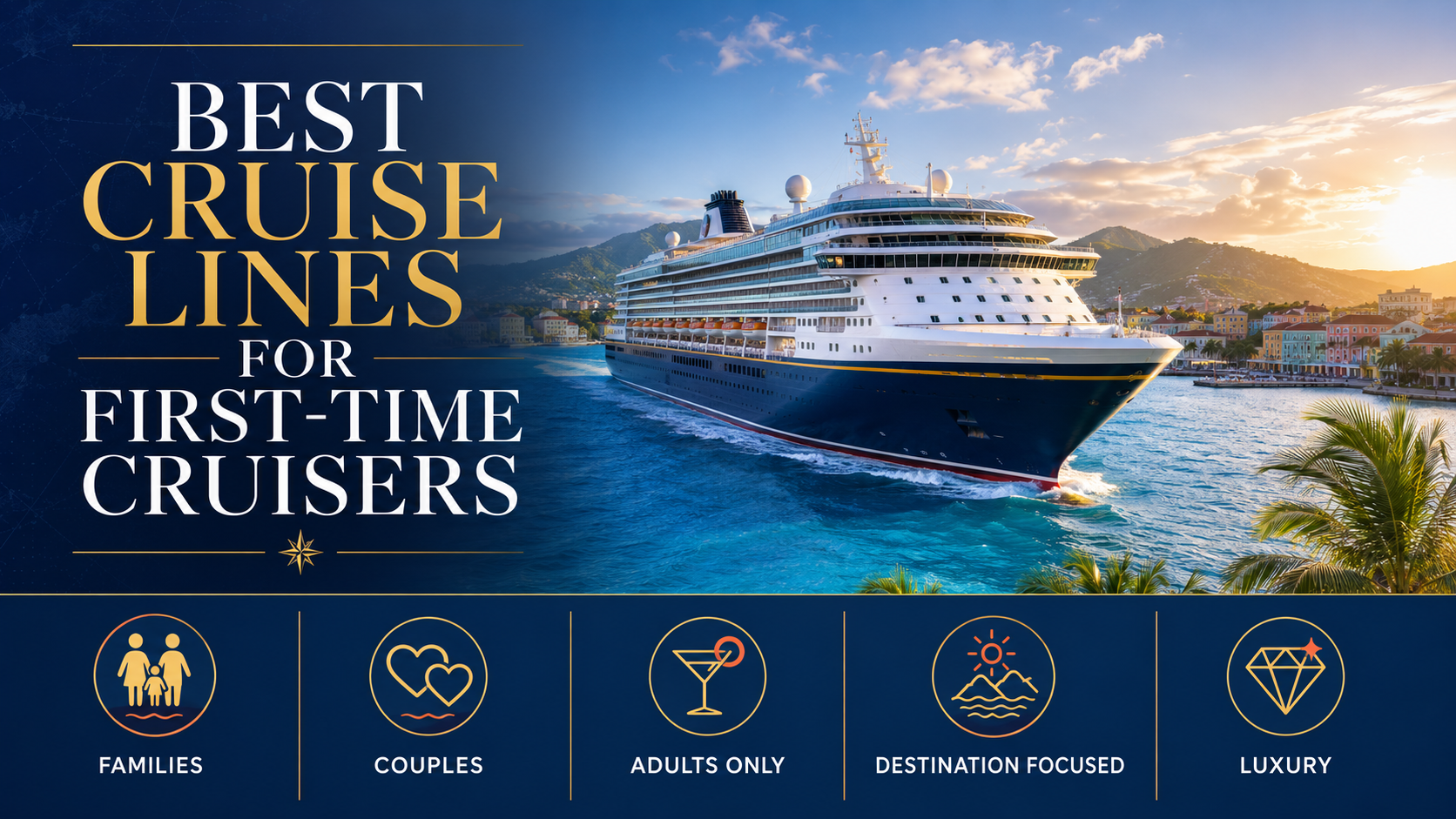
Best Cruise Lines for First-Time Cruisers
There is no single cruise line that is best for every first-time cruiser. Each one creates a different atmosphere through its ships, dining, entertainment, service, accommodations, and itineraries.
The goal is not to select the cruise line with the loudest advertising or lowest starting fare. It is to find the experience that best matches your interests, budget, travel companions, and preferred vacation pace.
After reviewing current cruise-line websites, ship features, available destinations, onboard experiences, and traveler feedback, the following cruise lines stand out for different types of first-time cruisers.
Royal Caribbean: Best for Families and Activity-Focused Travelers
Royal Caribbean is often a strong choice for families, multigenerational groups, and travelers who want the ship to be a major part of their vacation.
Its larger ships are known for extensive entertainment and recreational choices. Depending on the ship, guests may find water slides, surf simulators, climbing walls, sports facilities, live productions, themed neighborhoods, children’s programs, and numerous dining venues.
Royal Caribbean may be right for you if:
You want activities available throughout the day
You are traveling with children or teenagers
Members of your group have different interests
You enjoy large-scale entertainment
You want plenty of casual dining choices
You consider the ship as important as the destinations
However, the newest and largest ships can feel busy. Many experiences may also require reservations or additional fees. First-time cruisers should compare the complete vacation cost—not only the advertised cruise fare.
Carnival Cruise Line: Best for a Casual, Social Vacation
Carnival Cruise Line generally provides a lively, informal experience with an emphasis on fun, comedy, music, poolside activities, and approachable dining.
Its broad selection of shorter sailings and convenient departure ports can make Carnival accessible to travelers who want to try cruising without committing to a longer or more expensive vacation.
Carnival may suit you if:
You enjoy a casual and energetic atmosphere
You want a shorter introductory cruise
You prefer relaxed dining and dress expectations
You are traveling with friends or family
You appreciate having multiple departure-port choices
You want to keep the initial fare within a moderate budget
The onboard personality can vary by ship, itinerary, and sailing date. A short weekend cruise during a holiday period may feel much livelier than a longer sailing when schools are in session. Choosing the right departure date is therefore almost as important as choosing the cruise line.
Norwegian Cruise Line: Best for Flexible, Unstructured Cruising
Norwegian Cruise Line helped popularize a more flexible style of cruising. Its ships generally provide numerous restaurants, entertainment choices, and activities without requiring every evening to follow the same traditional dining schedule.
Norwegian can work well for:
Travelers who dislike rigid vacation schedules
Couples and groups wanting varied dining
Families with different interests
Guests who prefer contemporary entertainment
Solo travelers interested in ships with dedicated studio accommodations
Travelers who want a balance of activity and independence
The flexible structure is appealing, but many specialty restaurants and popular onboard attractions may carry additional charges. Fare packages should be reviewed carefully because promotional inclusions can still involve gratuities, restrictions, or service charges.
Disney Cruise Line: Best for Families Who Value Themed Entertainment
Disney Cruise Line combines family cruising with character experiences, theatrical entertainment, imaginative children’s spaces, and service designed around parents and children traveling together.
It can be particularly appealing to families who already value Disney storytelling and want an experience that provides activities for children while preserving adult-oriented spaces.
Disney may be a good fit if:
Disney characters and stories are meaningful to your family
You value polished family entertainment
You want strong children’s programming
You appreciate dedicated adult spaces
You are willing to pay more for the Disney experience
Disney fares are often higher than those of other mainstream cruise lines, and the Disney theme is central to the experience. Families who are not especially interested in Disney may find another cruise line offers more ship features or itinerary choices for the same overall budget.
Celebrity Cruises: Best for Couples and Contemporary Premium Cruising
Celebrity Cruises generally offers a more refined and design-focused atmosphere than many mainstream lines without creating an excessively formal environment.
Its ships emphasize contemporary accommodations, dining, service, wellness, and stylish public spaces. Celebrity can be a strong first choice for couples or adults who want a sophisticated vacation while retaining recognizable cruise entertainment and activity options.
Celebrity may suit you if:
You are traveling as a couple
Food, design, and service are important
You prefer a polished, adult-oriented atmosphere
You want entertainment without a theme-park environment
You are interested in the Caribbean, Alaska, Europe, or longer destination-focused voyages
Families are welcome, but travelers primarily seeking water parks, extensive children’s attractions, or constant high-energy activities may prefer Royal Caribbean or another family-oriented line.
Princess Cruises: Best for Destination-Focused Premium Cruising
Princess Cruises can be an approachable choice for first-time cruisers who value destinations, comfortable ships, traditional cruise experiences, and a generally relaxed onboard environment.
The line is particularly well established in Alaska, where travelers can choose between round-trip cruises, one-way voyages, and cruisetours combining a cruise with a land experience.
Princess may be right for you if:
The itinerary is more important than onboard thrills
You prefer a calm but not overly formal environment
You are interested in Alaska
You want a premium experience at a moderate price point
You enjoy enrichment, live entertainment, and traditional dining choices
You are traveling as a couple or with adult family members
Families can certainly enjoy Princess, but the ships generally do not revolve around large recreational attractions. That difference can be an advantage for travelers who want less noise and fewer crowds around activity areas.
Holland America Line: Best for Classic Cruising and Enrichment
Holland America Line emphasizes destination experiences, live music, dining, service, and a more traditional style of cruising. It can be especially appealing to mature travelers, couples, and guests who want a calmer ship without moving fully into the luxury category.
Holland America may suit you if:
You appreciate live music and enrichment
You prefer a quieter onboard environment
You want a destination-focused itinerary
You are considering Alaska or a longer voyage
You value attentive service and comfortable public spaces
You do not need water slides or high-energy attractions
The passenger mix often trends older, particularly on longer sailings. First-time cruisers looking for active nightlife or extensive family attractions should consider whether the ship’s atmosphere matches their expectations.
Virgin Voyages: Best for Adults Wanting a Modern Escape
Virgin Voyages offers an adults-only experience with contemporary dining, nightlife, wellness activities, and an unconventional approach to cruise traditions.
Its ships may appeal to adults who want to avoid children’s programming, assigned dining times, large buffets, and some of the formal structures associated with traditional cruising.
Virgin Voyages may suit you if:
Everyone traveling is at least 18
You enjoy creative dining and modern design
You prefer an adults-only environment
You want energetic entertainment and nightlife
You appreciate a less traditional cruise atmosphere
You are traveling as a couple or with friends
The experience can feel bold and social. Travelers seeking quiet elegance, traditional production shows, or a conventional cruise schedule may be happier with Celebrity, Princess, or Holland America.
Luxury Cruise Lines: Best for Service and Greater Inclusions
Regent Seven Seas Cruises, Silversea, Seabourn, and other luxury lines offer smaller ships, highly personalized service, spacious accommodations, and fares that include more of the total vacation experience.
Depending on the line and fare, inclusions may cover beverages, specialty dining, Wi-Fi, gratuities, and selected excursions. Some itineraries also visit smaller ports that cannot accommodate the largest ships.
Luxury cruising may be appropriate for first-time cruisers who:
Prefer smaller ships and fewer passengers
Value personalized service
Want more expenses included before departure
Appreciate sophisticated dining
Are interested in unusual or remote ports
Have the budget for a premium experience
A luxury cruise is not automatically formal or intimidating. Nevertheless, each line has its own personality, and travelers should compare ship size, inclusions, dress expectations, excursions, and onboard atmosphere before booking.
First-Time Cruiser Comparison Table
Cruise line or style
Particularly suitable for
General atmosphere
Important consideration
Royal Caribbean
Families and active travelers
Energetic and activity-filled
Large ships can feel busy
Carnival
Social travelers and shorter cruises
Casual and lively
Experience varies by sailing date
Norwegian
Flexible travelers and mixed groups
Contemporary and unstructured
Review package charges carefully
Disney
Families who love Disney
Themed and family-focused
Premium pricing
Celebrity
Couples and premium travelers
Stylish and refined
Fewer large family attractions
Princess
Destination-focused travelers
Comfortable and relaxed
More traditional than activity-driven
Holland America
Mature travelers and enrichment seekers
Calm and classic
Less emphasis on nightlife and thrills
Virgin Voyages
Adults, couples, and friends
Modern and unconventional
Not designed for traditional cruisers
Luxury lines
Service-focused travelers
Intimate and highly personalized
Higher initial fare
How to Choose the Right Cruise Ship
Choosing a cruise line is only half the decision. Ships within the same fleet can differ dramatically.
An older, smaller Royal Caribbean ship does not provide the same experience as one of its newest megaships. A newer Princess ship may offer different accommodations and dining concepts than a smaller vessel in the same fleet. Even when service standards are similar, passenger capacity, public spaces, activities, and itinerary capabilities can vary.
Large Cruise Ships
Large ships generally provide the greatest selection of:
Restaurants
Entertainment venues
Pools
Children’s facilities
Sports and recreational attractions
Cabin categories
Nightlife
Organized activities
They are often ideal for families and groups because everyone can pursue different interests. However, they may require more planning. Shows, specialty restaurants, and popular activities can book quickly, while embarkation and port days may involve more passengers moving through the same spaces.
Mid-Sized Cruise Ships
Mid-sized ships often balance variety with easier navigation. They may provide several restaurants, pools, entertainment venues, and lounges without the scale of the industry’s largest vessels.
They can be a comfortable starting point for couples and first-time cruisers who want options but do not need a ship filled with major attractions.
Small Cruise Ships
Smaller ships can offer a more intimate atmosphere, personalized service, and access to ports that cannot accommodate megaships.
The tradeoff is a narrower selection of restaurants, entertainment, and activities. For destination-focused travelers, that may be an advantage. For someone expecting Broadway-style shows, water attractions, and constant activity, it may feel too quiet.
Newest Does Not Always Mean Best
New ships receive enormous attention, but the newest vessel is not automatically the right choice.
A new ship may offer impressive technology, dining, accommodations, and entertainment. It may also command higher fares, attract considerable demand, and carry thousands of passengers.
An older or recently renovated ship can provide excellent value, a more manageable layout, and an itinerary better suited to your interests. Ship age should be one factor—not the deciding factor.
Best Destinations for a First Cruise
Your destination determines the scenery, weather, ports, excursions, packing requirements, and pace of the vacation.
The Caribbean and Bahamas
The Caribbean and Bahamas are popular starting points because they offer numerous departure ports, itinerary lengths, cruise lines, and ship styles.
These cruises can work especially well for travelers who want:
Warm weather
Beaches and water activities
A balance of ports and sea days
Shorter flights from many North American cities
A broad range of fares and ships
A relaxed introduction to cruising
Eastern, Western, and Southern Caribbean itineraries are not interchangeable. Each region provides different islands, sailing distances, and overall pacing, so the ports should be compared rather than treating every Caribbean cruise as the same vacation.
Alaska
An Alaska cruise places scenery, wildlife, glaciers, and outdoor excursions at the center of the experience. The primary cruise season generally runs from May through September.
It can be an excellent first cruise for travelers who prefer mountains, wildlife, history, and nature to tropical beaches. Alaska also rewards careful itinerary selection because glacier-viewing opportunities, ports, departure cities, and land-extension possibilities vary considerably.
A balcony can be valuable in Alaska, but it should never replace an itinerary with strong glacier and port experiences.
The Mediterranean
A Mediterranean cruise can introduce travelers to multiple European destinations without requiring repeated hotel changes and transportation arrangements.
However, Mediterranean itineraries are often port-intensive. Early mornings, longer excursions, summer heat, and considerable walking can make the experience more demanding than a relaxed Caribbean sailing.
It is a strong first-cruise choice for travelers whose primary goal is exploring Europe—not spending most of the vacation beside the pool.
Mexican Riviera
Mexican Riviera cruises commonly visit Pacific coastal destinations and may depart conveniently from California. They can provide warm weather, cultural excursions, beaches, food experiences, and a manageable introduction to cruising.
Travelers should compare specific ports and seasonal conditions, as the experience differs from a Caribbean itinerary.
Canada and New England
Canada and New England cruises appeal to travelers interested in coastal scenery, history, smaller cities, seafood, and autumn foliage.
These itineraries can provide a calmer alternative to tropical cruising, although weather can be variable and port experiences may be more important than onboard attractions.
How Long Should Your First Cruise Be?
For most first-time cruisers, a seven-night cruise provides the best balance.
It is long enough to settle into the ship, experience multiple ports, enjoy sea days, and understand the rhythm of cruising. It also gives you time to recover if embarkation day initially feels overwhelming.
A three- or four-night cruise requires less commitment, but it may create a misleading impression. Short sailings can feel rushed, attract a more energetic weekend crowd, and leave limited time to explore the ship.
Cruises lasting ten nights or more can be wonderful, but they require a larger investment of time and money. Unless the itinerary is the primary attraction, seven nights is usually the most comfortable introduction.
Choosing the Best First-Cruise Itinerary
Do not choose an itinerary based solely on the number of ports.
Instead, compare:
How many sea days are included
The amount of time available in each port
Whether any ports require tender boats
The distance between the airport and cruise terminal
Typical seasonal weather
The physical demands of excursions
Whether the ship visits the destinations most important to you
How early the ship arrives and departs
Whether you need a pre-cruise hotel
Whether the itinerary includes a private-island or beach destination
A first cruise should have enough variety to remain interesting without turning every day into a race from one excursion to the next.
Travel With McNellis can help you compare cruise lines, individual ships, departure ports, sailing lengths, and itineraries—then narrow hundreds of possibilities into the options that genuinely fit your vacation.
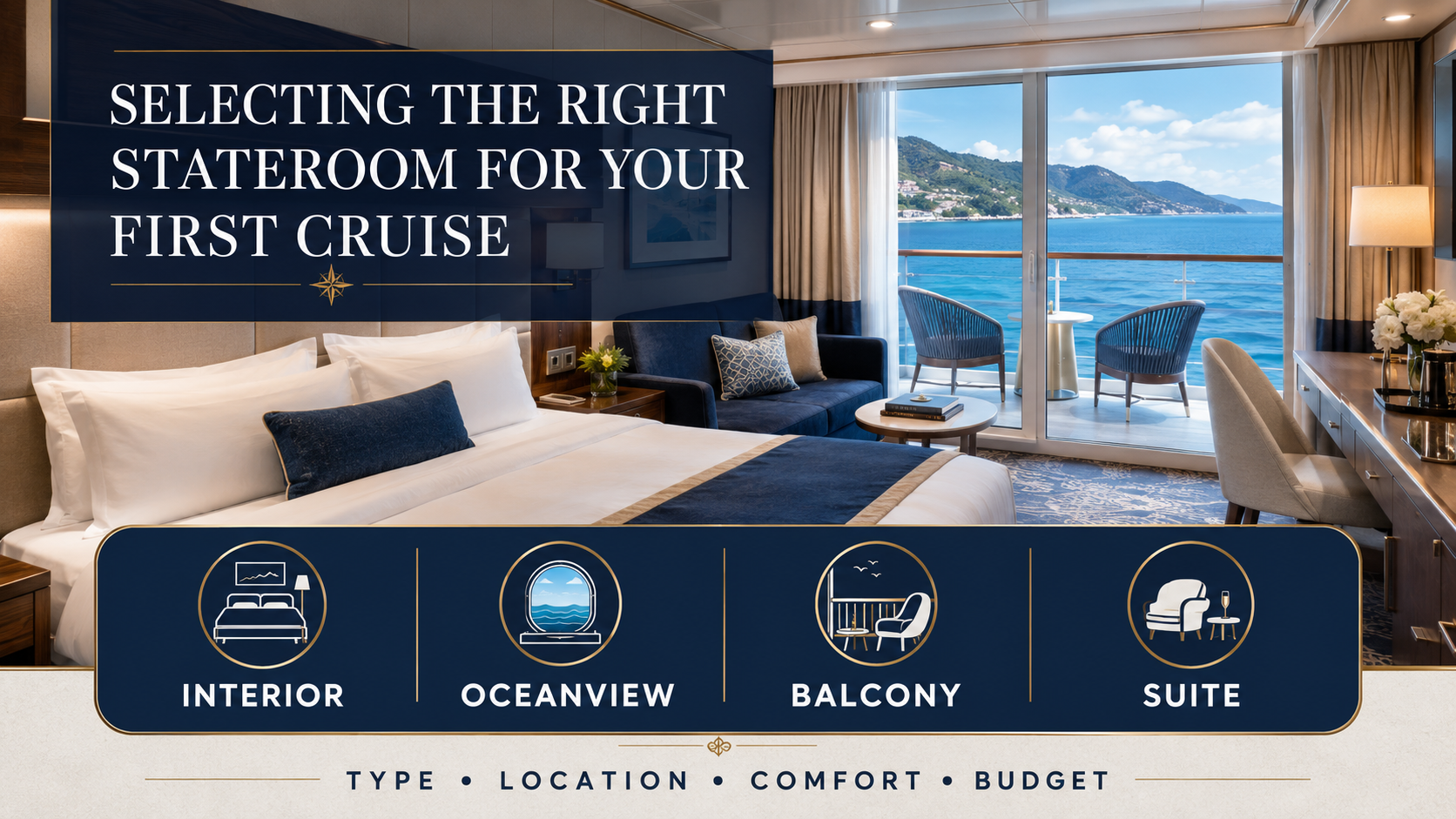
Selecting the Right Stateroom for Your First Cruise
Your stateroom becomes your private retreat during the cruise. Although you may spend much of the day exploring the ship or visiting ports, cabin type and location can significantly affect your comfort.
The best stateroom is not automatically the most expensive one. It is the cabin that provides the space, location, features, and view that matter most to you without consuming money you would rather spend elsewhere.
Interior Staterooms
Interior staterooms do not have an exterior window. They are generally the most affordable accommodations on the ship and can be an excellent value for travelers who expect to use their room mainly for sleeping, showering, and changing.
An interior cabin may be right for you if:
You want to keep the cruise fare lower
You sleep better in a very dark room
You plan to spend most of your time around the ship
You would rather invest in excursions, dining, or another vacation
A private ocean view is not important to you
The absence of natural light can make it harder to judge the time of day. Some first-time cruisers may also find an interior cabin more enclosed than expected.
Oceanview Staterooms
Oceanview staterooms include a window or porthole but do not provide private outdoor space.
They allow natural light into the room and let you see the weather or approaching coastline without paying for a balcony. The view may be partially or fully obstructed on certain ships, so the exact cabin description should be reviewed before booking.
Oceanview cabins can provide a practical middle ground for travelers who want to see outside but do not expect to spend much time sitting on a private balcony.
Balcony Staterooms
A balcony cabin provides private outdoor space where you can watch the ocean, enjoy morning coffee, see the coastline, or relax away from the ship’s public areas.
Balconies can be particularly appealing on scenic itineraries such as Alaska, Norway, the Mediterranean, or longer voyages with memorable arrivals and departures.
A balcony may be worth the additional cost if:
You enjoy quiet time outdoors
Scenic cruising is important
You want somewhere private to relax
You expect to spend meaningful time in your cabin
You prefer fresh air and natural light
One traveler rests while the other wants to sit outside
Not every balcony offers the same experience. Size, furniture, privacy, overhang, wind exposure, and obstruction can vary. Some balconies overlook interior areas of the ship rather than the ocean, so never choose by category name alone.
Suites
Suites provide more space and may include separate living areas, larger balconies, upgraded bathrooms, priority services, exclusive lounges, dedicated dining venues, or concierge assistance.
The benefits differ considerably between cruise lines and ships. On one vessel, a suite may primarily provide additional space. On another, it can include access to an almost separate ship-within-a-ship experience.
A suite can be worthwhile for families, special occasions, longer cruises, or travelers who value additional service and privacy. However, first-time cruisers do not need a suite to enjoy an excellent vacation.
Cabin Location Matters as Much as Cabin Type
Two cabins in the same category can produce very different experiences depending on their location.
Midship Cabins
A cabin near the middle of the ship and on a lower or middle deck generally experiences less noticeable movement than one positioned high or far forward.
Travelers concerned about seasickness often feel more comfortable closer to the ship’s natural center of motion.
Forward Cabins
Forward cabins may be convenient for specific venues and can provide dramatic views, but movement may be more noticeable in rough conditions.
Some cabins near the bow may also experience noise when the ship is docking or anchoring.
Aft Cabins
Aft-facing cabins can provide beautiful wake views and larger balconies on certain ships.
However, they may be farther from elevators and major venues. Depending on the ship, vibration or noise may also be noticeable during docking.
Check What Is Above, Below, and Beside the Cabin
Review the ship’s deck plan before selecting a cabin.
Potential noise sources include:
Nightclubs
Theaters
Pool decks
Fitness centers
Restaurants
Children’s facilities
Crew work areas
Elevators
Connecting doors
Service closets
A cabin surrounded by other staterooms is often a safer choice for light sleepers.
Families and groups should also verify whether rooms truly connect, sit beside one another, or are only located within the same general section of the ship. Cruise-line terminology and deck-plan symbols matter.
What Is Usually Included in a Cruise Fare?
The base fare commonly includes:
Your selected stateroom
Transportation between scheduled ports
Meals in the main dining room
Many buffet and casual-dining options
Basic beverages such as tap water, regular coffee, tea, and selected juices
Live entertainment
Access to pools and many public spaces
Numerous scheduled activities
Children’s programming on many family-oriented ships
Fitness-center access
The precise inclusions vary by cruise line, ship, fare type, and itinerary. Premium and luxury cruise lines may include services that mainstream lines sell separately.
Before comparing prices, determine what each fare actually includes. A lower initial fare can become more expensive once the services you want are added.
Additional Cruise Costs to Expect
First-time cruisers are sometimes surprised by how many optional purchases are available onboard. None of these extras are automatically a problem, but they need to be included in the vacation budget.
Possible additional costs include:
Government taxes and port expenses
Daily gratuities
Alcoholic beverages
Specialty coffees and bottled water
Drink packages
Specialty restaurants
Wi-Fi
Shore excursions
Spa services
Casino spending
Photographs
Arcade games
Certain attractions or activities
Laundry
Transportation to the departure port
Pre- and post-cruise hotels
Flights
Travel protection
Parking
Purchases in port
Gratuities
Many cruise lines automatically add daily gratuities or service charges to your onboard account. Some fare packages include them, while others do not.
These charges support crew members across housekeeping, dining, and other guest-service areas. Verify the amount before departure, especially when traveling as a family because gratuities may be charged per guest, per day.
Beverage Packages
A beverage package can make spending more predictable, but it is not automatically a bargain.
Before purchasing one, compare:
The daily package price
Service charges or gratuities
The number of drinks you realistically consume
Nonalcoholic beverages included
Individual drink-price limits
Port-day usage
Package rules for guests sharing a cabin
Any beverages already included in your fare
Whether private-island or resort drinks are covered
For a detailed breakdown, read → Cruise Drink Packages Explained: Are They Really Worth It?.
Wi-Fi
Cruise-ship internet has improved, but speed, reliability, device limits, and package rules vary.
If you need internet for work, communication, or entertainment, determine whether your fare includes it and what level of service is available. Messaging, browsing, video calls, and streaming may require different packages.
Travel Protection
Travel protection deserves serious consideration because cruise vacations often combine nonrefundable fares, flights, hotels, transfers, and excursions.
The correct policy depends on the traveler, trip cost, destination, health considerations, and desired coverage. Review the policy terms carefully rather than assuming every plan covers cancellation, medical care, interruption, delays, or evacuation in the same way.
Dining on a Cruise Ship
Dining is a major part of the cruise experience, but the structure differs between lines and ships.
Main Dining Rooms
The main dining room generally serves multi-course meals included in the cruise fare.
Depending on the line, you may select a fixed dining time, choose a flexible option, or reserve dining through an app.
Fixed dining can provide consistency because you dine at approximately the same time and may have the same service team. Flexible dining provides more freedom but can require reservations or involve a wait during popular periods.
Buffets and Casual Dining
Buffets provide variety and convenience, while casual venues may serve pizza, burgers, sandwiches, tacos, or other quick meals.
Not every casual restaurant is included. Check the cruise line’s dining guide so you know which venues carry additional charges.
Specialty Restaurants
Specialty restaurants may focus on steakhouses, seafood, Italian cuisine, Asian dishes, chef-driven menus, or immersive dining experiences.
They can be worthwhile for a celebration or a quieter evening, but you do not need to purchase specialty dining every night. First-time cruisers should experience the included restaurants before assuming that paid dining is necessary.
Popular restaurants and desirable dining times may fill before sailing. If one meal is particularly important, reserve it early.
Dietary Requirements
Cruise lines can often accommodate common dietary needs when informed in advance.
Travelers with allergies, celiac disease, religious dietary requirements, or other important restrictions should notify the cruise line and their travel advisor before departure.
Once onboard, speak directly with the dining team rather than relying only on buffet labels or assumptions.
Entertainment and Activities
Cruise entertainment may include:
Stage productions
Live music
Comedy
Movies
Trivia
Dance classes
Enrichment programs
Cooking demonstrations
Fitness classes
Poolside activities
Children’s and teen programs
Nightclubs
Casinos
Games and competitions
The selection depends heavily on the ship. A large family vessel may offer extensive recreational attractions, while a premium or smaller ship may emphasize live music, lectures, culinary programming, or destination enrichment.
Reviewing daily programs from similar sailings can help you understand the general rhythm, but schedules may change.
Do not try to attend everything. The purpose of reviewing the schedule is to identify what matters—not to transform your vacation into a checklist.
Planning Shore Excursions
Shore excursions can become some of the most memorable parts of a cruise. They can also represent a significant percentage of the total vacation cost.
Excursions may include:
Guided city tours
Beach visits
Wildlife experiences
Snorkeling or diving
Food and wine tours
Historic sites
Hiking
Scenic rail journeys
Cultural experiences
Boat trips
Private drivers
Resort day passes
When to Book Through the Cruise Line
Cruise-line excursions may be especially useful when:
The activity travels far from the port
Transportation is complicated
The port time is limited
You are concerned about returning before departure
The destination is unfamiliar
The excursion requires specialized equipment
Mobility assistance needs to be coordinated
You prefer a structured experience
When Independent Exploration May Work
Exploring independently may be appropriate when:
The main attractions are close to the port
Public transportation is reliable
You want a private or customized tour
You have researched the destination carefully
You understand the ship’s all-aboard time
You have allowed a generous return-time cushion
The ship will generally wait for a delayed cruise-line excursion, but it is not obligated to wait for guests returning late from independent arrangements.
Reserve high-demand excursions early, particularly in Alaska, Europe, private-island destinations, and ports where capacity is limited.
When Should You Book Your First Cruise?
For many sailings, booking approximately nine to twelve months ahead provides a strong balance of cabin selection, itinerary choice, and planning time.
Booking even earlier may be worthwhile for:
Alaska cruises
Mediterranean summer sailings
Holiday cruises
Spring-break travel
New ships
Popular suites
Accessible staterooms
Connecting family cabins
Large groups
Destination weddings
Limited expedition itineraries
Waiting for a last-minute price can reduce your choice of cabins, dining times, excursions, and flights. The lowest advertised fare is not always attached to the cabin location or fare conditions you would willingly accept.
Cruise prices and promotions change. A promotion may advertise reduced deposits, onboard credits, included beverages, Wi-Fi, or discounted additional guests, but the complete price and terms matter more than the headline.
A travel advisor can compare the fare, inclusions, restrictions, cabin location, deposit terms, and total vacation cost before you commit.
Travel With McNellis can help you select the right stateroom, understand what your fare includes, estimate the true vacation cost, reserve important experiences, and organize the details that turn a cruise booking into a well-planned first voyage.
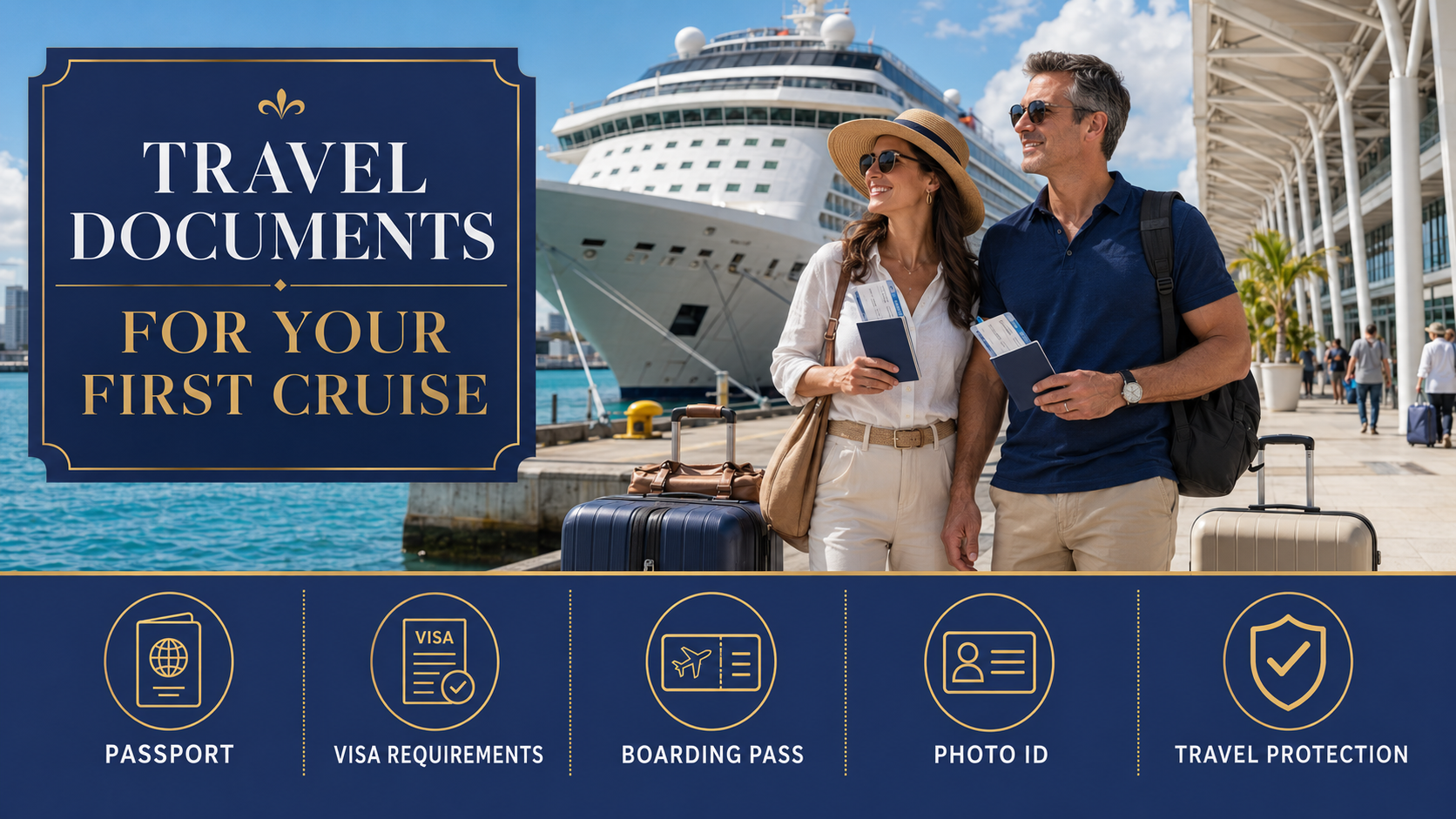
Travel Documents for Your First Cruise
Proper travel documents are essential. If you arrive without the documents required for your citizenship, departure port, itinerary, or cruise line, you may be denied boarding without a refund.
Requirements vary based on:
Your citizenship
Your country of residence
The cruise’s departure and return ports
Every country included in the itinerary
Whether the cruise begins and ends at the same U.S. port
Your passport’s expiration date
Visa and electronic travel-authorization requirements
Whether children are traveling with one or both parents
Your cruise line’s individual policies
Some U.S. citizens may be permitted to take certain closed-loop cruises using an approved proof of citizenship and government-issued photo identification. However, a passport book remains the safer choice.
If you must leave the ship unexpectedly and fly home from another country, a birth certificate or passport card will not replace the passport book required for international air travel.
After reviewing current guidance from the U.S. Department of State, U.S. Customs and Border Protection, and cruise-line documentation policies, first-time cruisers should follow these precautions:
Travel with a valid passport book whenever possible
Check the passport-validity requirement for every destination
Confirm whether blank passport pages are required
Verify visa or electronic travel-authorization requirements
Review requirements even if you do not plan to leave the ship in a port
Carry original or officially accepted documents—not informal copies
Confirm requirements for children traveling with only one parent
Keep documents in your carry-on bag, never checked luggage
Recheck the rules shortly before departure because requirements can change
Your cruise line and travel advisor can help identify requirements, but every passenger is ultimately responsible for carrying the correct documentation.
What to Pack for Your First Cruise
Cruise packing should reflect your destination, weather, excursions, dining plans, ship activities, and cabin storage.
The goal is not to prepare for every imaginable situation. It is to bring versatile clothing and essential items without filling your cabin with unnecessary luggage.
First-Cruise Packing Essentials
Your basic packing list may include:
Passport and required travel documents
Boarding pass
Travel-protection information
Flight and hotel confirmations
Prescription medications in their original containers
A small supply of basic over-the-counter medication
Comfortable walking shoes
Sandals or casual shoes
Swimsuits and a cover-up
Lightweight layers
Evening clothing appropriate for the cruise line
Exercise clothing if you plan to use the fitness center
Sunscreen
Sunglasses
Hat
Toiletries
Chargers and approved adapters
Refillable water bottle where permitted
Small day bag or backpack
Waterproof phone pouch
Copies of important contact information
Luggage trackers
Seasickness remedies recommended by your healthcare professional
Pack for the actual itinerary rather than the destination’s reputation. Alaska can have rain, wind, sun, and cool temperatures during the same sailing. Mediterranean summers may require lightweight clothing, sun protection, and comfortable shoes suitable for long walking tours. Caribbean evenings can feel cool inside air-conditioned dining rooms and theaters.
What to Pack in Your Carry-On Bag
Checked luggage may not reach your cabin until later in the afternoon or evening. Your carry-on should contain everything you need during embarkation day.
Include:
Passports and travel documents
Boarding passes
Wallet and credit cards
Prescription medication
Valuables
Mobile phone and charger
Travel-protection details
A change of clothing
Swimsuit
Sunscreen
Essential toiletries
Items required for children
Any cruise-line-permitted beverages
Anything you cannot comfortably be without overnight
Never place passports, medication, jewelry, electronics, cash, or irreplaceable items in luggage handed to a porter.
Review the Cruise Line’s Prohibited-Items List
Cruise lines restrict certain electrical appliances, heating devices, weapons, recreational equipment, alcohol, and other potentially dangerous items.
Rules differ, so check your cruise line’s current prohibited-items policy rather than relying on an old packing list. Items such as irons, steamers, candles, heating appliances, and some power strips are frequently restricted.
Do not assume that an item permitted by one cruise line will be accepted by another.
Preparing Before Embarkation Day
Complete the cruise line’s online check-in as soon as the appropriate window opens.
Depending on the cruise line, the process may allow you to:
Enter passport and identification information
Add emergency contacts
Register a payment method
Select an arrival time
Complete health or safety information
Upload a security photograph
Download the cruise-line app
Access boarding documents
Print luggage tags
Reserve dining, entertainment, and activities
Download the cruise-line app before leaving home and sign in while you have dependable internet access. Some onboard features may work through the ship’s internal network even if you do not purchase an internet package.
Also review your reservations for:
Specialty dining
Shore excursions
Beverage or Wi-Fi packages
Spa appointments
Entertainment
Airport transfers
Pre-cruise accommodations
Transportation to the terminal
Arrive at the Departure City Early
When flying to a cruise, arrive at least one day before departure whenever possible. For international embarkation ports, complicated connections, or high-risk weather periods, arriving two or more days early may be appropriate.
A cruise ship will not normally wait because your independently booked flight was delayed.
Arriving early provides time to recover from a delay, retrieve misplaced luggage, adjust to a time change, and begin the cruise without turning embarkation morning into a race.
The additional hotel night is part of protecting the larger vacation investment.
What to Expect on Embarkation Day
Embarkation day includes luggage drop-off, document verification, security screening, check-in, boarding, and the mandatory safety process.
Arrive During Your Assigned Window
Follow the cruise line’s instructions and arrive during your assigned terminal window.
Arriving substantially early does not guarantee earlier boarding and may contribute to congestion.
Confirm the terminal address before leaving your hotel. Large ports can have several terminals, and the cruise line may not use the same berth for every sailing.
Hand Off Checked Luggage
Porters typically collect larger bags before you enter the terminal. Attach the cruise line’s luggage tags securely and keep a small amount of cash available if you wish to tip the porter.
Your checked luggage will be delivered separately, so retain your embarkation-day essentials.
Complete Security and Check-In
You will present your travel documents, pass through security, and complete any remaining verification required by the cruise line.
Keep your passport and boarding information readily accessible rather than buried at the bottom of your bag.
Explore the Ship Strategically
Once aboard:
Confirm your dining and excursion reservations.
Locate your assigned safety station.
Complete the required muster or safety process.
Learn the route between your cabin and the main public areas.
Check whether your stateroom is ready.
Put your phone in airplane mode before the ship leaves cellular coverage.
Review the day’s schedule in the cruise-line app.
Enjoy lunch without trying to see the entire ship immediately.
Embarkation day can feel busy because thousands of passengers are learning the ship simultaneously. The atmosphere usually settles after luggage is delivered, cabins open, and the ship departs.
Common First-Time Cruise Mistakes
Choosing by Price Alone
A low advertised fare may involve an undesirable cabin, restrictive terms, inconvenient flights, limited inclusions, or a cruise experience that does not suit you.
Compare the complete cost and overall value.
Choosing the Wrong Cruise Line
A wonderful cruise line can still be wrong for your vacation. Match its atmosphere, dining, entertainment, passenger mix, and activities to the people traveling.
Ignoring the Individual Ship
Ships within one cruise line are not identical. Always investigate the specific vessel, not merely the brand.
Booking an Inconvenient Cabin
A cabin beneath a nightclub or pool deck may cost the same as a quieter cabin surrounded by other accommodations. Review the deck plan before confirming.
Flying on Embarkation Morning
A delayed or canceled flight can cause you to miss the ship. Arriving early is one of the simplest ways to protect your vacation.
Forgetting Additional Costs
Gratuities, drinks, Wi-Fi, excursions, specialty dining, hotels, transportation, and travel protection can materially change the final price.
Overplanning Every Day
Reservations matter, but a vacation filled with back-to-back commitments can become exhausting. Leave space to explore the ship and change your plans.
Waiting Too Long to Reserve Important Experiences
Popular excursions, restaurants, entertainment, and specialty activities may fill before departure.
Returning Late from an Independent Excursion
Ship time and local time may not always be the same. Confirm the official all-aboard time and allow a generous margin for traffic or other delays.
Using Cellular Service at Sea Without Checking the Cost
Once the ship leaves port, your phone may connect to maritime cellular service. Place it in airplane mode and intentionally enable Wi-Fi or other functions as needed.
Packing Travel Documents in Checked Luggage
You cannot complete check-in if your passport or identification is inside a bag already handed to a porter.
Trying to Do Everything
You do not have to attend every show, activity, meal, sale, party, and port event. Choose the experiences that make the vacation meaningful to you.
First-Cruise Planning Checklist
Before Booking
Identify the experience you want
Choose an appropriate cruise style
Compare individual ships
Review the itinerary and port times
Estimate the complete vacation cost
Examine cabin categories and locations
Confirm deposit and cancellation terms
Consider travel protection
Verify document requirements
After Booking
Check passport expiration dates
Arrange flights and a pre-cruise hotel
Reserve ground transportation
Download the cruise-line app
Monitor payment deadlines
Research the ports
Reserve priority excursions
Consider dining and activity reservations
Review beverage and Wi-Fi options
Notify the cruise line of dietary or accessibility needs
Several Weeks Before Departure
Complete online check-in
Select an arrival appointment if required
Download or print boarding documents
Print and secure luggage tags
Confirm flights, hotels, and transfers
Review prohibited items
Prepare medications
Recheck visas and entry requirements
Confirm credit-card travel notifications if needed
Share the itinerary with someone at home
On Embarkation Day
Keep documents in your carry-on
Arrive during the assigned window
Retain medication and valuables
Complete the safety process
Confirm important reservations
Place your phone in airplane mode
Check the daily schedule
Give yourself time to settle in
Key Takeaways for First-Time Cruisers
There is no universal best cruise line; there is only the best match for your travel style.
Compare the specific ship as carefully as the cruise-line brand.
A seven-night sailing is generally a comfortable introduction to cruising.
Select the itinerary based on meaningful ports and pacing—not the largest number of stops.
Consider what the fare includes before deciding which cruise is the best value.
Cabin location can be just as important as cabin category.
Arrive in the departure city at least one day before the cruise.
Carry your passport, medication, valuables, and embarkation essentials with you.
Reserve high-priority excursions and experiences before they sell out.
Leave room in the schedule to relax and enjoy the ship.
Work with a knowledgeable travel advisor when comparing unfamiliar cruise lines, fare types, ships, and cabin options.
Frequently Asked Questions About First-Time Cruises
What is the best cruise line for a first-time cruiser?
The best cruise line depends on your travel companions, preferred atmosphere, budget, dining expectations, and interest in onboard activities. Royal Caribbean often suits active families, Celebrity appeals to many couples, Princess emphasizes destinations, and Virgin Voyages offers an adults-only experience. The correct choice is the line that matches your vacation style.
What is the best cruise length for a first cruise?
A seven-night cruise is generally ideal for first-time cruisers. It provides enough time to become comfortable with the ship, visit several destinations, enjoy onboard activities, and experience both port and sea days without requiring the commitment of a much longer voyage.
Is a three- or four-night cruise long enough?
A short cruise can provide an introduction, but it may feel rushed and may attract a livelier weekend crowd. Travelers who have the time and budget will usually gain a more representative understanding of cruising from a six- to eight-night sailing.
What is the best destination for a first cruise?
The Caribbean and Bahamas are approachable choices because they offer many ships, departure ports, sailing lengths, and price levels. Alaska is excellent for scenery and wildlife, while the Mediterranean suits travelers who prioritize cultural exploration and do not mind a port-intensive itinerary.
Is a balcony worth it on a first cruise?
A balcony may be worth the additional cost if you value privacy, ocean views, natural light, or quiet outdoor space. It can be especially rewarding on scenic itineraries. Travelers who expect to spend little time in the cabin may prefer an interior or oceanview room and use the savings elsewhere.
Where is the best cabin location for someone concerned about seasickness?
A cabin located on a lower or middle deck near the middle of the ship generally experiences less noticeable movement. No location eliminates motion completely, and travelers with significant concerns should discuss appropriate prevention options with a healthcare professional.
Are cruises all-inclusive?
Most mainstream cruises are not fully inclusive. The fare generally covers the cabin, transportation between ports, many meals, entertainment, and numerous activities. Alcohol, Wi-Fi, gratuities, excursions, specialty restaurants, spa services, and other extras may cost more.
Do I need a passport for a cruise?
Passport requirements depend on your citizenship, itinerary, departure port, destinations, and cruise-line policy. Although some U.S. citizens may take qualifying closed-loop cruises using other approved documents, a valid passport book offers greater protection if an emergency requires international air travel.
Should I book cruise excursions through the cruise line?
Cruise-line excursions are useful when the destination is unfamiliar, transportation is complicated, the activity is far from the port, or timing is tight. Independent tours may offer smaller groups and more customization, but passengers are responsible for returning before the ship’s all-aboard time.
How far ahead should I book my first cruise?
Booking approximately nine to twelve months in advance frequently provides a good combination of cabin availability, itinerary choice, and planning time. Book earlier for Alaska, Europe, holiday sailings, new ships, suites, accessible cabins, connecting rooms, or large groups.
Should I use a travel advisor to book my first cruise?
A cruise-focused travel advisor can compare ships, cabin locations, fare conditions, promotions, inclusions, and itineraries. This guidance is particularly valuable for a first cruise because an attractive price does not reveal whether the complete vacation matches your expectations.
Your First Cruise Should Feel Right From the Beginning
The best first cruise is not the one receiving the most attention online. It is the cruise that brings together the right ship, itinerary, cabin, atmosphere, inclusions, and experiences for you.
That match can be difficult to identify from hundreds of ships, thousands of sailings, changing promotions, and cabin descriptions that appear nearly identical. A knowledgeable travel advisor can look beyond the headline fare and help you understand the differences that will shape your actual vacation.
Travel With McNellis will help you compare the possibilities, choose a cruise suited to your priorities, and coordinate the essential details—from the right stateroom and itinerary to flights, hotels, excursions, dining, and travel protection.
Your first cruise should make you eager to sail again—not leave you wondering whether you chose the wrong vacation.