MARGE’S TRAVEL INSIGHTS
Your First European River Cruise: How to Choose the Right River, Season, Cruise Line and Cabin
Plan your first European river cruise with confidence. Compare rivers, seasons, cruise lines, cabins, excursions and costs with McNellis Travel.
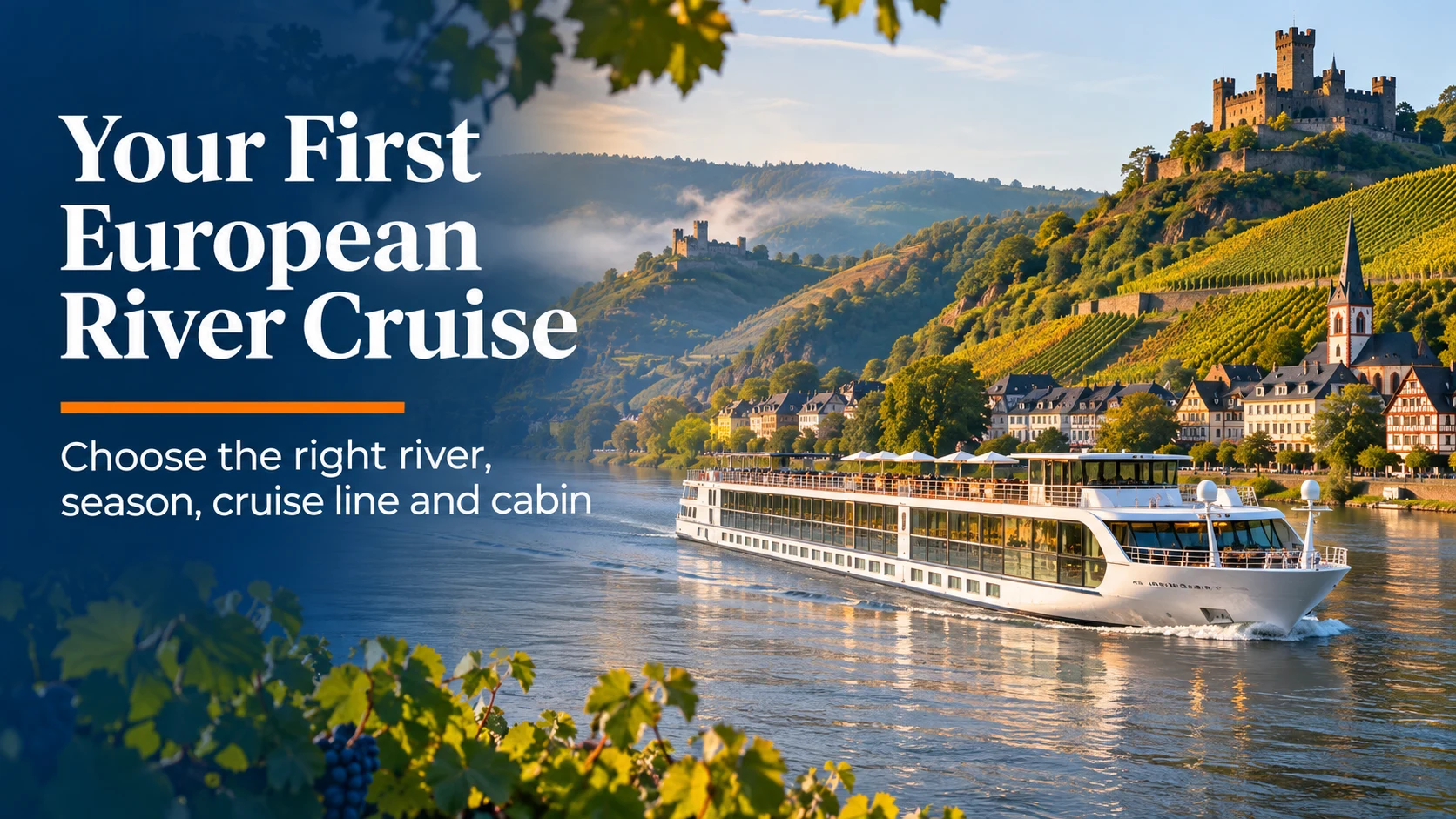
A European river cruise can make exploring several destinations feel remarkably simple.
You unpack once, travel between cities while you sleep or dine, and often dock close to the historic areas you came to experience.
That simplicity, however, can conceal some important differences.
A Rhine itinerary filled with castles, vineyards and medieval towns does not feel the same as a Danube journey connecting major European capitals. A cruise through Portugal’s Douro Valley moves at a different rhythm from one along France’s Seine. Cruise lines also vary in their dining, excursions, cabin designs, activity levels and included amenities.
The right river cruise is not simply the itinerary with the most recognizable cities or the promotion with the largest advertised discount. It is the sailing that matches your interests, mobility, preferred pace, budget and expectations.
This guide will help first-time river cruisers understand how the experience works, compare Europe’s principal rivers and avoid choosing a cruise that looks appealing online but does not fit the way they actually want to travel.
If you are still deciding between river cruising and other vacation styles, begin by exploring the broader cruise-planning options available through Travel With McNellis.
What Is a European River Cruise Really Like?
A European river cruise combines elements of a cruise, an escorted tour and an independent city vacation.
The ship provides your accommodations, meals, transportation between destinations and much of the daily organization. Guided excursions introduce you to the cities, villages, historic sites and landscapes along the route. Depending on the itinerary and cruise line, you may also have free time to visit cafés, markets, museums or shops independently.
The experience is generally more destination-focused than a large ocean cruise. River ships do not need enormous theatres, water parks or several decks of entertainment because the surrounding destination is the central attraction.
A typical day may include:
Breakfast onboard
A morning walking tour or cultural excursion
Free time in town
Lunch onboard or ashore
An afternoon activity, scenic sailing or second excursion
A port talk explaining the following day
Dinner onboard
Light entertainment, local performers or quiet conversation in the lounge
Schedules vary considerably. Some cruises offer a relaxed morning followed by scenic sailing, while others include consecutive days of walking tours and full-day exploration. “River cruise” does not automatically mean “slow vacation.”
That distinction matters when comparing itineraries. Travelers should look beyond the number of nights and examine what happens on each individual day.
How Is a River Cruise Different From an Ocean Cruise?
The most obvious difference is the size of the ship, but the more important difference is how the vacation unfolds.
Ocean ships may spend entire days at sea and provide extensive onboard dining, entertainment and recreation. River ships usually travel close to land, make frequent stops and devote more of the schedule to the destinations. Full days with no port or planned sightseeing are less common on European river itineraries.
River Cruises Usually Carry Fewer Guests
European river ships are restricted by the dimensions of the rivers, locks and bridges they navigate. They are therefore much smaller than modern ocean ships.
A smaller vessel can create a quieter and more personal atmosphere, but it a
lso means fewer onboard facilities. Travelers should not expect a large theatre, casino, extensive shopping area or dozens of restaurants.
There may be one principal dining room, a lounge, an outdoor deck, a fitness area and perhaps a small specialty dining venue. The exact facilities depend on the ship.
The Destination Receives More Attention
On an ocean cruise, the ship itself can be one of the main reasons to travel. On a river cruise, the ship is primarily a comfortable way to move through the destination.
This can be ideal for travelers who care more about historic districts, architecture, food, wine, local culture and guided sightseeing than large-scale onboard entertainment.
More Excursions May Be Included
Many river-cruise fares include at least one guided excursion in most ports, although inclusions differ by cruise line and itinerary. Some companies offer several choices based on interests or activity levels, while others include a standard city tour and charge separately for certain optional experiences.
AmaWaterways, for example, currently describes guided excursions, onboard dining, Wi-Fi and selected beverages among its standard inclusions, with multiple excursion styles available on many European itineraries. Those inclusions must still be confirmed for the specific sailing being considered.
Travelers interested in a more active approach can also review Avalon Waterways’ Active & Discovery river-cruise experiences, which may include alternatives to a conventional walking tour.
The Social Atmosphere Is Different
Because there are fewer passengers and most guests follow a shared sightseeing schedule, travelers often encounter the same people throughout the cruise.
This can make conversation and meeting other passengers easier. It also means the experience may feel less anonymous than a large ocean cruise.
Travelers who prefer numerous dining venues, late-night entertainment and the ability to disappear into a crowd may enjoy an ocean cruise more. Those who appreciate a smaller environment and a shared interest in the destination may find river cruising especially appealing.
Who Is a European River Cruise Best For?
A river cruise can be an excellent choice for travelers who want to see several places without repeatedly changing hotels, packing and unpacking, or arranging transportation between cities.
It may be particularly suitable for:
Couples interested in culture, history, food or wine
First-time visitors who want an organized introduction to Europe
Travelers who enjoy guided sightseeing but still want some independent time
Friends or relatives who want to travel together without planning every detail themselves
Solo travelers who prefer a structured and social environment
Ocean cruisers looking for a more destination-intensive experience
Travelers who value convenience over extensive onboard entertainment
River cruising can also work well for a multigenerational vacation, but the ship, itinerary and activity level require careful review. Families considering that option should also read How to Plan a Multigenerational Family Vacation.
Who May Not Enjoy a River Cruise?
River cruising is not the right fit for everyone.
Travelers may prefer another vacation style if they want:
Large production shows and extensive nightlife
Numerous restaurants, pools and recreational facilities
Several unscheduled days with no sightseeing
A vacation centred primarily on beaches
Complete independence from group schedules
Extensive programs for young children or teenagers
A resort-like ship that serves as the primary destination
River cruising may also present challenges for travelers with limited mobility. Historic European streets can include cobblestones, hills, uneven surfaces and stairs. Ships may dock beside one another, requiring passengers to walk through or across another vessel to reach shore. Water conditions or port congestion can also change the docking location.
An elevator onboard does not necessarily reach every deck, and an accessible cabin does not guarantee that every excursion or docking point will be accessible.
Travelers with mobility concerns should review the entire journey—not only the cabin. That includes airports, transfers, gangways, docking arrangements, excursion vehicles, walking distances, hotels and any pre- or post-cruise extension.
River Cruising Is Organized, but It Is Not Passive
The words “relaxed” and “effortless” appear frequently in river-cruise marketing. They can accurately describe the convenience of unpacking once and letting the ship handle transportation, but they should not be confused with doing very little.
Many European itineraries involve:
Morning departures
Guided walking tours
Cobblestone streets
Historic buildings without elevators
Consecutive sightseeing days
Changes in temperature and weather
Optional afternoon or evening activities
Travelers do not have to join every excursion. Skipping an included tour, returning to the ship early or exploring independently may create a more enjoyable pace.
The goal is not to complete every available activity. It is to choose the experiences that make the journey meaningful without returning home exhausted.
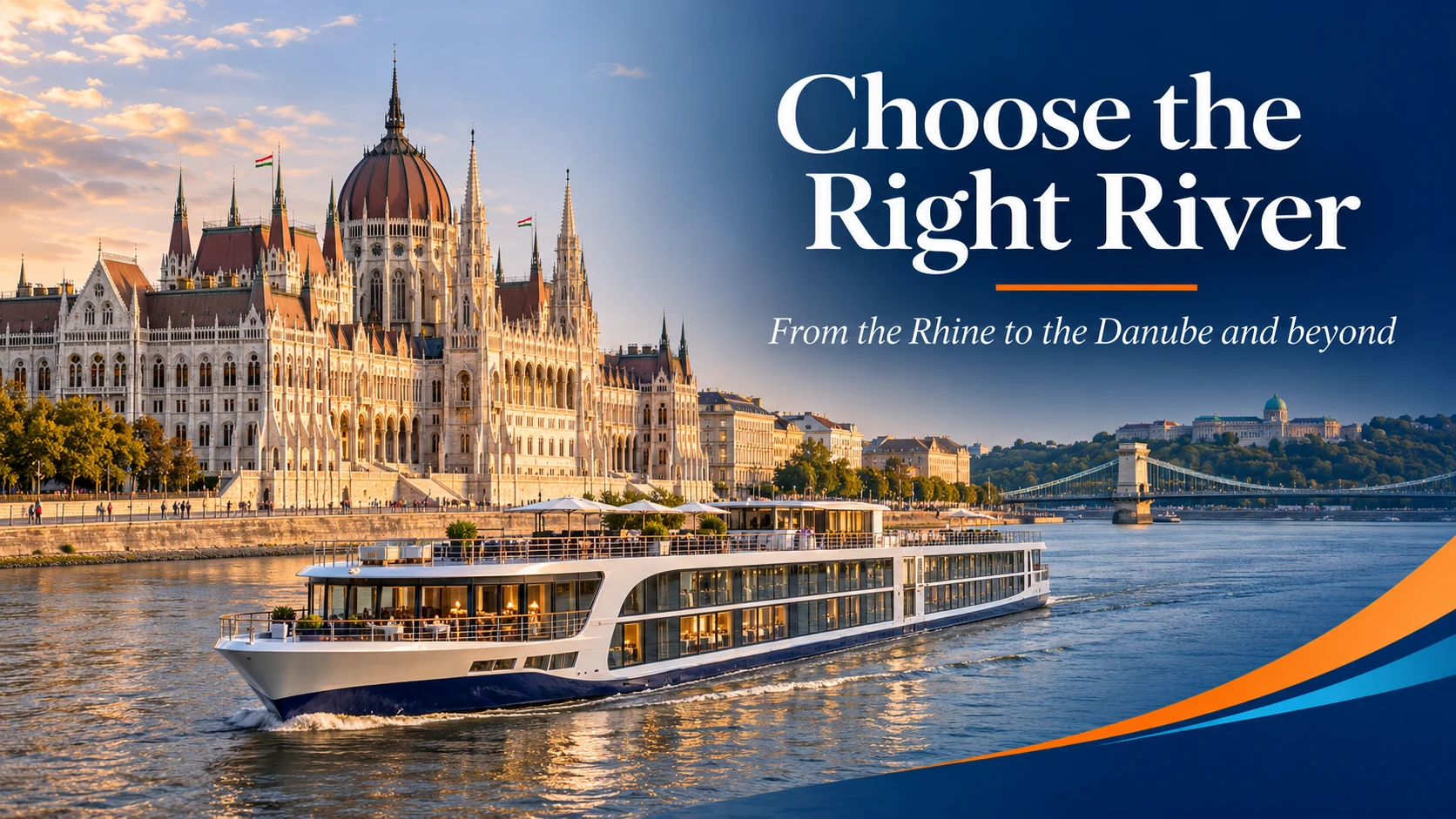
Start With the River, Not the Cruise-Line Logo
First-time river cruisers often begin by comparing cruise lines. That is important, but the river and itinerary should usually come first.
The route determines:
Which countries and cities you visit
The landscapes you see from the ship
The history and culture emphasized during the journey
How much time is spent sailing
The typical length and intensity of excursions
The most suitable travel seasons
The available pre- and post-cruise extensions
Once you identify the region that best matches your interests, you can compare the cruise lines, ships, cabin categories and departure dates operating there.
The Rhine: Castles, Vineyards and a Classic First River Cruise
The Rhine is one of the most approachable choices for a first European river cruise.
Many popular itineraries travel between Amsterdam and Basel, sometimes including destinations in the Netherlands, Germany, France and Switzerland. Exact ports vary, but the route may feature historic cities, riverside villages, vineyard landscapes and the castle-lined Rhine Gorge.
The Rhine may be a strong fit for travelers interested in:
Medieval towns and castles
German and Alsatian culture
Wine regions
Scenic sailing
A combination of major cities and smaller communities
Pre- or post-cruise time in Amsterdam or Switzerland
A Rhine cruise can provide a broad introduction to river cruising because it combines recognizable cities with scenery that can be enjoyed directly from the ship.
However, travelers should not assume every Rhine itinerary is identical. One sailing may emphasize the Netherlands and Germany, while another incorporates the Moselle, extends into France or combines multiple rivers. Compare the actual port sequence, excursion schedule and time available in each destination.
The Danube: European Capitals, Imperial History and Cultural Variety
The Danube passes through or borders more countries than any other European river, but most first-time itineraries concentrate on a specific section rather than covering its entire length.
Popular Upper Danube cruises frequently connect destinations such as Budapest, Bratislava, Vienna, Austria’s Wachau Valley, Linz and Passau. Longer journeys may continue through Germany or travel farther east toward Croatia, Serbia, Bulgaria and Romania.
The Danube may be a strong choice for travelers interested in:
Budapest and Vienna
Imperial history
Classical music and grand architecture
Central European food and wine
Abbeys, castles and historic town centres
Visiting several countries during one journey
The Upper Danube usually provides a more city-focused experience than travelers may expect from the phrase “river cruise.” Budapest and Vienna can involve full sightseeing days, while smaller communities and scenic sections provide contrast.
Lower Danube itineraries can offer a different experience, with more attention to the Balkans, regional history and destinations that many North American travelers have not previously visited.
Do not choose a cruise simply because the itinerary says “Danube.” Determine which portion of the river it covers and what kind of experience that section provides.
The First Important Decision
Before comparing prices, promotions or cabin upgrades, answer one question:
What do you most want to experience when you step off the ship?
If the answer is castles, vineyards and storybook towns, the Rhine may lead the shortlist.
If it is major European capitals, music, architecture and imperial history, the Danube may be the stronger starting point.
That decision provides a much better foundation than selecting a cruise because its advertisement promises a free upgrade or a temporary discount. A promotion can improve the value of the right cruise. It cannot transform the wrong itinerary into the right vacation.
The Douro: Portugal’s Vineyards, Villages and Dramatic Scenery
The Douro offers a more concentrated regional experience than itineraries that cross several countries.
Most Douro cruises begin and end in Porto, following the river east through northern Portugal’s terraced wine country. Some itineraries approach the Spanish border and include an overland excursion into Spain, but the heart of the journey remains the Douro Valley.
The Douro may be a strong fit for travelers interested in:
Portuguese food, wine and culture
Terraced vineyard landscapes
Smaller communities and rural scenery
A journey focused on one country
Time in Porto before or after the cruise
A generally slower rhythm than a capital-intensive Danube itinerary
The scenery is one of the Douro’s principal attractions. Hillsides rise sharply from the river, with vineyards, estates and villages spread across the valley.
Travelers should understand that the landscape can also influence the excursions.
Visiting a winery, historic estate or hilltop community may involve slopes, steps and uneven surfaces. Someone who can comfortably move around the ship may still find certain shore activities demanding.
A Douro cruise can be especially appealing to travelers who have already visited Europe’s major capitals and want a more regional experience. It can also work for a first visit to Portugal when combined with additional time in Porto or Lisbon.
It is not necessarily the best option for someone hoping to visit several countries or check numerous famous European cities off a list.
The Seine: Paris, Normandy and French History
Seine itineraries commonly begin and end in Paris, then travel through Normandy toward the English Channel.
Depending on the itinerary, travelers may visit communities associated with artists such as Claude Monet, medieval towns, historic abbeys and locations connected to the Second World War. Some sailings include excursions to Normandy’s D-Day sites, although the exact locations and time available vary.
The Seine may suit travelers interested in:
Paris before or after the cruise
French art and architecture
Normandy’s towns and countryside
Second World War history
Gardens and historic estates
A culturally focused itinerary within one country
This route can be emotionally significant for travelers visiting Normandy’s military sites.
It is important to compare the actual excursion details rather than assuming every sailing includes the same beaches, cemeteries or museums.
The distance between the river and certain Normandy sites may require substantial time by motorcoach. A day advertised around the D-Day landings may therefore feel more like a full escorted excursion than a casual port visit.
Travelers should also examine how much time the itinerary genuinely provides in Paris.
The city may serve primarily as the embarkation and disembarkation point. Anyone hoping to explore its museums, neighbourhoods and landmarks should consider adding several hotel nights rather than expecting the cruise schedule to provide a complete Paris vacation.
The Rhône and Saône: Provence, Burgundy, Food and Wine
River cruises in southern France frequently combine the Rhône and Saône, connecting cities and regions associated with Provence, Burgundy and the country’s culinary traditions.
Potential destinations vary but may include Lyon, Avignon, Arles, Viviers and communities surrounded by vineyards or agricultural landscapes.
The Rhône and Saône may be especially attractive to travelers interested in:
French cuisine
Rhône and Burgundy wine regions
Roman history
Provence
Art and architecture
Markets and regional food
Combining Paris or the French Riviera with a river cruise
These itineraries often balance historic cities with smaller communities. Lyon can appeal to food-focused travelers, while Avignon and Arles provide access to architecture, art and layers of Roman and medieval history.
Summer can bring strong sun and heat, particularly in southern France. Travelers who expect extensive walking may prefer spring or fall conditions, while those who enjoy warm evenings, outdoor dining and a livelier summer atmosphere may accept the higher temperatures.
The best choice depends on priorities rather than a universally superior season.
The Moselle: Smaller Towns, Vineyards and a Quieter Alternative
The Moselle flows through parts of France, Luxembourg and Germany before joining the Rhine at Koblenz.
It is often incorporated into a Rhine itinerary rather than sold as an entirely separate journey. The river is associated with vineyard-covered slopes, wine-producing communities, castles and smaller historic towns.
The Moselle may appeal to travelers who want:
Wine-focused experiences
Intimate towns rather than major capitals
Scenic sailing
A quieter alternative to the best-known Rhine routes
An itinerary combining the Rhine and another river
Travelers attracted to the Rhine but concerned that the most familiar route may feel too conventional should compare Rhine-and-Moselle combinations. The additional river can change the balance of the journey by introducing smaller communities and more time in wine country.
The tradeoff is that these itineraries may include fewer major cities. That can be a benefit or a disadvantage depending on what the traveler wants from a first European trip.
Dutch and Belgian Waterways: Tulips, Canals and Compact Historic Cities
Spring cruises through the Netherlands and Belgium are often marketed around tulip season, although the experience extends beyond flowers.
Potential stops may include Amsterdam, Rotterdam, Antwerp, Ghent, Bruges or smaller communities connected by rivers and canals. Exact routes differ by cruise line.
These cruises may appeal to travelers interested in:
Spring gardens and floral displays
Dutch and Belgian art
Canal cities
Historic architecture
Local food, beer and chocolate
Shorter travel distances between destinations
Beginning or ending in Amsterdam
Tulip-focused departures require realistic expectations. Blooming periods are influenced by seasonal weather, and no cruise line can control the precise timing or condition of every garden.
Travelers should select the itinerary because the wider region interests them, not because they expect every field to reach peak colour during one particular week.
Spring weather can also be changeable. Rain, wind and cool temperatures are possible, so waterproof outerwear and layers can be as important as a camera.
Christmas Market River Cruises
Christmas market cruises transform familiar Rhine, Main and Danube routes into seasonal journeys.
They commonly operate during portions of November and December, visiting cities and towns decorated for Advent. Depending on the route and date, travelers may find market stalls selling ornaments, crafts, regional food, sweets and hot drinks.
These sailings may be a good fit for travelers who enjoy:
Holiday traditions and decorations
Seasonal food and local crafts
Cooler-weather travel
A festive atmosphere
Christmas shopping
Shorter daylight hours balanced by illuminated evenings
Christmas market cruises require more careful date checking than the name suggests.
Markets do not all open and close on the same day. Some may not yet be operating on an early departure, while others may close before a late-December sailing reaches them.
Operating dates can change annually and should be verified for the specific year and itinerary.
Travelers must also prepare for winter conditions. Temperatures can be cold, daylight is limited and rain or snow may affect walking conditions. The tradeoff is an atmosphere that cannot be recreated during the summer season.
Current river-cruise programs include festive sailings on the Rhine, Danube, Douro and other European waterways, but the exact markets visited depend on the sailing rather than the marketing category alone.
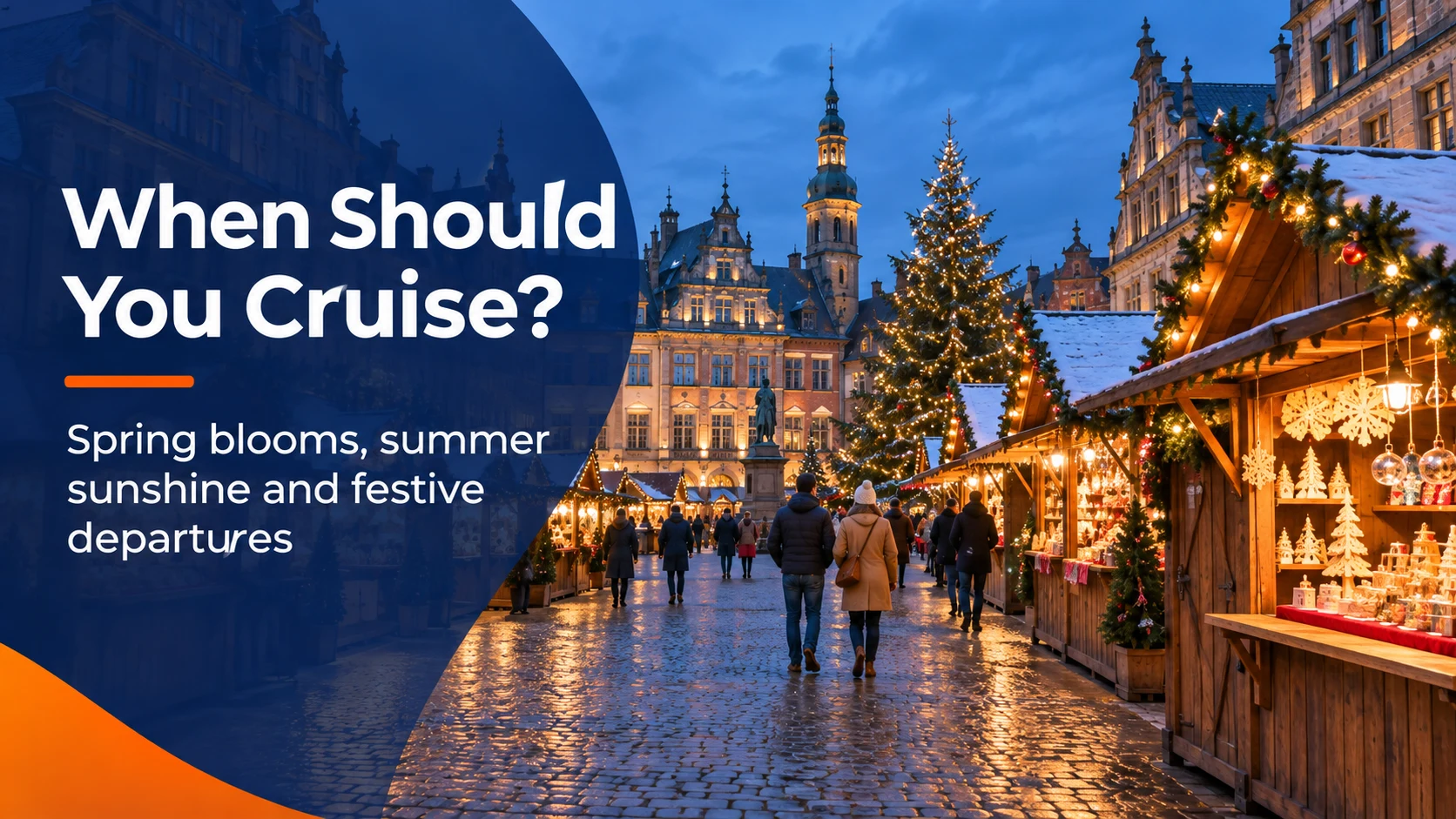
When Is the Best Time for a European River Cruise?
There is no single best month for every river or traveler.
Europe’s main river-cruise season generally stretches from spring into late fall, followed by selected Christmas market departures. Availability varies by river and cruise line.
The better question is: Which season best supports the experience you want?
Spring: Flowers, Cooler Weather and Changing Conditions
Spring can be an appealing time for the Netherlands and Belgium, gardens, fresh landscapes and sightseeing in milder temperatures.
Potential advantages include:
Spring flowers
Cooler walking conditions
Fewer peak-summer crowds in some destinations
Green landscapes
Seasonal itineraries not available throughout the year
Potential disadvantages include:
Rain and wind
Cooler mornings and evenings
Unpredictable blooming periods
High or changing water conditions in some years
Popular tulip departures selling early
Spring is not automatically a quiet or inexpensive season. Special-interest departures tied to tulip displays or holidays may be in high demand.
Summer: Long Days and a Lively Atmosphere
Summer offers long daylight hours, warm weather and active public spaces. Outdoor cafés, festivals and evening strolls can add energy to the experience.
Potential advantages include:
Longer daylight hours
Warm-weather activities
Lively cities and waterfronts
More time for outdoor sightseeing
Convenient timing for families and educators
Potential disadvantages include:
Heat
Larger crowds
Higher demand for flights and hotels
More intense walking conditions
Low-water concerns on certain rivers during some years
The possibility of low or high water should be understood without being exaggerated. River conditions vary by location, time and year. A particular month is not guaranteed to produce either ideal or problematic levels.
When navigation is affected, cruise lines may adjust docking points, modify excursions, use motorcoaches or, in some circumstances, transfer passengers between ships. The response depends on the river, vessel, itinerary and conditions at the time.
Fall: Comfortable Sightseeing and Harvest Atmosphere
Fall can offer cooler temperatures, vineyard scenery and a strong culinary atmosphere, particularly on wine-oriented routes.
Potential advantages include:
More comfortable walking weather
Harvest-season experiences in some regions
Changing foliage
Fewer school-holiday travelers
Appealing conditions for food and wine itineraries
Potential disadvantages include:
Shortening daylight
Cooler or wetter weather later in the season
Continued demand for popular departures
No guarantee of peak fall colour
Regional events affecting hotel availability
Travelers should not assume that fall means empty destinations or dramatically reduced prices. September and early October can remain highly desirable travel periods.
Winter: Festive, Atmospheric and Weather Dependent
Winter river cruises are primarily associated with Christmas markets and holiday traditions.
Potential advantages include:
Seasonal decorations
Regional Christmas markets
Holiday food and crafts
A distinctly different atmosphere from summer
The possibility of pairing the cruise with a European city stay
Potential disadvantages include:
Cold weather
Short daylight hours
Potentially slippery walking surfaces
Holiday closures
Variable market operating dates
Flight disruption risks during winter travel
A winter river cruise works best for someone who actively wants a seasonal experience—not simply a lower-priced version of a summer itinerary.
Do Not Choose the Month Before Choosing the River
A traveler may begin by saying, “We want to go in September,” but that is only one part of the decision.
September on the Douro may offer a different experience from September on the Seine.
A late-November Rhine sailing may revolve around Christmas markets, while a French itinerary on similar dates may have a different seasonal emphasis.
Before selecting the departure date, compare:
The river and region
Expected temperatures
Typical daylight
Seasonal activities
Local holidays
Pre- and post-cruise plans
Walking conditions
Flight availability
Hotel demand
The experiences included on that specific departure
Travelers planning well ahead can use the 2027 vacation planning calendar to understand when limited river-cruise cabins, seasonal departures and airfare should enter the planning process.
A Practical River Shortlist
For a first European river cruise:
Choose the Rhine for castles, vineyards, medieval communities and a classic introduction.
Choose the Upper Danube for major capitals, imperial history, music and cultural variety.
Choose the Douro for Portugal, wine-country scenery and a more regionally focused journey.
Choose the Seine for Paris, Normandy, art and wartime history.
Choose the Rhône and Saône for French cuisine, wine, Provence and Roman heritage.
Choose the Moselle for vineyards, smaller towns and a quieter atmosphere.
Choose the Dutch and Belgian waterways for spring gardens, canals and compact historic cities.
Choose a Christmas market itinerary for seasonal traditions rather than warm weather or long sightseeing days.
The river establishes the character of the vacation. The cruise line then determines how that journey is delivered.
How to Compare European River Cruise Lines
Once you have chosen the river and approximate travel season, the cruise-line comparison becomes much more useful.
Several companies may operate similar routes, but they do not necessarily deliver the same experience. Differences in excursions, dining, cabin design, passenger mix, activity level and included amenities can substantially affect both the atmosphere and the final price.
No river cruise line is the best choice for every traveler.
The right question is:
Which company delivers this itinerary in the way I want to experience it?
Begin With the Actual Itinerary
Two cruises may both advertise seven nights on the Rhine while providing noticeably different vacations.
Before comparing ships, examine:
The embarkation and disembarkation cities
Every scheduled port
Arrival and departure times
Scenic cruising periods
Overnight stays
Included excursions
Optional excursions
Motorcoach travel
Free time
Pre- and post-cruise extensions
Whether the cruise travels in one direction or returns to its starting point
A longer list of destinations does not automatically make an itinerary better.
One cruise may stop briefly in numerous places, while another provides enough time to enjoy fewer destinations more deeply. A late arrival or early departure can also change the value of a port that appears impressive on the itinerary map.
The cruise line matters, but the daily schedule determines how much of the destination you will actually experience.
AmaWaterways: Excursion Choice and an Active Option
AmaWaterways may appeal to travelers who want several ways to experience a destination rather than joining the same standard tour each day.
Depending on the sailing, excursion choices may include different walking speeds, cycling, hiking, food or wine experiences and conventional cultural tours. Its European program also emphasizes regionally influenced dining, onboard wellness and a selection of included beverages.
Current published inclusions generally identify onboard meals, guided excursions, Wi-Fi, a cruise manager and wine and beer with lunch and dinner, although some activities or excursions may cost extra on selected sailings. Every traveler should confirm the written inclusions attached to the exact itinerary and fare being considered.
AmaWaterways may be a strong fit for:
Couples with different preferred activity levels
Travelers interested in cycling or hiking
Food- and wine-focused travelers
Guests who want a selection of included excursions
Multigenerational adults who do not all want to follow the same tour
Travelers who appreciate an active but comfortable environment
Its “twin balcony” design on many European ships combines a French balcony with a separate outside balcony. However, that feature is not found in every room on every vessel. The ship and cabin description must be checked individually.
Readers can learn more about the general style through AmaWaterways’ European river-cruise experience.
Avalon Waterways: Flexible Excursions and View-Focused Cabins
Avalon Waterways places considerable emphasis on flexibility.
Its excursion program commonly divides activities into Classic, Discovery and Active options. Depending on the itinerary, travelers may choose a traditional guided tour, a hands-on cultural experience or something more physically demanding.
Avalon’s Panorama Suites are known for wall-to-wall windows that open to create an indoor open-air viewing space. The beds face the windows, which can be appealing to travelers who want to enjoy the scenery without occupying a separate exterior balcony.
Current published inclusions for European sailings identify onboard dining, selected beverages, Wi-Fi, excursions and wellness activities, but exact offerings depend on the itinerary and ship.
Avalon may be a strong fit for:
Travelers who dislike rigid excursion schedules
Guests who want active and cultural choices
Travelers who value cabin views
Couples who want flexible dining
Independent-minded travelers who still appreciate an organized framework
Guests who want a contemporary rather than highly formal atmosphere
The existing guide to Avalon Active & Discovery river cruises provides a closer look at this approach.
Viking: Destination-Focused and Consistent
Viking is one of the most familiar names in North American river cruising. Its European river program tends to emphasize culture, history and destination-focused travel.
A complimentary shore excursion is generally offered in each port, with additional optional experiences available for purchase on many itineraries. Published inclusions commonly identify onboard meals, Wi-Fi and beer, wine and soft drinks with lunch and dinner.
Viking’s river cruises are designed for adults, and the company does not accept passengers younger than 18 on these sailings. That policy can create a quieter adult atmosphere, but it also makes the line unsuitable for families traveling with children or younger teenagers.
Viking may appeal to:
Adults seeking a destination-centred experience
Travelers who value a recognizable and consistent product
Guests interested in history, culture and guided sightseeing
Travelers who prefer an adult-only environment
First-time river cruisers who want a clearly structured program
Do not assume familiarity with the brand means every itinerary or cabin category is interchangeable. Compare the specific ship, route, excursion schedule and room location.
Uniworld: More Inclusive Luxury and Distinctive Design
Uniworld positions itself toward the luxury end of the river-cruise market.
Its ships are individually designed, often with elaborate interiors that feel more like boutique hotels than standardized vessels. Published inclusions may incorporate premium beverages, onboard gratuities, Wi-Fi, fitness activities and excursions.
The higher starting fare should therefore be compared against what another line would cost after adding beverages, gratuities, optional activities or other expenses.
Uniworld may be a strong fit for:
Luxury travelers
Guests who appreciate highly styled interiors
Travelers who want a more inclusive fare
Food- and wine-focused travelers
Couples celebrating a milestone
Travelers who value personalized service over the lowest initial price
The decorative style is part of the experience. Someone who loves distinctive, richly designed hotels may find it appealing. Someone who prefers minimalist or understated surroundings may be happier with another company.
Uniworld’s current published all-inclusive offering identifies premium beverages, onboard gratuities, Wi-Fi, fitness options and shore excursions among its inclusions. The exact package must still be verified for the selected sailing.
Other River Cruise Lines Deserve Consideration
AmaWaterways, Avalon, Viking and Uniworld are not the only choices.
Depending on the river, departure date and traveler, appropriate options may also include Tauck, Scenic, Emerald Cruises, Riverside Luxury Cruises, CroisiEurope and other regional or specialist operators.
A lesser-known line should not be dismissed simply because its advertising is less visible. It may provide the right route, ship size, cabin, language environment or price structure.
At the same time, travelers should not book an unfamiliar operator based solely on a low fare. Review its:
Financial and operational reputation
Passenger terms
Language used onboard
Excursion structure
Dining arrangements
Cancellation conditions
Accessibility policies
North American customer support
Air and transfer options
Inclusions and mandatory charges
The best shortlist may contain only two or three cruise lines after the itinerary, travel date and cabin requirements are considered.
Compare What Is Included—not Just the Cruise Fare
River cruises can appear more expensive than ocean cruises because more elements may be incorporated into the advertised fare.
That does not mean every river cruise is all-inclusive.
Depending on the company and fare, the price may or may not include:
Guided shore excursions
Optional excursions
Wine or beer with meals
Beverages outside mealtimes
Premium spirits
Wi-Fi
Gratuities
Port charges
Airport transfers
Pre-cruise hotels
Post-cruise hotels
Laundry
Specialty dining
Bicycles
Wellness activities
Flights
Travel insurance
Two cruises with a substantial difference in advertised price may become much closer after the full trip cost is calculated.
Before booking, request a written comparison showing:
The cruise fare
Taxes and port charges
Included excursions
Likely optional excursions
Beverage inclusions
Gratuities
Flights
Transfers
Hotels
Travel protection
Expected personal spending
A complimentary beverage package has little value to a traveler who rarely drinks. An included active-excursion program may be valuable to one couple and irrelevant to another.
Value should be measured according to what you will actually use.
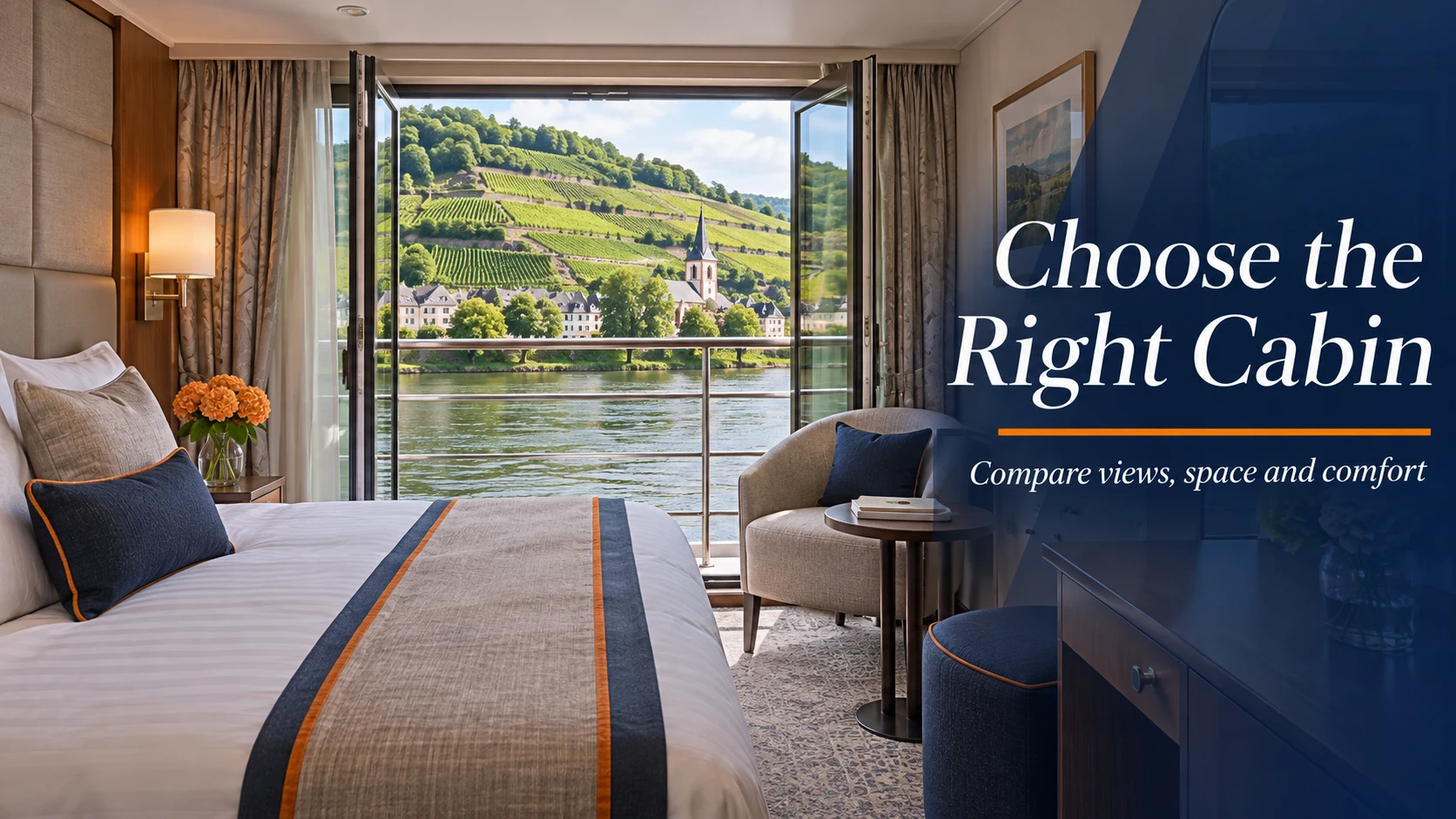
Understanding River Cruise Cabin Types
River cruise cabin names can be confusing because familiar terms do not always mean the same thing they do on an ocean ship.
The principal categories usually include:
Lower-deck cabins with fixed windows
French balcony cabins
Cabins with open-air window systems
Cabins with step-out balconies
Suites
Specialty or larger suites
Before selecting one, look at the floor plan, square footage, window design, deck location and position on the ship.
The article explaining interior, oceanview, balcony and suite cruise cabins provides useful general cabin principles, but river ships require several additional considerations.
Lower-Deck Cabins With Fixed Windows
Lower-deck river cabins are usually the most economical.
Because part of the room sits near or below the waterline, the window may be positioned high on the wall and may not open. It provides natural light and a partial view rather than a full panoramic outlook.
These cabins may suit:
Travelers prioritizing price
Guests who expect to spend little time in the room
Travelers who want to direct more of the budget toward flights or extensions
Light sleepers who prefer a lower deck, subject to the specific ship layout
Possible disadvantages include:
Limited view
Less natural light
No opening window
Potential proximity to mechanical or crew areas
Stairs or additional distance from the main lounge and dining room
Do not assume a lower cabin is uncomfortable. It may contain the same bed, bathroom and essential amenities as a higher category. The principal difference may be the window and location.
What Is a French Balcony?
A French balcony is generally a floor-to-ceiling glass door or window that opens, with a railing positioned directly outside.
You can stand at the opening and enjoy fresh air, but there is no exterior platform large enough for chairs.
This design provides:
A larger view
Fresh air
More natural light
No loss of interior space to an outside balcony
Travelers should not book one expecting a traditional balcony where they can sit outdoors.
The term “French balcony” is used somewhat differently across companies, so photographs and floor plans are more reliable than the category name alone.
Open-Air Balcony Designs
Some river ships use a wall-to-wall window system that opens partway, turning a portion of the room into an open-air viewing area.
This design keeps the viewing space inside the cabin rather than allocating square footage to a separate exterior platform.
It can work well for travelers who want:
An expansive view
Fresh air
More usable interior space
Protection from wind or rain when the window is closed
The disadvantage is that opening the window may affect the room’s climate control. It is also not the same experience as stepping onto a separate outdoor balcony.
Step-Out Balconies
A step-out balcony has a small exterior platform with room to stand or sit.
It can be appealing during scenic sailing, but river cruise balconies are generally compact. The ship’s width is restricted, so exterior balcony space must come from somewhere within the cabin’s overall footprint.
A room with a balcony is not automatically larger than one without it.
Travelers should compare:
Total cabin square footage
Interior square footage
Balcony depth
Furniture
Door placement
Storage
Walking space around the bed
A beautifully photographed balcony can be less valuable than a better-designed interior room if it reduces the usable cabin space.
Suites
Suites may provide additional room, larger bathrooms, enhanced furnishings, separated sitting areas or extra benefits.
They can be valuable for:
Longer cruises
Travelers who spend more time in their room
Guests who need additional space
Special occasions
Travelers combining the cruise with a luxury vacation
Anyone who values privacy and comfort over spending elsewhere
However, the word “suite” does not guarantee a separate bedroom. On some ships, it describes a larger open room. Always review the floor plan rather than relying on the category name.
Cabin Location Matters
The deck is only one part of the cabin decision.
Also consider whether the room is:
Near an elevator or staircase
Beneath the lounge
Beneath the sun deck
Close to the engines
Near crew or service areas
Beside an ice machine or supply closet
Toward the bow, middle or stern
Near a door passengers use when going ashore
River ships sometimes sail early, pass through locks at night or begin docking procedures in the morning. Operational sounds are part of river travel.
Cabins beneath frequently moved deck furniture or near mechanical areas may experience more noise. Exact conditions differ by vessel and itinerary, so the deck plan should be studied before choosing a room.
The View May Not Always Be Open
River ships frequently dock directly beside a quay, but they may also tie up alongside another river ship.
This practice is sometimes called rafting or double docking. When it occurs, another vessel may temporarily block the view from your window or balcony. Passengers may also need to walk through the neighbouring ship to reach shore.
The cruise line cannot always guarantee which side of the ship will face the river or whether another vessel will be beside it.
For that reason, paying more for a balcony should be based on the overall value of natural light, fresh air and scenic sailing—not an expectation of uninterrupted privacy in every port.
Choose the Cabin After Choosing the Itinerary
The most expensive room on the wrong itinerary is still the wrong vacation.
Establish the river, route, season and cruise line first. Then decide how much value the cabin adds.
A lower-category room may be perfectly sensible on an excursion-intensive itinerary where little time is spent onboard. A French balcony or suite may be more valuable during a longer journey with substantial scenic sailing.
The right cabin is not automatically the largest one you can afford. It is the category that supports the way you expect to use the ship while leaving enough budget for the rest of the journey.
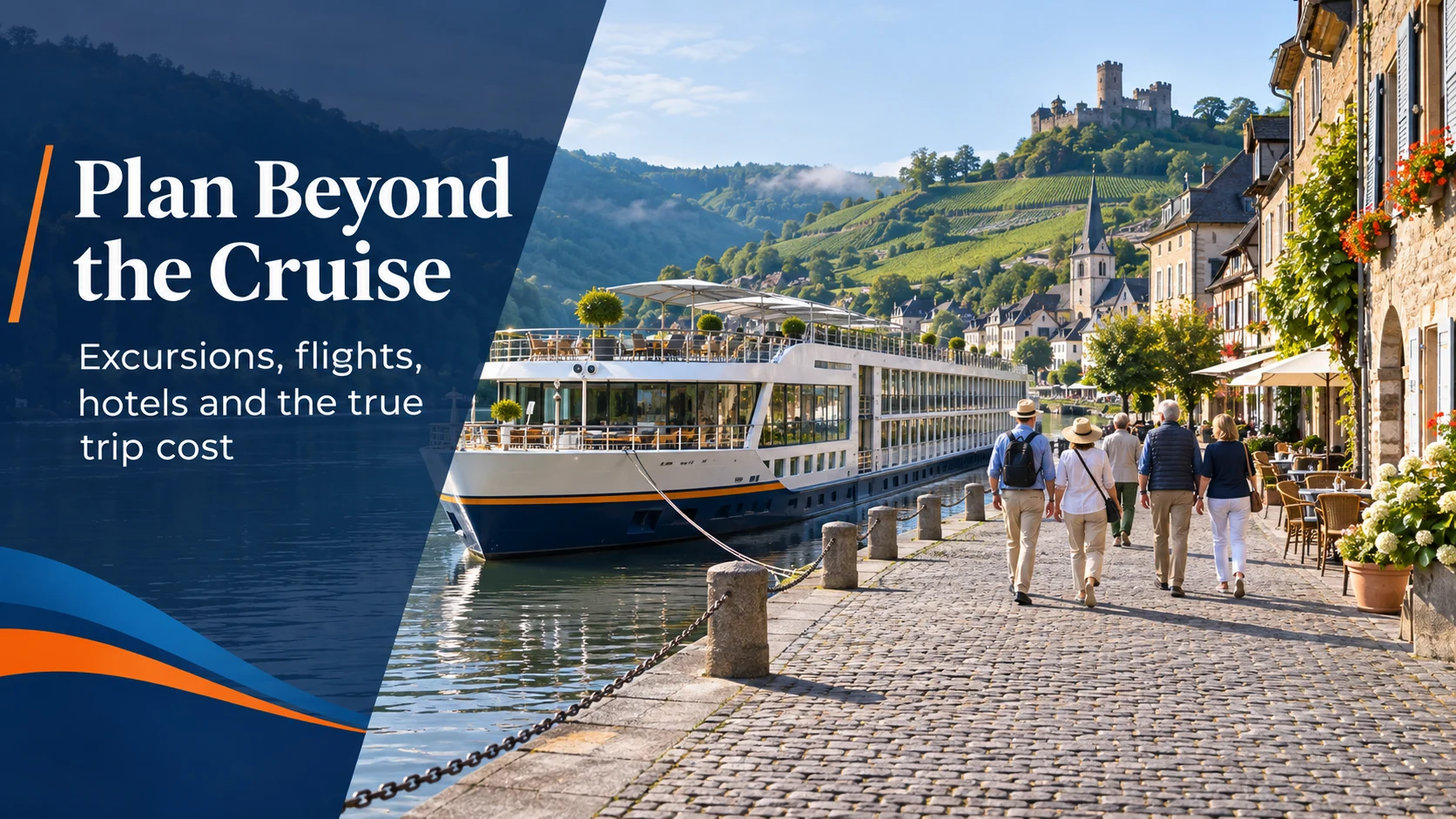
What Daily Life Is Like on a European River Cruise
Daily schedules vary, but most European river cruises combine organized sightseeing, scenic sailing, meals onboard and some independent time.
The evening before arriving in a destination, the cruise director will usually explain the following day’s schedule. This may include docking information, excursion departure times, expected walking conditions, weather considerations and suggestions for independent exploration.
A day might begin with breakfast followed by a morning walking tour. Guests may return for lunch, remain ashore independently or join an afternoon excursion. The ship may stay in port through the evening, depart during dinner or sail overnight toward the next destination.
The schedule can change because of:
River conditions
Lock traffic
Port congestion
Weather
Local events
Road closures
Excursion availability
Operational requirements
Travelers should approach the published itinerary as a carefully planned schedule rather than an absolute promise that every hour will unfold exactly as printed.
How Much Free Time Will You Have?
The amount of free time depends on the itinerary and the choices you make.
Some destinations may include a guided tour followed by several hours to explore independently. Other days may involve longer motorcoach excursions with limited unscheduled time.
Before booking, examine whether the cruise provides enough freedom for your interests.
If you want to visit a particular museum, restaurant or neighbourhood, determine:
How far it is from the docking location
Whether advance reservations are required
What time the ship departs
Whether the ship changes docking locations
How you will return to the vessel
Whether local transportation is practical
What will happen if the ship’s schedule changes
A river cruise can simplify European travel, but it does not guarantee unlimited time in every destination.
Travelers who want several uninterrupted days in Paris, Amsterdam, Vienna, Budapest or Porto should add a hotel stay before or after the cruise.
What Is the Food Like?
Dining is an important part of the river-cruise experience.
Most European river ships have one principal dining room, a lounge and one or more alternative dining spaces, depending on the vessel. Meals frequently include regional ingredients or dishes inspired by the destinations, alongside familiar options.
Breakfast may be buffet-style with prepared-to-order selections. Lunch can include a buffet, lighter dishes or a served menu. Dinner is generally a multi-course meal with table service.
The atmosphere is usually polished but not highly formal.
Travelers should check:
Whether seating is open or assigned
Whether dining times are fixed or flexible
How many restaurants are available
Which beverages are included
Whether specialty dining requires reservations
Whether room service is offered
How dietary requests are handled
Whether lunch is available when excursions return late
What happens if you choose to dine ashore
Cruise lines may be able to accommodate common dietary requirements when notified in advance, but capabilities differ by ship and destination. Travelers with serious allergies should discuss their needs before booking rather than waiting until embarkation.
Will You Eat Local Food?
A river cruise can introduce travelers to regional cuisine, but most meals are still served onboard to an international group.
The menu may feature local wines, cheeses, produce, desserts or regional dishes.
Excursions may also include markets, wineries, cooking demonstrations or tastings.
However, travelers who want a deeper culinary experience should leave room to eat ashore.
That might mean:
Having lunch in a family-run restaurant
Visiting a local food market
Booking a regional cooking class
Trying a bakery recommended by the cruise director
Sampling wine at an independent tasting room
Spending an additional night in the embarkation city
Included meals provide convenience and value, but eating every meal onboard can limit your connection to the local food culture.
How River Cruise Excursions Work
A guided excursion is often included in most ports, although the number and type of activities depend on the cruise line and fare.
Common options include:
Historic walking tours
Museum visits
Castle or palace tours
Winery visits
Food tastings
Cycling
Hiking
Canal cruises
Concerts
Full-day motorcoach trips
Visits to villages away from the river
Some cruise lines divide walking tours into gentle, regular and active groups. These descriptions are helpful, but they are not universal measurements.
A “gentle” tour may still involve cobblestones, steps or prolonged standing. An “active” excursion might involve a substantial hike or cycling route. Read the actual description and ask questions about distance, terrain, transportation and restroom access.
Should You Take the Included Tour or Explore Independently?
Included tours can provide valuable historical context and solve transportation problems. They are particularly useful when the principal attraction is far from the docking point or difficult to reach without a vehicle.
Independent exploration may be more satisfying when:
The ship docks in a walkable town
You have already visited the principal attractions
You prefer photography, shopping or cafés
You want a slower pace
You have researched a particular museum or neighbourhood
You feel comfortable navigating locally
Travelers do not have to make the same choice in every port.
You might join a guided tour in Vienna, explore a small Rhine town independently and book a specialized culinary experience elsewhere.
The guide to cruise-line excursions versus independent tours explains the broader advantages and risks of each approach.
Accessibility Requires Detailed Planning
River cruises can simplify transportation between destinations, but they are not automatically accessible vacations.
Potential challenges include:
Narrow or steep gangways
Ships docked alongside one another
Steps between vessels
Cobblestone streets
Historic buildings without elevators
Long walking tours
Motorcoaches that cannot accommodate every mobility device
Upper decks not served by the elevator
Changing docking locations
Limited cabin layouts
Uneven waterfront surfaces
Travelers should describe their actual abilities and equipment rather than asking only whether the cruise is “accessible.”
Important questions include:
Can the traveler walk up and down a gangway?
Can they board a motorcoach?
Can the mobility device be stored safely?
Does the elevator reach the cabin, restaurant and disembarkation level?
Is there a step into the bathroom?
Can the traveler manage several vessels rafted together?
Which excursions can accommodate the device?
Are accessible transfers available?
What assistance can the crew provide—and what assistance can they not provide?
A cruise line’s written accessibility policy should be reviewed before payment.
Requirements and capabilities vary by ship, itinerary and destination.
Plan the Flights and Hotels as Part of the Cruise
The vacation does not begin when you board the ship.
Flights, airport transfers and pre-cruise accommodations are essential parts of the plan.
Travelers arriving from North America should not schedule an international flight to land on the day the river cruise departs. A delay, missed connection or baggage problem could cause them to miss embarkation.
Arriving at least one day early creates a valuable buffer. Two or three nights may be better when the embarkation city is somewhere you genuinely want to explore.
The correct amount of time depends on:
Flight schedules
Number of connections
Embarkation time
Distance from the airport to the ship
Time-zone adjustment
Traveler mobility
Whether the cruise includes a hotel package
How much of the city you want to experience
The same care is required at the end of the cruise. Disembarkation time does not necessarily mean travelers can reach the airport immediately. Motorcoach schedules, luggage collection, traffic and airport check-in requirements must be considered.
Should You Book a Pre- or Post-Cruise Extension?
An extension can make a river cruise feel more complete.
It may provide time to:
Recover from the overnight flight
Explore the embarkation city
Visit destinations beyond the river
Slow the pace of the vacation
Add a major city such as Paris, Prague, Amsterdam or Lisbon
Create a more relaxed departure day
Cruise-line extensions provide coordinated hotels, transfers and touring. Independent extensions can offer greater control over the hotel, schedule and activities.
Compare the complete value rather than assuming one approach is less expensive.
A cruise-line package may include transfers, luggage handling, guided sightseeing and the services of a cruise manager. An independent hotel may cost less but require you to arrange every component yourself.
What Does a European River Cruise Really Cost?
The advertised cruise fare is only the beginning of the total vacation budget.
Depending on the company and package, travelers may also need to pay for:
International airfare
Seat selection
Checked baggage
Pre-cruise hotels
Post-cruise hotels
Airport transfers
Optional excursions
Gratuities
Premium beverages
Meals ashore
Travel insurance
Passport expenses
Ground transportation
Shopping
Laundry
Currency conversion or bank fees
The same itinerary can cost substantially more or less depending on the cabin, departure date, airfare and extensions.
Travelers should compare the complete expected cost—not a promotional “from” price.
A lower cruise fare may be a strong value if the traveler does not need a premium cabin or numerous extras. A higher fare may provide better overall value when it includes items the traveler would otherwise purchase separately.
How Far in Advance Should You Book?
River ships carry fewer passengers than large ocean ships, so the most desirable cabins and dates can become limited.
Earlier planning is especially helpful when you want:
A specific itinerary
A particular week
A suite or balcony category
Cabins near traveling companions
A solo cabin or reduced single supplement
A tulip-season departure
A Christmas market sailing
A themed cruise
A pre- or post-cruise extension
Convenient award flights
Business-class airfare
Flexible travelers may still find later opportunities, but waiting for a discount can mean accepting a less desirable cabin, flight or departure date.
The goal is not to book as early as possible in every circumstance. It is to book early enough to preserve the choices that matter to you.
Common First-Time River Cruise Mistakes
Choosing the Cruise Line Before the River
A well-known cruise line cannot compensate for an itinerary that does not match your interests.
Choose the region and route first, then compare the companies operating suitable sailings.
Assuming Every Excursion Is Easy
Historic European cities can involve considerable walking. Review distances, surfaces, steps and transportation before selecting an activity.
Paying for a Balcony Without Studying the Floor Plan
A balcony may reduce interior space, and another ship may occasionally block the view while docked. Compare the room design rather than relying on the category name.
Trying to Join Every Excursion
An included activity is not mandatory. Resting, exploring independently or enjoying the ship can prevent the vacation from becoming exhausting.
Ignoring the Flight Schedule
Arriving on embarkation day creates unnecessary risk. Include at least one pre-cruise night in the plan.
Comparing Only the Advertised Fare
A less expensive cruise may exclude beverages, gratuities, excursions or other items included by a competitor.
Expecting Ocean-Cruise Entertainment
River ships are smaller and destination-focused. Evening entertainment is typically more modest.
Assuming “All-Inclusive” Means Every Expense
Even an inclusive cruise may exclude flights, certain excursions, premium beverages, spa services or other purchases. Read the written terms.
Treating the Published Schedule as Unchangeable
River conditions, lock traffic and operational requirements can alter the itinerary. Travelers should be comfortable with reasonable adjustments.
Booking Without Reviewing Cancellation Terms
Deposits, final-payment dates and cancellation penalties vary. Understand what becomes non-refundable and when.
First European River Cruise Booking Checklist
Before paying a deposit, confirm:
The river and exact section being traveled
Every scheduled port
Embarkation and disembarkation cities
The ship assigned to the departure
Cabin size, window design and deck location
Included and optional excursions
Expected activity levels
Dining arrangements
Beverage inclusions
Gratuities
Port charges
Wi-Fi
Transfers
Flight arrangements
Pre- and post-cruise hotels
Accessibility requirements
Dietary requests
Passport and entry requirements
Travel-insurance options
Deposit amount
Final-payment date
Cancellation conditions
Expected total vacation cost
Keep copies of the cruise confirmation, insurance documents, flight schedule, hotel details, transfers and emergency contact information in both digital and accessible offline formats.
Frequently Asked Questions About First European River Cruises
Is a European river cruise good for a first trip to Europe?
It can be. A river cruise simplifies transportation and provides organized introductions to several destinations. However, port visits may not offer enough time for travelers who want to explore major cities in depth. Adding hotel nights before or after the cruise can create a more complete first visit.
Will I get seasick on a river cruise?
River ships generally experience less motion than ocean vessels because they travel on inland waterways. Individual sensitivity varies, and movement may still occur. Travelers concerned about motion sickness should seek advice appropriate to their health before departure.
Do I need to dress formally?
Most European river cruises use a smart-casual approach rather than formal nights. Comfortable daytime clothing and walking shoes are essential. Some travelers choose slightly dressier clothing for dinner or special events. Review the cruise line’s current guidance before packing.
Are river cruises only for older travelers?
No. Passenger demographics vary according to cruise line, itinerary, season and activity program. Active excursions, cycling, hiking and culinary experiences can attract a wider range of adults. However, most European river cruises remain adult-oriented and may provide limited programming for children.
Is a balcony worth paying for?
It depends on the itinerary, cabin design and budget. A balcony or opening window can add natural light, fresh air and scenic views. Travelers who spend little time in their room may prefer to use that money for flights, excursions or an extension.
Are excursions included?
Many European river cruises include guided excursions, but the number and type vary. Certain specialty tours, concerts or full-day experiences may cost extra. Confirm the inclusions for the exact sailing.
Can I explore independently?
Usually, yes, when time and docking location permit. Confirm the ship’s departure time, local transportation and return arrangements. The ship may change docking locations during the day.
What happens if river levels affect the itinerary?
The cruise line may adjust sailing times, change docking locations, substitute transportation, modify excursions or transfer passengers to another vessel. The response depends on the conditions and itinerary. Review the cruise contract and travel-insurance terms before booking.
Is a European River Cruise Right for You?
A European river cruise can be an exceptional way to connect several destinations without repeatedly changing hotels or organizing transportation.
Its greatest advantages are convenience, cultural access and the ability to watch the landscape unfold between historic cities and smaller communities.
Its limitations are equally important to understand. Cabins are compact, nightlife is modest, excursions can be physically demanding and changing river conditions may affect the schedule.
The right cruise begins with honest expectations.
Choose the river for the destinations. Choose the cruise line for the way it delivers the experience. Choose the cabin for how you will actually use it. Then compare the complete vacation cost before committing.
If those decisions feel overwhelming, read more about what personalized travel planning can save you.
Plan Your First European River Cruise With Travel With McNellis
Your first river cruise should not be selected from a list of prices alone.
Margen can help you compare rivers, cruise lines, itineraries, ships, cabin categories, excursion styles, flights and extensions according to your interests, mobility, schedule and budget.
You do not need to know the perfect river or cruise line before starting the conversation. Share who is traveling, when you hope to go, what you want to experience and your approximate budget.
Contact Travel With McNellis for a personalized river-cruise consultation and begin narrowing the possibilities into a journey that genuinely fits you.