MARGE’S TRAVEL INSIGHTS
Best Mediterranean Cruise Itineraries: How to Choose the Perfect Route
Explore the best Mediterranean cruise itineraries including Western Europe, Greek Islands, and Adriatic routes. Find the perfect cruise for your travel style.
Originally published March 18, 2026. Updated August 2026 with expanded route comparisons, port logistics, pacing considerations, traveler recommendations, and practical guidance for choosing the Mediterranean cruise itinerary that best fits your vacation.
Best Mediterranean Cruise Itineraries: How to Choose the Perfect Route
A Mediterranean cruise can take you from ancient Roman ruins and Renaissance masterpieces to whitewashed Greek islands, medieval coastal towns, glamorous seaside resorts, and some of Europe’s most celebrated food and wine regions. However, choosing a Mediterranean cruise involves more than finding an appealing ship or recognizing a few famous ports.
The itinerary determines the rhythm of the vacation.
One sailing may spend seven days moving between major European cities, with early mornings, long excursions, and several hours of sightseeing each day. Another may concentrate on Greek islands, offering a more relaxed combination of coastal scenery, historic sites, beaches, and waterfront dining. A longer voyage might connect Spain, France, Italy, Greece, Croatia, and Turkey—but require more vacation time, a larger budget, and the energy to manage many consecutive port days.
These experiences may all be described as Mediterranean cruises, yet they can feel completely different.
Before comparing cruise lines, ships, dining packages, or stateroom categories, travelers should understand where the itinerary goes, how much time it provides in each destination, and what reaching the main attractions will involve. The best Mediterranean cruise itinerary is not automatically the one with the most ports or the largest number of famous cities. It is the route that matches your interests, preferred pace, available time, mobility, and vision for the vacation.
Travelers looking for a broad introduction to the region can begin with the Mediterranean Cruise Travel Guide. This guide takes the next step by comparing the principal Mediterranean routes and helping you decide which one is right for you.
Why Your Mediterranean Cruise Itinerary Matters So Much
On some vacations, the hotel or resort is the main experience. On a Mediterranean cruise, the ship matters—but the route often has an even greater effect on how the vacation feels.
Mediterranean itineraries are usually destination-intensive. Instead of offering several sea days between ports, many sailings visit a different destination almost every day. That creates an extraordinary opportunity to experience multiple countries during one trip, but it can also produce a demanding schedule.
Two seven-night cruises may appear similar until you examine the details. One may include four ports and two sea days, giving you time to enjoy the ship and recover between excursions. Another may include six consecutive port days, several early arrivals, and destinations that require long transfers from the ship.
The number of ports alone does not reveal the quality of an itinerary. You also need to consider:
How long the ship remains in each port
Whether it docks directly or uses tender boats
How far the port is from the advertised city or attraction
Whether the schedule includes sea days
How many countries are included
Whether several demanding sightseeing days occur consecutively
Whether the ship stays late or overnight in an important destination
How much time you want to spend aboard the ship
An itinerary filled with famous destinations may look impressive, but it may not be enjoyable if the pace leaves you exhausted. Conversely, an itinerary with fewer recognizable names may provide more authentic exploration, shorter transfers, and enough time to appreciate each stop.
The goal is not to collect the largest possible number of ports. It is to choose a route that allows you to experience the Mediterranean in a way that feels rewarding.
Understand the Difference Between a Port and a Gateway City
One of the most important details in Mediterranean cruise planning is frequently overlooked: the city listed on the itinerary may not be where the ship actually docks.
Some ports place travelers within walking distance or a short ride of the main attractions. In destinations such as Barcelona, Dubrovnik, Mykonos, or parts of the French Riviera, it may be relatively easy to begin exploring soon after leaving the ship.
Other ports serve as gateways to cities located much farther inland.
Cruise itineraries commonly list:
Rome, although ships generally use Civitavecchia
Florence, although ships commonly dock at Livorno or La Spezia
Paris, even though some cruise calls use Le Havre, several hours away
Seville, although ships may call at Cádiz
Venice, while the exact port can vary according to the ship and current operating restrictions
This distinction matters because travel time affects how much of the destination you can realistically experience.
A day advertised as “Rome” may require a long journey from Civitavecchia before sightseeing begins, followed by another journey back to the ship. The same applies to Florence when arriving through Livorno. These can still be spectacular port days, but they require more planning than destinations located immediately beside the harbor.
When comparing routes, do not evaluate a port based only on the famous city written in large type. Look at the actual docking location, arrival and departure times, available transportation, excursion length, and margin for returning to the ship.
A travel agent can help clarify these logistical differences before you commit to an itinerary. That guidance can be particularly valuable for first-time European travelers, families, older adults, and anyone concerned about mobility or long excursion days.
Western Mediterranean Cruise Itineraries
Western Mediterranean cruises commonly connect Spain, France, Italy, Monaco, Malta, and nearby islands. Barcelona and Civitavecchia are among the most frequent embarkation ports, although sailings may also begin in places such as Athens, Lisbon, Marseille, or other regional ports.
A typical Western Mediterranean itinerary might include:
Barcelona, Spain
Marseille, France
Nice, Cannes, or Monaco
Livorno or La Spezia for Florence and Tuscany
Civitavecchia for Rome
Naples, Italy
Sicily
Mallorca
Malta
The exact combination varies, but Western Mediterranean cruises are usually built around celebrated cities, art, architecture, historic landmarks, regional cuisine, and dramatic coastal scenery.
What a Western Mediterranean Cruise Feels Like
Western routes tend to feel energetic and culturally dense. Travelers may spend one day exploring Gaudí’s architecture in Barcelona, another visiting the villages of the French Riviera, and another walking through the ruins of Pompeii or the historic centre of Rome.
For travelers taking their first major trip to Europe, the appeal is obvious. A single cruise can introduce several iconic destinations without requiring multiple hotel changes or separate flights between countries.
However, this convenience should not be mistaken for a slow vacation.
Western Mediterranean sailings can be physically demanding because several of the most desirable attractions are located away from the port. Rome, Florence, Pompeii, the Amalfi Coast, and parts of Tuscany may involve long excursions, considerable walking, heat, crowds, and early departure times.
Travelers should consider how many major sightseeing days they genuinely want. Visiting Rome, Florence, and the Amalfi Coast on consecutive days can be unforgettable, but it may also leave little energy for enjoying the ship.
Who Should Choose a Western Mediterranean Itinerary?
A Western Mediterranean cruise may be an excellent choice for:
First-time visitors who want to experience famous European destinations
Art, architecture, and museum enthusiasts
Travelers interested in Roman and Renaissance history
Food and wine lovers
Couples seeking a combination of culture and coastal scenery
Families with older children or teenagers who enjoy active sightseeing
Travelers who want to extend their vacation in Barcelona or Rome
It may be less suitable for someone who imagines the Mediterranean primarily as a restful island vacation. Western routes can include beautiful beaches and scenic coastlines, but their strongest appeal is usually cultural exploration.
Why Barcelona and Rome Are Popular Starting Points
Barcelona and Rome provide strong pre- and post-cruise possibilities. Arriving two or three days early allows travelers to recover from an overnight flight, adjust to the time difference, and explore the embarkation region without trying to fit everything into a single port call.
Barcelona offers architecture, markets, Mediterranean cuisine, museums, beaches, and convenient connections to the cruise port. Rome requires transportation to Civitavecchia on embarkation day, but beginning or ending there creates an opportunity to see the city without watching the clock for the ship’s departure.
Travelers should generally avoid scheduling an international flight to arrive on the same day the cruise departs. Flight delays, missed connections, baggage problems, and transportation disruptions can place the entire vacation at risk. A pre-cruise stay provides additional protection and makes the beginning of the journey far more enjoyable.
Eastern Mediterranean Cruise Itineraries
Eastern Mediterranean itineraries commonly explore Greece, Turkey, Croatia, Montenegro, Cyprus, and parts of Italy. Some sailings also include ports in Israel or Egypt when cruise lines determine that operating conditions are appropriate.
Athens is one of the most common embarkation points, while Rome, Venice-area ports, Istanbul, and other regional cities may also serve as the beginning or end of the cruise.
Typical Eastern Mediterranean ports can include:
Athens and Piraeus, Greece
Santorini, Greece
Mykonos, Greece
Rhodes, Greece
Crete, Greece
Kusadasi for Ephesus, Turkey
Istanbul, Turkey
Dubrovnik, Croatia
Kotor, Montenegro
Corfu, Greece
Sicily or southern Italy
Eastern Mediterranean cruises are frequently associated with ancient civilizations, archaeological sites, island scenery, historic religious landmarks, and distinctive regional cultures.
What an Eastern Mediterranean Cruise Feels Like
Eastern routes often combine visually dramatic destinations with deep historical experiences. Travelers might explore the Acropolis in Athens, walk through the ancient city of Ephesus, watch the sunset over Santorini, wander Dubrovnik’s medieval streets, and sail through the Bay of Kotor during the same journey.
That variety makes the Eastern Mediterranean especially appealing to travelers who want history and scenery rather than a route dominated by major Western European cities.
However, Eastern does not automatically mean quieter or less crowded. Santorini, Mykonos, Dubrovnik, and other famous ports can become extremely busy when several ships arrive together. The experience depends on the season, the number and size of ships in port, arrival times, and how excursions are planned.
The better distinction is not “touristy versus undiscovered.” It is the type of destination being experienced. Western itineraries tend to emphasize major cities and internationally recognized landmarks, while Eastern routes often combine islands, ancient sites, coastal towns, and culturally distinct ports.
Who Should Choose an Eastern Mediterranean Itinerary?
An Eastern Mediterranean cruise may be ideal for:
Travelers fascinated by ancient Greece, Rome, Byzantium, or the Ottoman world
Couples drawn to island scenery and romantic coastal destinations
History and archaeology enthusiasts
Travelers who have already visited major Western European cities
Photographers and scenery-focused travelers
Cruisers interested in combining Greece, Turkey, Croatia, and Montenegro
Travelers who want a mix of active exploration and coastal atmosphere
Eastern itineraries can still be intensive. Ancient sites may involve uneven surfaces, heat, stairs, and limited shade, while island ports can require tender boats. Travelers with mobility concerns should examine the details of each port rather than assuming that an island-focused itinerary will automatically be easier.
For a wider look at the region’s cruise, resort, and destination possibilities, explore Mediterranean vacations with Travel With McNellis.
Greek Islands Cruise Itineraries
Greek Islands cruises are technically part of the Eastern Mediterranean, but they deserve separate consideration because their pace, scenery, and port mix can create a noticeably different experience.
Some itineraries focus almost entirely on Greece, combining Athens with islands such as Mykonos, Santorini, Rhodes, Crete, Corfu, Patmos, or Milos. Others add Turkey, Cyprus, Montenegro, Croatia, or southern Italy.
A typical Greek Islands itinerary might include:
Athens and Piraeus
Mykonos
Santorini
Rhodes
Crete
Corfu
Kusadasi for Ephesus
Istanbul
Patmos
Milos
The exact islands matter. A cruise that visits Santorini, Mykonos, and Rhodes will feel different from one that combines smaller islands with Crete and the Turkish coast.
What a Greek Islands Cruise Feels Like
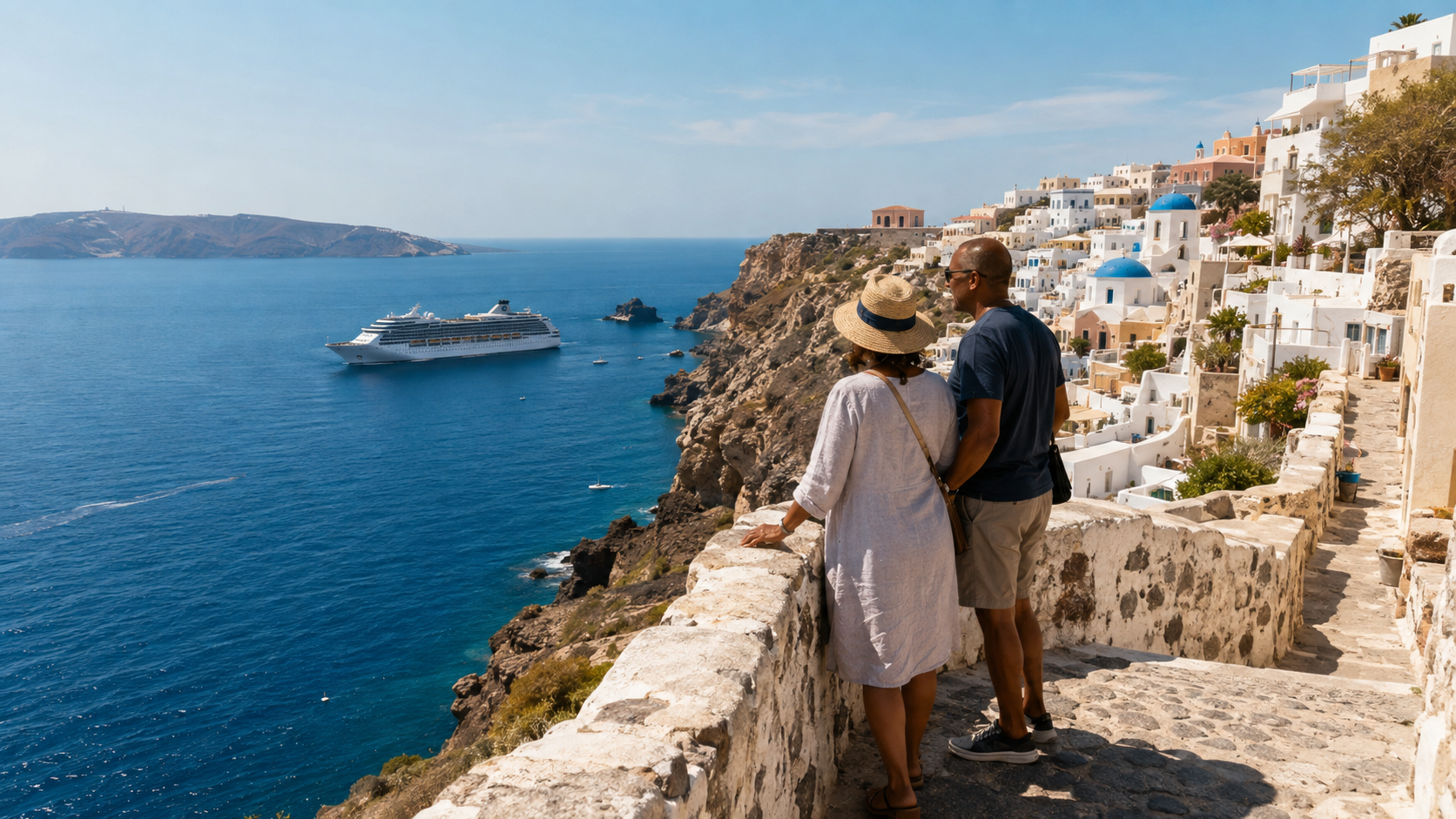
Greek Islands cruises are known for whitewashed villages, blue water, waterfront restaurants, archaeological sites, rugged coastlines, and long evenings beneath the Mediterranean sun. They can provide a beautiful balance between sightseeing and vacation atmosphere.
However, travelers should not assume that every Greek island day will be spent relaxing on a beach.
Santorini may involve tender transportation, steep terrain, crowded pathways, and logistical decisions about reaching the villages of Fira and Oia. Mykonos offers beaches and coastal scenery, but it is also known for shopping, dining, nightlife, and its picturesque old town. Rhodes and Crete provide substantial historic and cultural experiences that can fill an entire day.
Some itineraries are built around recognizable islands, while others include smaller ports that may offer a quieter experience. A famous port is not automatically a better port. Less familiar islands can provide beautiful beaches, traditional villages, local cuisine, and fewer competing attractions.
Travelers should examine how many ships are expected, how long their vessel remains in port, and whether it docks or tenders. A late departure can be especially valuable in the Greek Islands because it allows time for dinner ashore or a sunset experience without turning the day into a race.
Who Should Choose a Greek Islands Itinerary?
A Greek Islands cruise may be an excellent choice for:
Couples planning a honeymoon or anniversary vacation
Travelers who want scenery and culture without focusing entirely on major cities
Visitors interested in Greek history and mythology
Travelers who enjoy waterfront dining and island atmosphere
Photographers and landscape enthusiasts
Repeat European travelers looking beyond the major capitals
Cruisers who want to combine sightseeing with beach time
Travelers interested in adding Athens before or after the cruise
A Greek Islands itinerary can also work well for first-time Mediterranean cruisers, provided they understand the tendering, walking, heat, and crowds that may accompany the most popular ports.
If Santorini is one of your priorities, look beyond whether it appears on the itinerary.
Compare arrival time, departure time, the number of other ships in port, excursion options, and how the cruise line manages tender transportation. A short call during a crowded period can produce a very different experience from a longer visit that continues into the evening.
Adriatic Cruise Itineraries
Adriatic cruises generally explore the eastern coast of Italy and the shores of Croatia, Montenegro, Slovenia, and nearby areas. Some remain concentrated in the Adriatic, while others connect these destinations with Greece, Malta, or the wider Eastern Mediterranean.
Possible ports include:
Dubrovnik, Croatia
Split, Croatia
Zadar, Croatia
Hvar, Croatia
Kotor, Montenegro
Koper, Slovenia
Trieste, Italy
Ravenna, Italy
Bari, Italy
Corfu, Greece
These itineraries appeal to travelers who want medieval towns, fortified cities, islands, mountain-backed bays, historic architecture, and some of the Mediterranean’s most dramatic sailing scenery.
What an Adriatic Cruise Feels Like
An Adriatic itinerary often feels more intimate than a route dominated by Rome, Barcelona, and other major cities. Several ports place travelers relatively close to old towns, waterfront promenades, historic walls, restaurants, and local attractions.
Dubrovnik’s preserved old city, Split’s Roman heritage, and Kotor’s setting between mountains and water provide very different experiences from the large metropolitan centres of the Western Mediterranean.
The sailing itself can also become part of the attraction. Arriving in or departing from Kotor, for example, can provide memorable views from the ship. Smaller Croatian ports and islands may introduce travelers to destinations they would be less likely to include in a conventional land vacation.
That does not mean every Adriatic cruise is quiet. Dubrovnik and other celebrated ports can become crowded, especially when several ships arrive during the busiest months. Historic centres may include stone streets, steps, slopes, and limited shade. Summer conditions can make an otherwise manageable walking tour much more demanding.
Travelers should also pay close attention to the listed embarkation port. A cruise described as departing from Venice may operate from another regional port, depending on the ship and itinerary. The distance between your hotel, airport, and actual terminal can materially affect your pre-cruise plans.
Marge can help you identify the real departure point and determine how much time and transportation will be required. This is one reason the itinerary should be evaluated as a complete journey rather than a simple list of destinations.
Who Should Choose an Adriatic Itinerary?
An Adriatic cruise may be especially appealing to:
Travelers interested in medieval towns and coastal history
Couples seeking romantic scenery and atmospheric ports
Visitors who have already explored Rome, Florence, and Barcelona
Travelers who prefer smaller cities to large metropolitan areas
Photographers and architecture enthusiasts
Cruisers who want to combine Croatia and Montenegro with Greece or Italy
Travelers who enjoy exploring independently near the port
People attracted to scenic arrivals and departures
Adriatic routes can provide an excellent balance between recognizable destinations and places that still feel like discoveries. They are particularly strong for travelers who enjoy history and scenery but do not want every port day to require a long journey inland.
Longer Mediterranean and Grand Voyage Itineraries
Travelers with more time may consider Mediterranean cruises lasting 10, 12, 14 nights, or longer. These itineraries can connect several regions and sometimes continue into the Atlantic, Northern Europe, the Middle East, or North Africa.
A longer sailing might combine:
Spain, France, and Italy
Italy, Greece, and Turkey
Greece, Croatia, and Montenegro
Portugal, Spain, and the Western Mediterranean
The Western and Eastern Mediterranean in one journey
Mediterranean ports with the Canary Islands or Morocco
Consecutive cruises booked aboard the same ship
The principal advantage is variety. A longer cruise can introduce travelers to multiple cultures and regions without requiring them to repack, change hotels, or arrange transportation between every destination.
However, more days do not automatically produce a more relaxed cruise.
Some extended itineraries include a better balance of ports and sea days. Others simply add more consecutive sightseeing days. Travelers need to examine the schedule rather than relying on the cruise length alone.
When a Longer Mediterranean Cruise Makes Sense
A longer itinerary may be worthwhile when:
International airfare represents a significant part of the vacation investment
You want to experience more than one Mediterranean region
You have enough time to arrive early and recover after the cruise
You enjoy the ship as well as the destinations
The itinerary includes sea days between intensive port calls
You want to avoid arranging separate transportation between countries
This may be your only major Mediterranean journey
You are comfortable with an active, destination-rich vacation
Travelers comparing cruise lengths should consider the total trip, not just the number of nights aboard the ship. A seven-night cruise may require 10 or 11 days once international flights and a pre-cruise hotel stay are included. A 12-night sailing may become a 15- or 16-day vacation.
The right duration depends on available time, budget, energy, and how much of the region you want to experience. Travelers uncertain about the total commitment can review how many days you really need for a Mediterranean cruise before comparing specific sailings.
Western vs. Eastern Mediterranean Cruises
The most common route decision is whether to choose the Western or Eastern Mediterranean. Neither is universally better.
The Western Mediterranean generally places greater emphasis on major European cities, renowned museums, architecture, cuisine, and Roman or Renaissance landmarks.
The Eastern Mediterranean more often combines islands, archaeological sites, fortified coastal towns, ancient civilizations, and dramatic natural scenery.
A simplified comparison looks like this:
Choose the Western Mediterranean if you want:
Barcelona, Rome, Florence, Naples, or the French Riviera
Major museums and internationally recognized landmarks
Roman history and Renaissance art
Food and wine experiences in Spain, France, and Italy
A pre- or post-cruise stay in Barcelona or Rome
A first introduction to several famous European destinations
Choose the Eastern Mediterranean if you want:
Athens, the Greek Islands, Turkey, Croatia, or Montenegro
Ancient Greek, Byzantine, and Ottoman history
Island scenery and historic coastal towns
Archaeological sites such as Ephesus
A combination of cultural exploration and waterfront atmosphere
A route that reaches beyond Western Europe’s best-known cities
This comparison is helpful, but it is not absolute. Western itineraries can include islands and beaches, while Eastern itineraries can be filled with demanding historic sightseeing.
The individual ports, time ashore, transportation requirements, and number of sea days ultimately matter more than the regional label.
For a deeper side-by-side analysis, read Western vs. Eastern Mediterranean Cruises: Which Is Right for You?.
City-Heavy Routes vs. Island-Focused Itineraries
Another useful way to compare Mediterranean cruises is to look beyond geography and evaluate the type of experience each route delivers.
A city-heavy itinerary might include Barcelona, Marseille, Florence, Rome, and Naples.
These routes can provide exceptional history, architecture, museums, and cuisine, but they frequently require early mornings, long transfers, structured excursions, and substantial walking.
An island-focused itinerary may include Mykonos, Santorini, Rhodes, Crete, Corfu, or smaller Greek and Croatian ports. These routes may offer more waterfront atmosphere and beach possibilities, but they are not necessarily effortless. Tendering, hills, uneven streets, heat, and crowded transportation can still make individual days challenging.
Ask yourself which vacation description sounds more appealing:
Seeing as many famous landmarks as possible
Exploring ancient sites and historic cities
Dividing time between sightseeing and beaches
Enjoying smaller ports and waterfront dining
Spending meaningful time aboard the ship
Experiencing several countries during one journey
Concentrating on one region more deeply
There is no prize for choosing the most intensive itinerary. A route should support the experience you want rather than leave you needing another vacation when you return.
Do Not Judge an Itinerary by the Number of Ports
Travelers understandably feel that more ports provide greater value. In some cases, they do. However, a seven-night cruise with six port calls is not automatically superior to one with four or five.
Sea days give travelers time to:
Recover from long excursions
Enjoy the pool, spa, dining, and entertainment
Sleep later without missing a destination
Appreciate the ship they selected
Organize photographs and prepare for upcoming ports
Spend unhurried time together
A sea day can be especially valuable after visiting a destination such as Rome, Florence, or Ephesus. Without breaks, even extraordinary ports can begin to blur together.
Port hours also matter. A cruise that remains in Dubrovnik or Mykonos into the evening may provide more useful time than one that visits an additional destination for only a few hours. An overnight stay in Istanbul or another major city can offer an experience that several shorter calls cannot match.
The itinerary’s rhythm is more important than its raw port count.
Evaluate Every Mediterranean Itinerary as a Complete Experience
Before choosing a cruise, look at the route day by day.
Consider:
Which destinations are essential to you
Which ports require lengthy transportation
How many early mornings occur consecutively
Whether tender ports appear on the itinerary
Where the ship begins and ends
Whether the cruise is round-trip or one-way
How much time you need before and after sailing
Whether sea days appear in useful places
How much walking your preferred excursions involve
Whether the schedule leaves time to enjoy the ship
A round-trip cruise can simplify flights because you arrive and depart from the same city. A one-way itinerary may offer greater geographic variety, but it can require more complicated airfare and transportation.
Neither format is inherently better. The right choice depends on whether you value simplicity or the opportunity to cover more of the region.
Travelers still becoming familiar with the overall experience can use the Mediterranean Cruise Travel Guide as the central planning resource, then return to the route comparisons here when they are ready to evaluate individual itineraries.
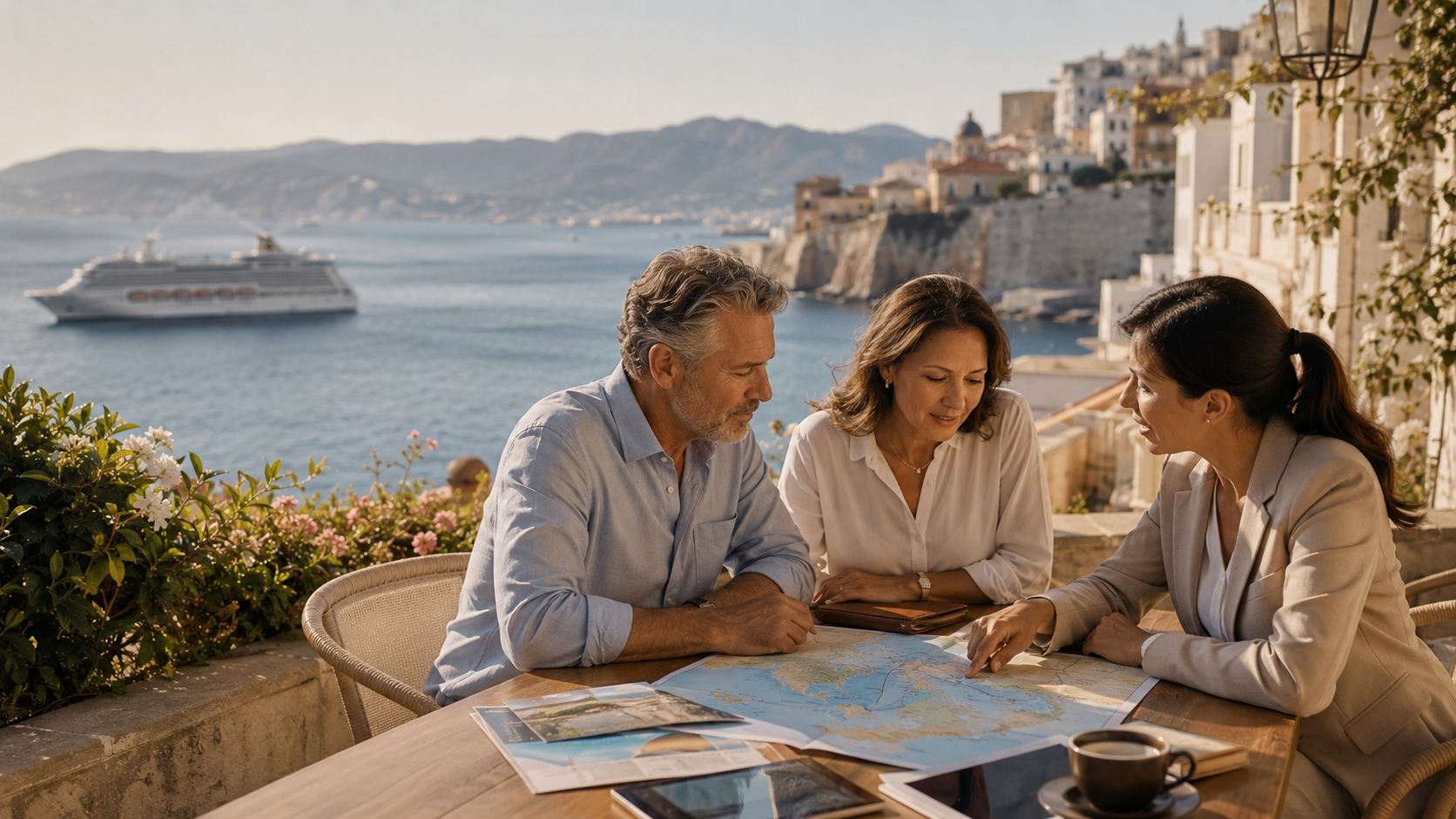
Marge can help you compare these details before you choose the cruise line or ship. By looking at the actual ports, timing, transfers, tender requirements, excursion possibilities, and overall pace, she can help you identify which Mediterranean route fits the vacation you want—not merely the itinerary with the most recognizable names.
How to Choose the Best Mediterranean Cruise Itinerary for You
Once you understand the differences between Western, Eastern, Greek Islands, Adriatic, and longer Mediterranean routes, the next step is matching those possibilities to your vacation.
The best itinerary is personal. A route that feels extraordinary to a history enthusiast may feel exhausting to someone who wants beaches and unhurried meals. A couple celebrating an anniversary may value romantic island scenery, while a family may prioritize convenient ports, manageable excursions, and a ship with activities for different ages.
Before selecting a sailing, consider the following factors.
Start With the Experiences You Want Most
Travelers often begin by comparing cruise lines or searching for advertised fares. For a Mediterranean cruise, it is usually more helpful to begin with the destinations and experiences that matter most.
Ask each traveler to identify three priorities.
Those priorities might include:
Visiting Rome or Barcelona
Seeing the Acropolis in Athens
Exploring Pompeii or Ephesus
Spending time in Santorini or Mykonos
Experiencing the Croatian coast
Visiting art museums and architectural landmarks
Enjoying Mediterranean food and wine
Relaxing on beaches
Exploring independently near the port
Celebrating a honeymoon or anniversary
Spending meaningful time aboard the ship
Avoiding too many long excursion days
Once those priorities are clear, the route options become easier to evaluate.
If Rome, Florence, and Barcelona are essential, a Western Mediterranean itinerary will probably serve you better than an island-focused cruise. If your vision includes Greek scenery, ancient ruins, and waterfront evenings, an Eastern Mediterranean or Greek Islands route may be more appropriate.
Try to distinguish between destinations you genuinely want to experience and names that simply look impressive on an itinerary. A port should contribute to your vacation—not merely make the sailing appear more valuable.
Consider the Best Time for Your Mediterranean Cruise
Mediterranean cruise seasons generally extend from spring through fall, with some cruise lines offering sailings outside the traditional peak period. Conditions vary considerably according to the month and region.
Spring
Spring can offer pleasant sightseeing weather, greener landscapes, and fewer peak-summer crowds. It is often attractive to travelers who care more about historic sites, walking tours, and cultural exploration than swimming.
However, temperatures and sea conditions can vary. Some beach services, seasonal businesses, and island activities may operate on reduced schedules earlier in the season.
Summer
Summer provides hot weather, long daylight hours, lively ports, and strong conditions for travelers who want beaches and island atmosphere. Families are also more likely to travel during school vacations.
The trade-offs are heat, crowds, and higher demand. Major attractions can become extremely busy, and extensive walking may be more difficult during the hottest part of the day. Popular islands can feel particularly crowded when several ships visit simultaneously.
Fall
Early fall can provide warm weather, comfortable evenings, and an appealing balance between sightseeing and coastal experiences. Later in the season, temperatures may become cooler and conditions less predictable.
Fall can be an excellent choice for travelers who want to avoid the height of summer, but the experience will depend on the destination and sailing date.
There is no universally perfect month. A traveler who wants warm water and beach time may choose differently from someone whose priority is walking through Rome, Athens, or Ephesus in more comfortable temperatures.
Your schedule, heat tolerance, budget, and desired activities should all influence the decision.
Match the Itinerary to Your Preferred Pace
Mediterranean cruises can be far more active than travelers expect.
A ship may arrive in port early in the morning and depart by late afternoon. Reaching inland attractions can require a bus, train, private transfer, or organized excursion. Once ashore, the day may involve several hours of walking, stairs, uneven stone, museums, archaeological sites, and summer heat.
Review the itinerary as a sequence rather than assessing each port separately.
Three intensive sightseeing days in a row may be manageable. Six may change the entire character of the vacation.
Look for:
A sea day after demanding ports
Later arrivals following long excursions
Overnight stays in important destinations
Ports that can be explored without lengthy transportation
A combination of structured tours and flexible days
Enough time to enjoy the ship
You do not need to see everything available in every destination.
Sometimes the better decision is to choose one neighbourhood, archaeological site, beach, or food experience and enjoy it properly. Attempting to cover an entire major city during a short port call can turn an exciting day into a checklist.
Think About Mobility and Physical Comfort
Mobility considerations should be part of itinerary selection from the beginning—not addressed only after the cruise has been booked.
Mediterranean destinations can include:
Cobblestone streets
Steep hills
Stairways
Uneven archaeological sites
Limited shade
Tender boats
Long walks from transportation drop-off points
Historic buildings without modern accessibility
Extended bus or train journeys
Crowded pedestrian areas
Travelers who use mobility aids or have difficulty with stairs, heat, or prolonged walking should investigate each port carefully. The advertised destination alone does not reveal how accessible the experience will be.
Tender ports require particular attention. Boarding a smaller vessel from the cruise ship may not be appropriate or available under every condition. Cruise-line policies, port facilities, weather, and the traveler’s needs can all affect participation.
This does not necessarily mean avoiding the Mediterranean. It means choosing a route, ship, stateroom, and excursion plan with realistic information.
A thoughtfully selected itinerary may include more ports that place travelers near the main attractions, fewer intensive sightseeing days, accessible excursions, and sea days positioned where rest will be most useful.
Travelers should discuss specific accessibility requirements with Marge before booking so she can help identify questions that need to be confirmed with the cruise line and excursion providers.
Compare Round-Trip and One-Way Cruises
A round-trip itinerary begins and ends in the same port. This can simplify flights, hotel arrangements, and ground transportation.
Barcelona round-trip and Athens round-trip cruises are common examples. Travelers can stay in the same city before and after sailing or arrange one return flight itinerary through the same airport.
A one-way cruise begins in one city and ends in another. For example, a sailing might begin in Barcelona and finish near Rome, or begin in Athens and end in an Adriatic port.
One-way cruises can cover more territory without retracing the route. They also allow travelers to add a pre-cruise stay in one city and a post-cruise stay in another.
However, they may require:
Multi-city airfare
Different airport transfers
Hotels in two locations
More detailed transportation planning
Additional time and expense
A one-way cruise may provide greater variety, while a round-trip cruise may provide greater simplicity. The best choice depends on your comfort with travel logistics and whether the additional destinations justify the complexity.
Establish a Realistic Mediterranean Cruise Budget
The advertised cruise fare is only one part of the total vacation cost.
A realistic Mediterranean cruise budget may need to include:
International airfare
Pre- and post-cruise hotels
Airport and port transportation
Cruise fare
Taxes, fees, and gratuities
Travel protection
Shore excursions
Specialty dining
Beverage and internet packages
Meals before and after the cruise
Independent tours
Museum and attraction admissions
Local transportation
Currency-exchange or transaction costs
Souvenirs and personal spending
Shore expenses can be particularly significant on a destination-intensive itinerary. A traveler who wants organized tours in Rome, Florence, Naples, Athens, and Santorini may spend considerably more than someone who plans to explore several walkable ports independently.
The least expensive cruise fare may not produce the least expensive vacation.
A lower fare could be attached to an itinerary requiring costly transfers, an inconvenient embarkation city, or an airfare schedule that adds hotel nights. Another sailing may cost more initially but include more convenient ports, longer stays, or a route better suited to independent exploration.
Compare the total experience rather than one advertised number.
Choose the Itinerary Before the Ship—But Do Not Ignore the Ship
For most Mediterranean travelers, the route should lead the decision. However, the ship still matters because it becomes your hotel, transportation, restaurant, and place to recover between destinations.
Consider:
Ship size
Dining options
Entertainment
Pool and outdoor areas
Children’s programs
Adults-only spaces
Accessibility
Stateroom choices
Service style
Included amenities
The balance between port time and onboard time
A large resort-style ship may appeal to families and travelers who want extensive entertainment. A smaller ship may reach different ports or offer a more intimate atmosphere. A premium or luxury cruise may provide a different level of service, dining, space, and inclusions.
The right ship should support the itinerary and the people traveling.
Do not select a ship filled with amenities if the itinerary leaves no time to use them. Conversely, do not dismiss the ship as unimportant if several sea days are included or if you value dining and evening entertainment.
First-time cruisers who need help understanding how ships, staterooms, dining, and onboard routines work can review the First-Time Cruise Guide.
Which Mediterranean Route Fits Different Travelers?
First-Time Visitors to Europe
A Western Mediterranean itinerary can provide an impressive introduction to Barcelona, Rome, Florence, southern France, and Naples. These routes work well for travelers who want internationally recognized destinations and are prepared for active sightseeing.
First-time European visitors should strongly consider arriving several days early. This provides time to adjust to the time difference, recover from the flight, and experience the embarkation city without depending on a short port call.
Couples and Honeymooners
Greek Islands, Adriatic, and selected Eastern Mediterranean itineraries can offer romantic scenery, waterfront dining, historic towns, and memorable sunsets.
The route should still be evaluated for pace. A honeymoon filled with six consecutive early-morning excursions may not feel as romantic as the photographs suggest. Look for late departures, sea days, smaller coastal ports, and opportunities to enjoy evenings ashore.
Families
Families should consider the ages and interests of the children, the length of excursions, transportation time, summer heat, and what the ship provides between ports.
Older children and teenagers may appreciate Rome, Pompeii, Athens, castles, mythology, food, and adventurous excursions. Younger children may be less enthusiastic about repeated museums and long bus rides.
A balanced itinerary with shorter port days, beach opportunities, sea days, and a family-friendly ship can make the experience more enjoyable for everyone.
History and Archaeology Enthusiasts
Western and Eastern routes both provide exceptional choices.
Western itineraries may include Rome, Pompeii, Florence, Sicily, and southern France. Eastern routes can provide access to Athens, Ephesus, Rhodes, Crete, Istanbul, and other historically significant destinations.
For these travelers, time in port may matter more than the number of destinations. A long call or overnight stay can be more valuable than several short visits.
Food and Wine Travelers
Spain, France, Italy, Greece, Croatia, and Turkey each offer distinctive culinary experiences.
Food-focused travelers should look for itineraries with late departures, regional excursions, market visits, winery opportunities, cooking experiences, and ports that can be explored independently.
Pre- and post-cruise stays also provide time for dining without watching the ship’s departure clock.
Travelers Who Want a Slower Vacation
Choose an itinerary with fewer ports, more sea days, shorter distances from port to attraction, and opportunities to enjoy the destination without full-day excursions.
Island-focused and smaller-port routes may help, but the specific schedule still needs to be examined. A famous island reached by tender can be more complicated than a less familiar city where the ship docks near the historic centre.
Common Mistakes When Choosing a Mediterranean Cruise
Choosing Solely by Price
A low cruise fare may be appealing, but it does not reveal the cost of airfare, hotels, transfers, excursions, or reaching the embarkation port.
Selecting Too Many Demanding Ports
Rome, Florence, Pompeii, Athens, and Ephesus can each produce an extraordinary day.
Placing several intensive excursions together may leave little energy for the later destinations.
Assuming the Ship Docks in the Advertised City
Always identify the actual port and calculate the time required to reach the destination.
Ignoring Arrival and Departure Times
A port call from 7:00 a.m. to 3:00 p.m. provides a different experience from one that continues into the evening.
Flying in on Embarkation Day
International flight disruptions can cause travelers to miss the ship. Arriving early provides a valuable buffer and a more comfortable beginning to the vacation.
Overlooking Tender Ports
Tendering can add time, create lines, and affect accessibility. Weather may also influence tender operations.
Trying to Experience Everything
A Mediterranean cruise should inspire future travel, not require you to complete an entire continent in one week. Prioritize the experiences that matter most and leave room to enjoy them.
Let Marge Help You Choose the Right Mediterranean Cruise
Comparing Mediterranean itineraries can become complicated quickly. Two sailings of the same length may differ in their actual ports, transfer times, tender requirements, sightseeing intensity, sea days, embarkation logistics, and total cost.
Marge helps travelers move beyond the itinerary headline and understand how the vacation will actually unfold.
She can help you compare:
Western, Eastern, Greek Islands, and Adriatic routes
Cruise lines and ships
Seven-night and longer itineraries
Round-trip and one-way sailings
Embarkation cities
Stateroom categories
Excursion possibilities
Pre- and post-cruise stays
Flights, hotels, and transfers
Payment schedules and important deadlines
You do not need to know the perfect route before reaching out. Begin with the destinations that interest you, your approximate dates, who is traveling, your preferred pace, and a realistic budget.
Explore the broader possibilities for Mediterranean vacations, or contact Travel With McNellis to speak with Marge about planning a Mediterranean cruise designed around you.
Key Takeaways
Western Mediterranean cruises generally emphasize major cities, art, architecture, cuisine, and Roman or Renaissance history.
Eastern Mediterranean cruises often combine ancient sites, Greek islands, Turkey, Croatia, Montenegro, and coastal scenery.
Greek Islands routes can balance history, beaches, villages, and waterfront atmosphere, but popular ports may involve tenders and crowds.
Adriatic itineraries are strong choices for travelers interested in medieval towns, dramatic coastlines, and smaller historic ports.
Longer cruises can cover several regions, but the daily schedule determines whether the voyage feels relaxed or intensive.
The listed destination may be far from the actual cruise port.
Sea days, port hours, tendering, and transportation time are as important as the number of ports.
Season, mobility, budget, and preferred pace should influence itinerary selection.
The itinerary should usually lead the decision, but the ship must still fit the travelers.
The best Mediterranean cruise is the one that matches your interests and energy—not necessarily the route with the most famous names.
Frequently Asked Questions
Which Mediterranean cruise itinerary is best for first-time visitors?
Travelers taking their first major European vacation often appreciate Western Mediterranean itineraries that include Barcelona, Rome, Florence, Naples, or southern France. However, first-time visitors primarily interested in Greece, ancient history, and island scenery may prefer the Eastern Mediterranean. The best choice depends on the destinations you most want to experience.
Is the Western or Eastern Mediterranean better?
Neither region is universally better. The Western Mediterranean generally offers more major cities, celebrated museums, Renaissance art, and famous European landmarks. The Eastern Mediterranean often provides Greek islands, archaeological sites, historic coastal towns, and connections to Turkey, Croatia, and Montenegro.
How long should a Mediterranean cruise be?
Seven-night cruises can provide an excellent introduction to one region. Cruises lasting 10 to 14 nights offer more destinations or a broader combination of regions. Remember to include international travel days and pre-cruise accommodations when calculating the total vacation length.
Is a Mediterranean cruise relaxing?
It can be, but many Mediterranean cruises are destination-intensive. Consecutive port days, long excursions, early mornings, walking, and summer heat can make the experience active. Travelers seeking a slower vacation should look for sea days, fewer ports, longer stays, and destinations located closer to the ship.
What is the best month for a Mediterranean cruise?
The best month depends on your priorities. Spring and fall can provide more comfortable sightseeing conditions, while summer offers warmer beach weather, long daylight hours, and a lively island atmosphere. Summer also brings greater heat and crowds.
Should I choose the itinerary or cruise ship first?
For most Mediterranean vacations, choose the region and itinerary first, then compare the ships operating suitable routes. The ship remains important, but an excellent onboard experience cannot compensate for an itinerary that does not match your interests.
Are Mediterranean cruises suitable for travelers with mobility concerns?
They can be, but careful planning is essential. Cobblestones, stairs, hills, heat, tender boats, and long transfers are common in some destinations. Review each port, ship, excursion, and accessibility policy before booking.
Is a balcony stateroom worth it on a Mediterranean cruise?
A balcony can be valuable for enjoying coastal arrivals, departures, and private outdoor space. However, travelers who plan to spend most days ashore may decide to direct more of their budget toward excursions or pre- and post-cruise stays. The value depends on your budget and how much time you expect to spend in the stateroom.
Should I book cruise-line excursions or explore independently?
Both approaches can work. Cruise-line excursions provide organized transportation and may simplify visits to destinations far from port. Independent exploration can offer greater flexibility in walkable ports. The right choice depends on distance, transportation, timing, comfort level, and the consequences of returning late.
How early should I arrive before a Mediterranean cruise?
Travelers should generally arrive at least one day before departure, while two or three days can be even better for an international journey. Arriving early allows time to recover from the flight, adjust to the time difference, and explore the embarkation city.
Can Marge help arrange the entire Mediterranean vacation?
Yes. Marge can help compare itineraries, cruise lines, ships, staterooms, pre- and post-cruise hotels, flights, transfers, and other important details. She can also explain payment deadlines and help travelers prepare questions about documentation, travel protection, and accessibility.