MARGE’S TRAVEL INSIGHTS
How to Plan Your First African Safari: Destinations, Seasons, Lodges, Costs and What to Expect
Plan your first African safari with guidance on Zambia, Botswana, Tanzania and Namibia, including seasons, lodges, costs, food, culture and health.
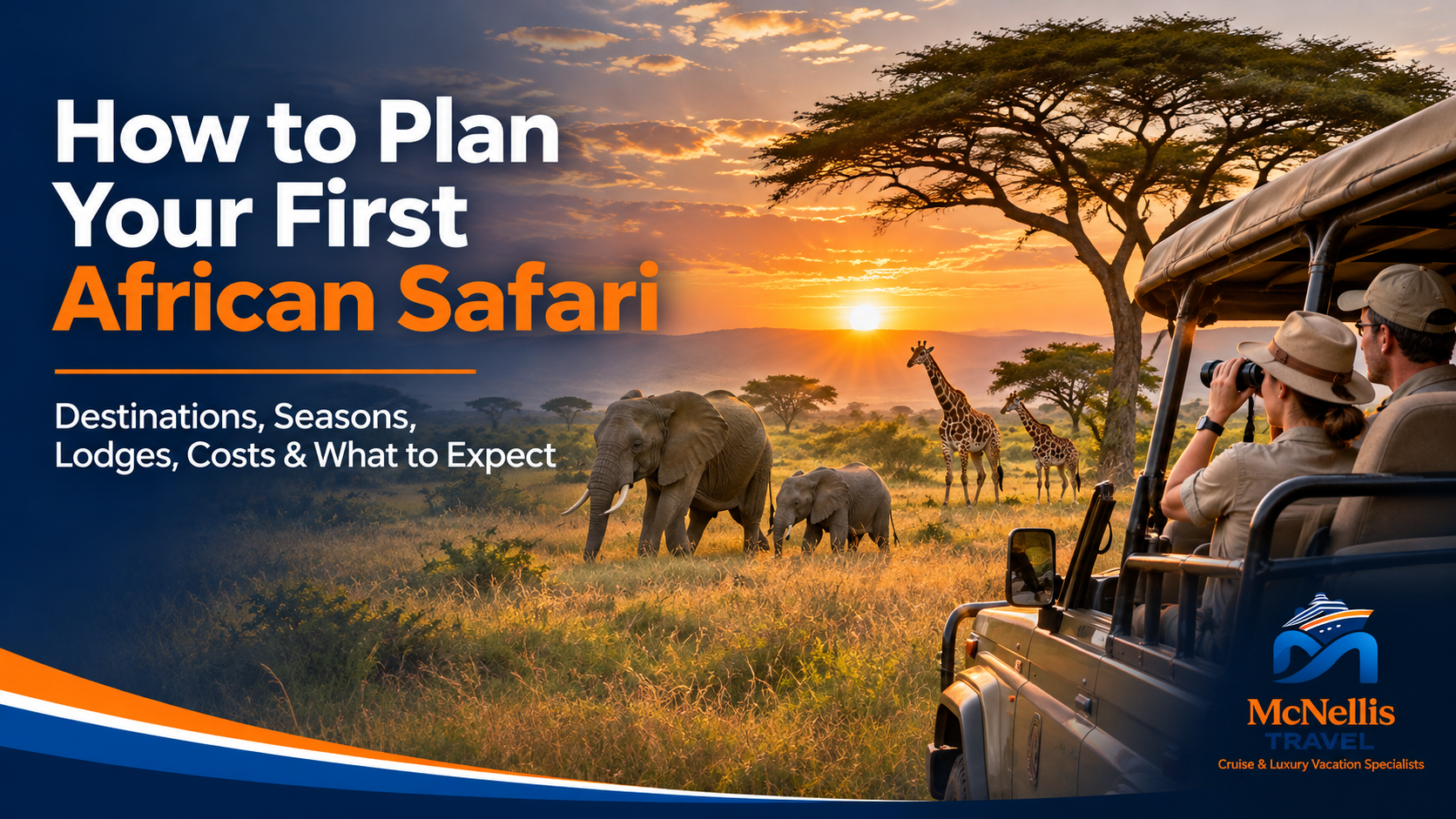
Planning a first African safari is exciting, but it can also feel unusually complicated. You are not simply choosing a hotel and a few tours. You are matching wildlife seasons, landscapes, camp styles, internal flights, road transfers, health considerations, cultural expectations and a budget that can vary dramatically from one itinerary to another.
This guide focuses on four destinations that can work especially well for U.S. travelers: Zambia, Botswana, Tanzania and Namibia. Each offers a different kind of safari, and none is automatically the “best.” The right choice depends on how you want to travel, what you hope to see, how active you want to be and how much comfort or privacy matters to you.
Travel conditions and entry rules can change. Before booking and again before departure, check current guidance from the U.S. Department of State, the Centers for Disease Control and Prevention, the destination’s immigration authorities and your medical provider. A well-designed itinerary should be based on current information, not an old checklist or a social-media trend.
Start With the Experience, Not a Wildlife Checklist
Many first-time travelers begin with the Big Five. Wildlife matters, but a safari is shaped just as much by the landscape, the guide, the pace and the activities permitted in each area.
Ask yourself a few practical questions:
Do you want classic game drives, or would you also enjoy walking, boating or canoeing?
Are you comfortable flying in a light aircraft between camps?
Would you rather see fewer vehicles, even if that means paying more for a remote location?
Is a famous migration event essential, or would you prefer a quieter green-season trip?
Do you want a highly polished lodge, a tented camp close to nature or a simple bush camp?
Are you combining safari with Victoria Falls, the Namib Desert, a beach stay or a cultural experience?
Your answers will narrow the choices faster than a list of animals. They also help prevent a common planning mistake: paying for a prestigious property that does not suit the way you actually like to travel. Our guide to travel mistakes even experienced travelers still make explains why logistics, pacing and realistic expectations matter as much as the headline destination.
Choosing Among Zambia, Botswana, Tanzania and Namibia
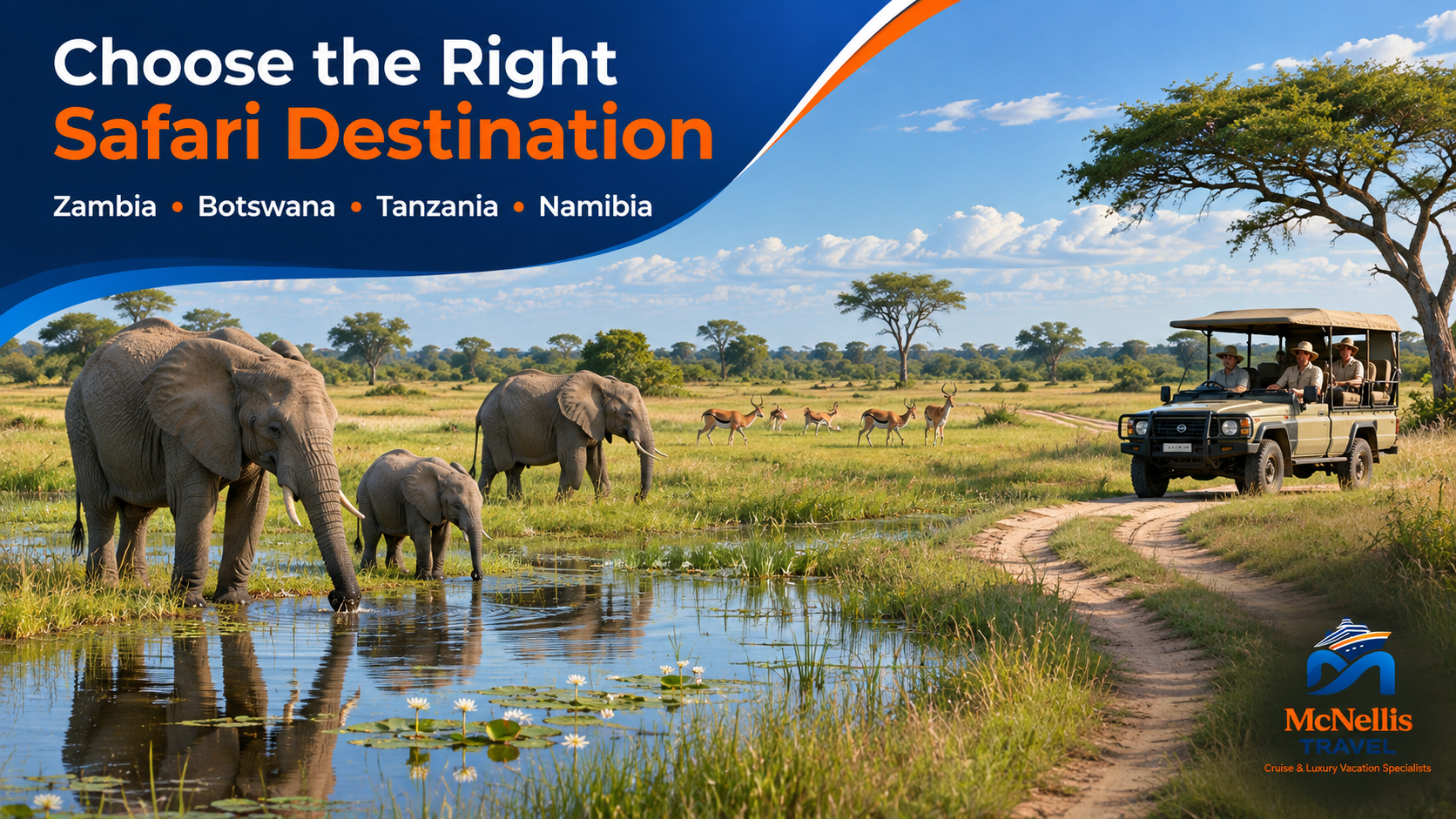
Zambia: Active Safari and Wild Landscapes
Zambia is an excellent fit for travelers who want safari to feel active and immersive. South Luangwa is renowned for walking safaris, while the Lower Zambezi can combine game drives with boating and, where conditions and operator rules allow, canoeing. Victoria Falls adds a powerful landscape experience and makes Zambia especially appealing to travelers who want more than vehicle-based wildlife viewing.
Zambia’s camps range from comfortable permanent lodges to intimate bush camps. Some remote properties operate seasonally, and access may involve light-aircraft flights or long transfers. That remoteness is part of the appeal, but it makes careful routing important.
Choose Zambia if you value:
Walking safaris led by qualified guides
A varied mix of land and water activities
Smaller camps and a strong sense of wilderness
The option to include Victoria Falls
Walking and canoeing have age, fitness and safety requirements that vary by operator. Travelers with mobility limitations can still have an excellent Zambia safari, but the itinerary should be designed around accessible vehicles, room layouts, transfer assistance and realistic distances.
Botswana: Low-Density Wilderness and Water-Based Safari
Botswana is known for remote camps, large wilderness areas and a tourism model that often emphasizes lower visitor density. The Okavango Delta can offer a combination of game drives, boating and mokoro excursions, depending on water levels and the specific camp. Chobe is known for elephant viewing and river activities.
Botswana can be expensive because many itineraries rely on small camps, inclusive rates and light-aircraft transfers. The reward is often a quieter experience with fewer vehicles, particularly in private concessions. Not every Delta camp offers every activity, and flood levels vary by location and year. A camp should be selected for its actual setting and permitted activities, not simply because “Okavango” appears in its address.
Choose Botswana if you value:
Remote, low-density safari areas
A possible mix of land and water activities
Small camps and polished guiding
A premium experience with complex logistics handled for you
Tanzania: Classic Wildlife and Varied Landscapes
Tanzania is a strong choice for travelers who want a classic East African safari. The Serengeti, Ngorongoro Conservation Area and Tarangire can be combined into an itinerary with broad savannas, volcanic landscapes, seasonal wildlife movements and a wide range of lodging styles.
The Great Migration is a year-round cycle rather than a single event. Herd locations depend on rainfall, grazing and river conditions, and dramatic crossings are never guaranteed. A good itinerary does not promise a precise wildlife performance. It places you in a strong region for the season and builds enough time into the route to enjoy the wider ecosystem.
Tanzania also gives travelers the option to add Zanzibar or another coastal stay. That combination can work well, but the cultural expectations of the coast differ from those at a safari lodge, especially regarding modest dress and public behavior.
Choose Tanzania if you value:
Iconic East African scenery
Large-scale wildlife viewing
A broad choice of camps and lodges
The possibility of a safari-and-beach itinerary
Namibia: Wildlife, Desert and an Overland Journey
Namibia is ideal for travelers who want more than a traditional safari. Etosha offers productive wildlife viewing, while Sossusvlei, Damaraland and the Skeleton Coast create a journey through desert, dunes, rock formations and stark Atlantic scenery.
Distances are substantial. A self-drive trip can offer independence, but it requires confidence on long roads, careful fuel planning and realistic daily distances. A privately guided or fly-in itinerary costs more but reduces the burden of navigation and can add valuable interpretation.
Choose Namibia if you value:
Wildlife combined with extraordinary desert scenery
Photography and landscape-focused travel
A road-trip style journey or scenic flying
A broader itinerary rather than continuous game drives
Safety and Current Travel Advice
No destination is risk-free, and national advisories do not tell the whole story about a particular safari circuit. Conditions can vary between cities, border areas, national parks and remote camps. The most useful approach is to combine official advice with destination-specific planning.
For these four countries, travelers should pay attention to ordinary crime precautions in cities and transit areas, health risks, road safety and the limits of medical care in remote regions. Tanzania also requires careful attention to current laws, local sensitivities and regional security guidance. Namibia’s long driving distances and remote areas make vehicle preparation and emergency planning important. Botswana and Zambia also have regions where malaria precautions may be recommended.
Practical safeguards include:
Use established transfer companies and safari operators.
Avoid displaying valuables in airports, cities and public areas.
Keep passport copies and emergency contacts separate from the originals.
Confirm who will meet you at each airport or airstrip.
Do not walk around an unfenced camp without staff after dark.
Follow the guide’s instructions around animals, even when the animal appears calm.
Purchase travel insurance that covers the full trip cost and the activities you plan to do.
Consider medical evacuation coverage because remote camps may be far from advanced care.
Recheck official advisories shortly before travel. If advice changes for a specific region, the itinerary may need to be adjusted even when the rest of the country remains suitable.
When to Go: Dry Season, Green Season and Shoulder Months
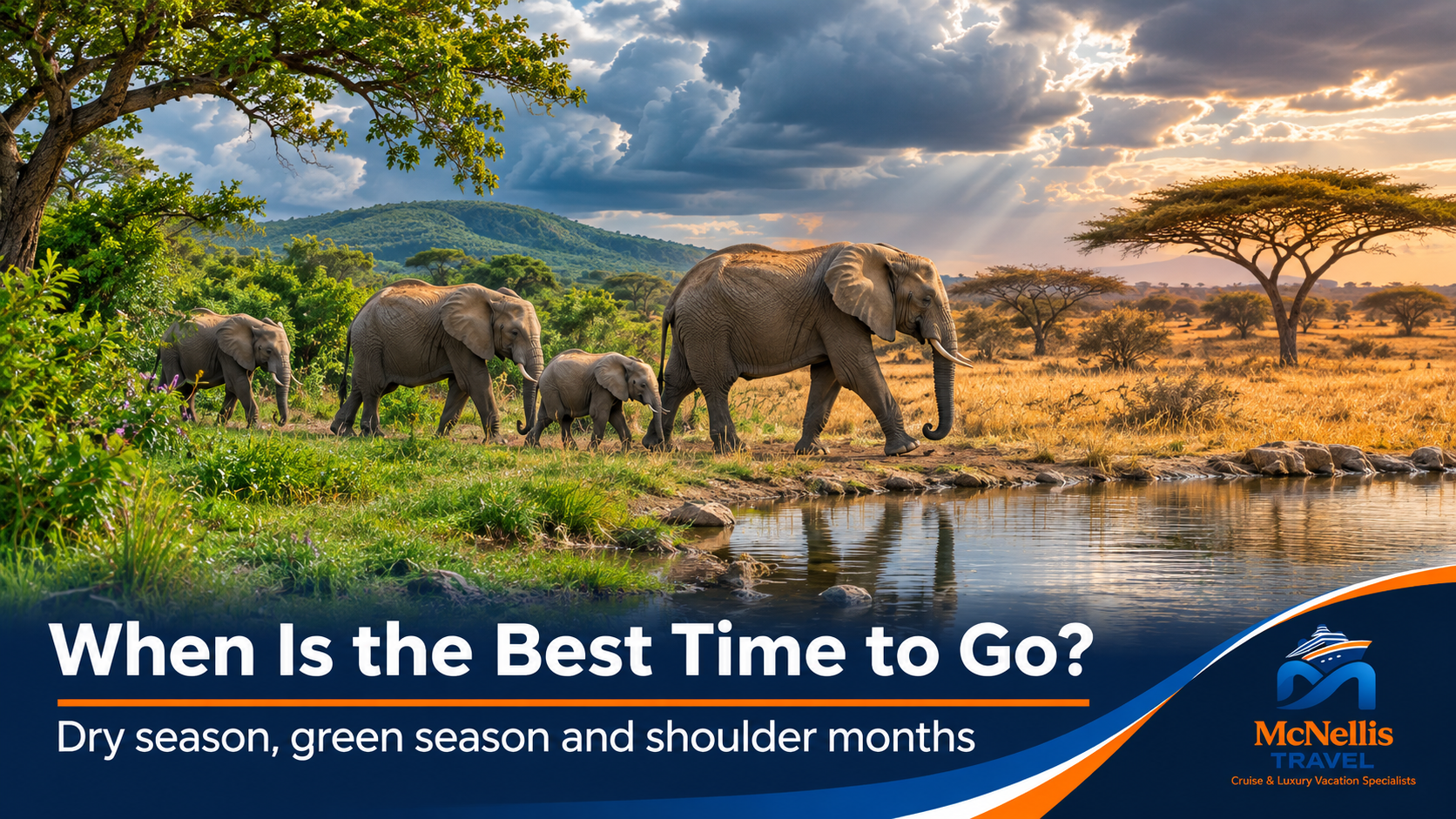
There is no single best month for every safari destination. Dry weather can concentrate animals near water and make vegetation thinner, but it also brings higher prices and more visitors. Green-season travel can offer dramatic skies, newborn animals, birdlife and better value, with the tradeoff of rain, thicker vegetation and occasional access limitations.
Zambia’s Seasons
The main safari season in much of Zambia generally runs from late autumn into spring, with the driest months often producing strong game viewing. South Luangwa becomes increasingly dry as the season progresses, and animals gather around remaining water. Some remote bush camps close during the wettest months because roads become difficult or impassable.
The Lower Zambezi is also seasonal, and water activities depend on local conditions. Victoria Falls changes dramatically through the year: higher water creates powerful spray, while lower water can reveal more of the rock face. The most impressive waterfall view and the best conditions for every activity do not necessarily occur at the same time.
Botswana’s Seasons
Botswana’s dry season is popular for wildlife viewing, but the Okavango Delta has an unusual rhythm. Floodwater can reach parts of the Delta during the regional dry season because it has traveled from rainfall far to the north. Water levels differ between concessions and from year to year.
The green season can bring excellent birding, young animals, dramatic storms and lower rates. Some areas become harder to reach, and wildlife may be more dispersed. Chobe’s riverfront and the Delta should be planned separately because their activity patterns and access are not identical.
Tanzania’s Seasons
Tanzania’s northern circuit can be visited throughout the year. The drier periods are popular for general game viewing. The greener months can be beautiful and may offer strong value, though heavier rains can affect roads and daily plans.
The migration should be planned as a moving cycle:
Calving is commonly associated with the southern Serengeti and Ndutu region early in the year.
Herds generally move north and west as seasonal conditions change.
River-crossing season is often associated with the northern Serengeti in the middle and later part of the year.
The herds eventually turn south again as the rains and grazing shift.
These are patterns, not appointments. Weather can move the herds earlier or later, and a crossing may happen before you arrive, after you leave or out of sight.
Namibia’s Seasons
Etosha is often most productive in the dry season, when wildlife gathers around waterholes. The wet season can bring greener scenery, birdlife and young animals. Desert destinations follow a different logic: heat, wind and light can matter more than wildlife concentration. Coastal areas may be cool or foggy even when the interior is hot.
For a first visit, think in terms of the entire route. A month that is excellent for Etosha may still require early starts and heat planning in the Namib Desert.
How Long Should a First Safari Be?
For most first-time travelers, seven to ten nights on safari provides enough time to settle into the rhythm without turning every day into a transfer. A longer trip is useful when combining countries or adding a major non-safari component.
Avoid changing camps every night. Two or three nights in each area is usually a more satisfying starting point. A three-night stay often creates two full activity days, while a two-night stay may provide only one full day after arrival and before departure.
Allow for:
An arrival night after the international flight when connections are tight
Weather or operational delays on light-aircraft routes
Recovery time after overnight travel
A slower day if combining several early-morning safari starts
Sufficient time in distinct ecosystems rather than repeating similar camps
If you are building a more complex route, our article on booking multi-city trips without stress or overspending explains why the order of flights and stops matters.
Lodge, Tented Camp or Bush Camp?
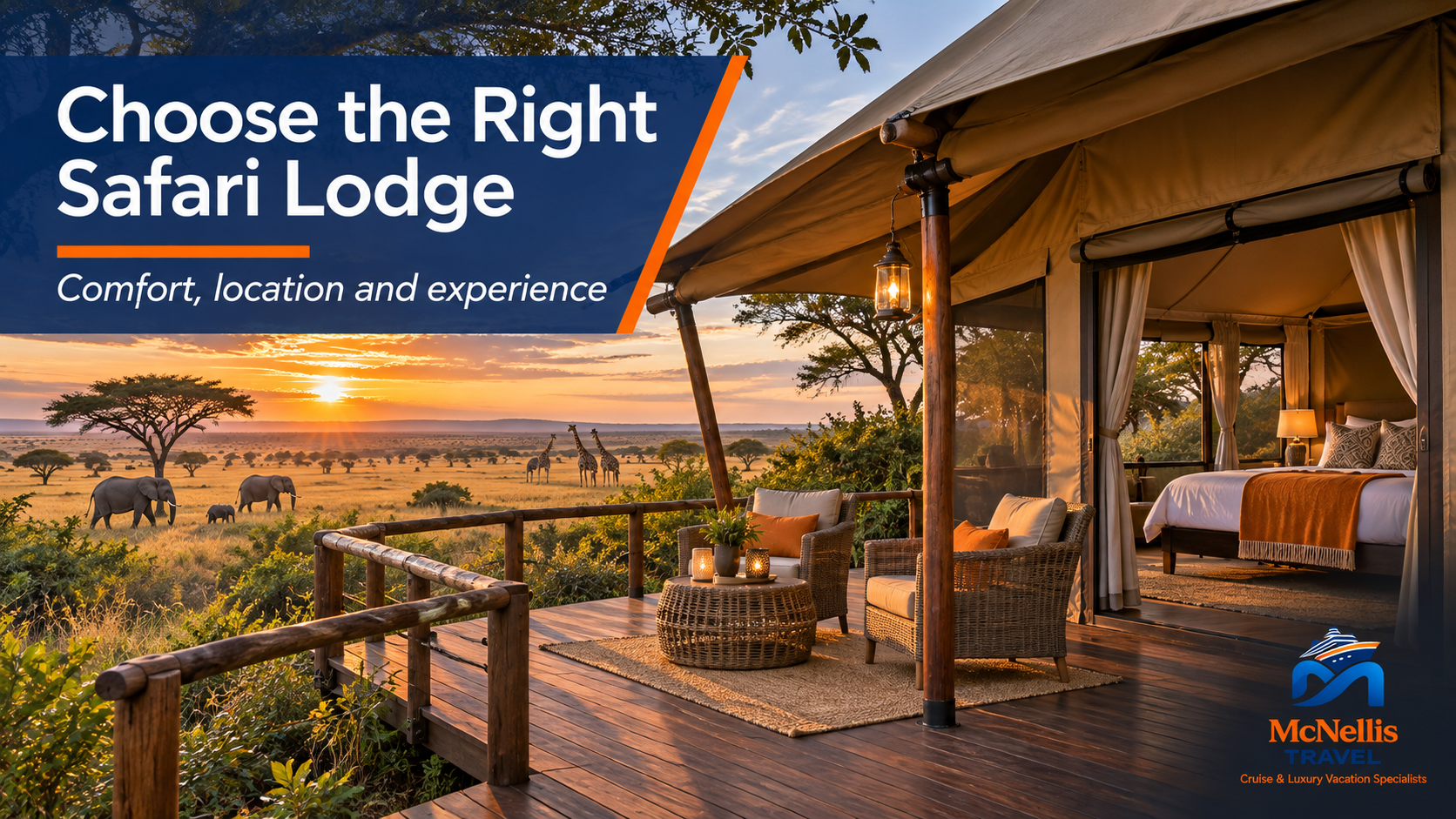
The word “camp” does not necessarily mean basic. A permanent tented camp may have a full bed, private bathroom, electricity, excellent meals and a deck overlooking wildlife. The canvas walls simply create a closer connection to the landscape.
Traditional Lodges
Permanent lodges often have solid walls, larger shared spaces and facilities such as a pool, gym or spa. They can suit travelers who value familiar comfort, climate control or easier accessibility. Larger lodges may feel less intimate, so ask about the number of rooms and vehicles.
Permanent Tented Camps
These camps combine comfort with the sounds and atmosphere of the bush. They may be luxurious, but canvas does not block animal noise. Guests must be comfortable following escort rules after dark.
Mobile and Seasonal Camps
Mobile camps can move to follow seasonal wildlife patterns, particularly in parts of Tanzania. Seasonal bush camps may operate only when roads and river conditions permit. They can deliver a strong sense of place but may have limited power, Wi-Fi or cooling.
Bush Camps
Small bush camps emphasize guiding, location and immersion. Luxury here may mean an exceptional guide, privacy and access to wildlife rather than marble bathrooms. Some have open-fronted rooms or minimal barriers between guests and the environment.
Before booking, ask:
Is the camp fenced?
Are vehicles shared, and how many guests sit in each row?
Are activities included?
Is laundry included, and are there restrictions on personal garments?
Is power available all day or only at set times?
Can medical devices be charged reliably?
Is Wi-Fi available, limited to common areas or intentionally absent?
How far is the room from the main area?
Are there stairs, uneven paths or long walks?
What is the bathroom configuration?
Are children accepted, and do age limits apply to activities?
The right property is not simply the most expensive one. It is the camp whose location, guiding, schedule and physical layout match the traveler.
What a Safari Day Is Really Like
A typical day begins early, sometimes before sunrise. Guests may have coffee and a light snack before leaving on a game drive, walk or boat activity. Breakfast or brunch follows the morning outing. The middle of the day is usually quieter, with time to rest, eat lunch, read or enjoy the lodge.
Afternoon tea may precede a second activity that continues toward sunset. In areas where night drives are permitted, the vehicle may remain out after dark. Dinner is often communal or served at individual tables, depending on the camp.
Safari is not passive sightseeing. Roads can be rough, mornings can be cold, afternoons can be hot and animals do not appear on schedule. There may be long quiet periods followed by an extraordinary sighting. The guide’s interpretation—tracks, behavior, plants, bird calls and conservation context—is a major part of the experience.
Activities Beyond the Standard Game Drive
Walking Safaris
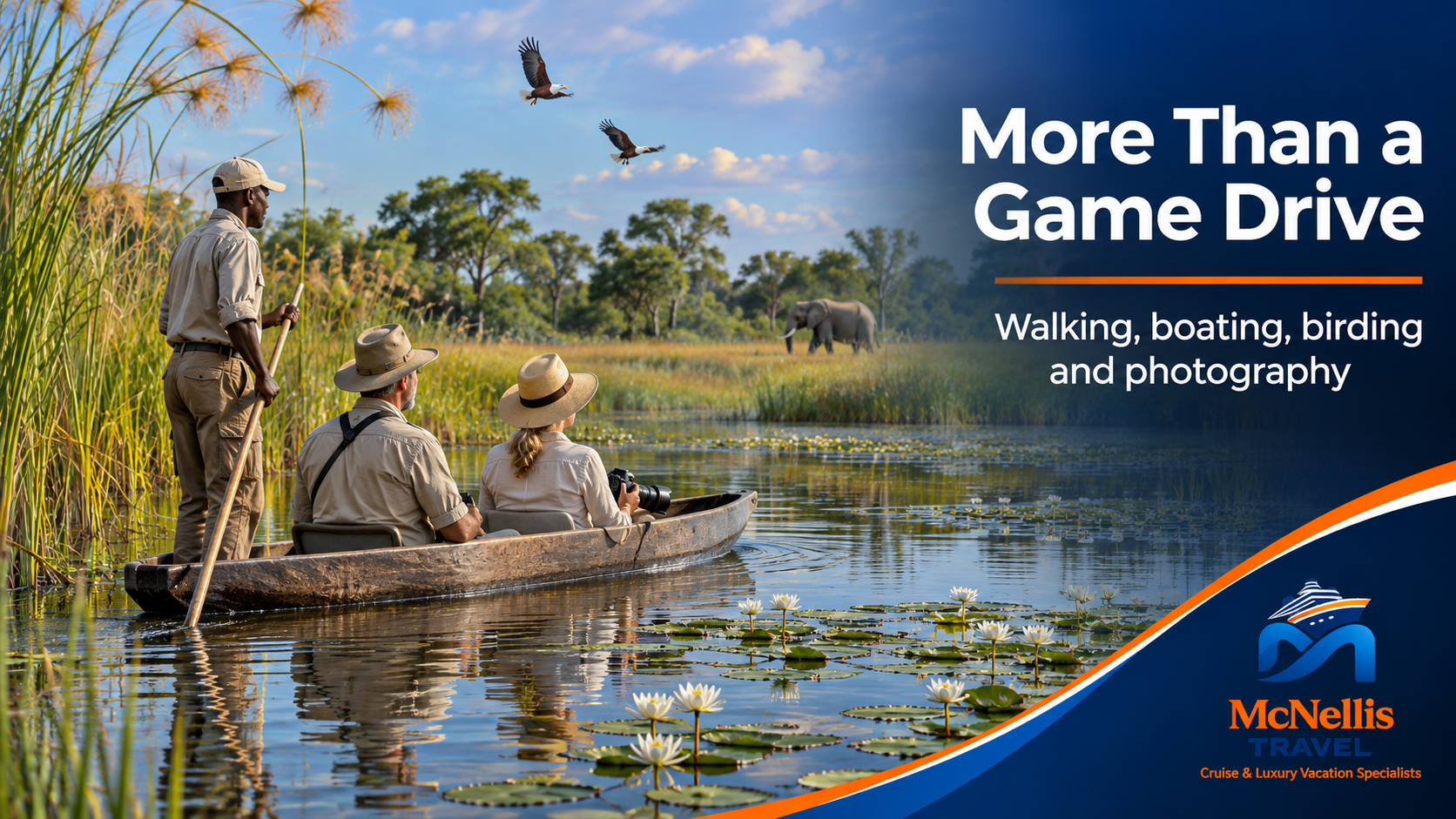
Walking shifts the focus from covering distance to noticing details: tracks, insects, plants, sounds and animal behavior. It is not designed to chase large animals on foot. Routes depend on conditions, and guests must follow the guide’s instructions. Minimum ages and fitness requirements vary.
Mokoro Excursions
A mokoro is a low, canoe-like craft traditionally associated with the Okavango Delta. Modern safari operations often use fiberglass versions for conservation and durability. These excursions are quiet and scenic, with a focus on waterways, reeds, birds and the feeling of moving through the Delta. They are not available at every camp or water level.
Boat Safaris and River Cruises
Boat activities can offer a different perspective on elephants, hippos, crocodiles and birdlife. Chobe and the Lower Zambezi are well known for water-based viewing. Exact routes and sightings depend on water and weather.
Canoeing
Canoeing can be more active and exposed than a motorboat cruise. It should be booked only with an established operator, and travelers must be honest about comfort, mobility and swimming ability. Wildlife protocols and age limits apply.
Night Drives
Night drives can reveal nocturnal animals and different behavior. They are usually permitted in private concessions and selected areas rather than everywhere. Do not assume a famous park allows them simply because a nearby private reserve does.
Birding and Photography
Birding adds depth to any safari, even for beginners. Photography-focused departures may provide specialized vehicles, fewer guests per row and guides experienced with positioning and light. Ask whether the vehicle accepts camera supports and whether luggage restrictions allow your equipment.
Scenic Flights and Balloon Safaris
Scenic flights can reveal the scale of the Delta, desert or savanna. Balloon safaris are available in selected areas and are weather-dependent. These activities usually cost extra and may have weight, mobility and early-start requirements.
Ethical Cultural Experiences
Community visits are most valuable when local people shape the experience and benefit directly. Avoid activities that treat daily life as a performance or encourage intrusive photography. Ask who operates the visit, how revenue is shared and whether photography is welcomed.
For more inspiration beyond traditional sightseeing, explore our bucket-list adventures in Africa and beyond.
Culture and Local Customs
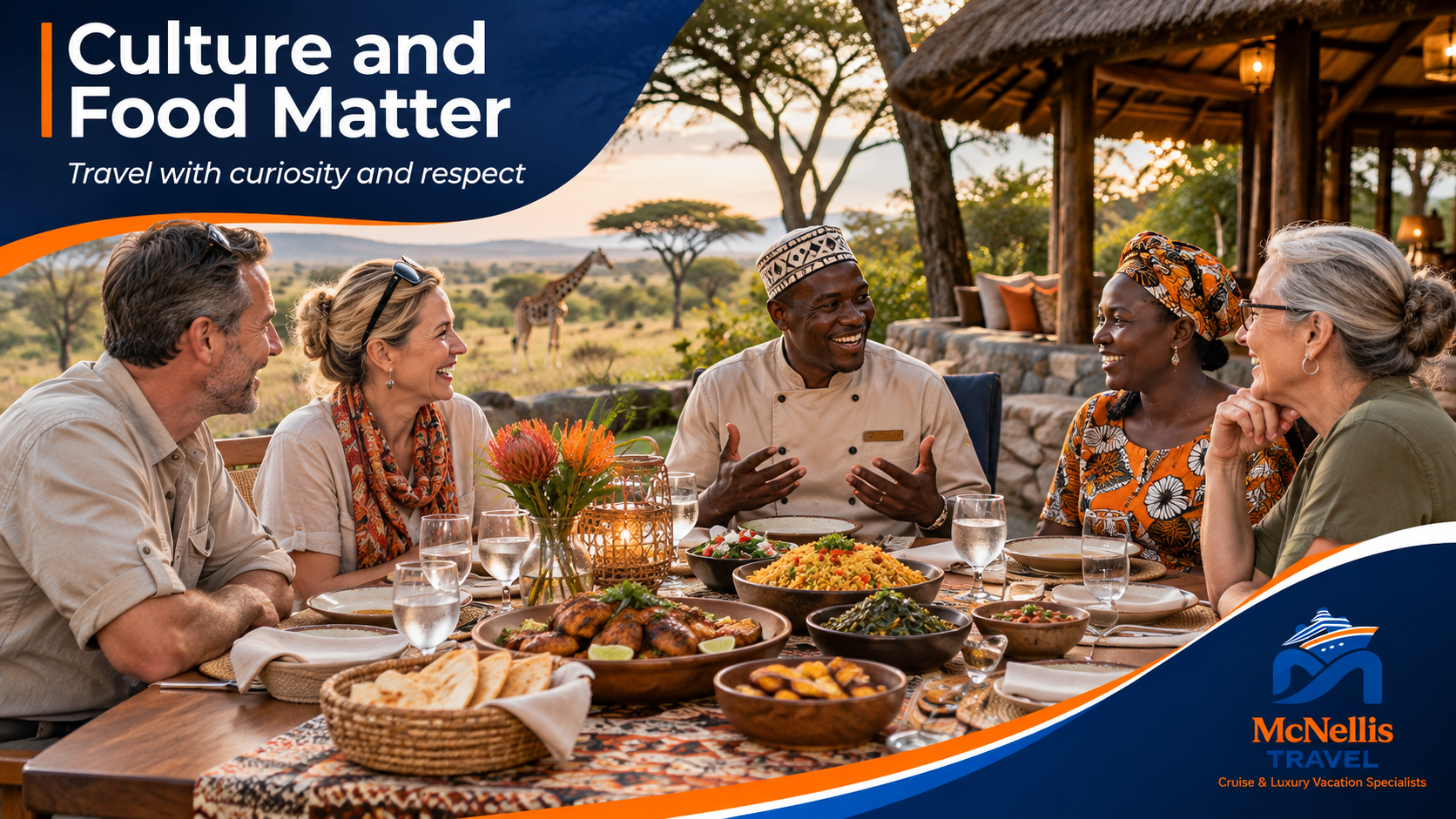
Respect does not require perfect knowledge. It requires attention, patience and a willingness to follow local cues. English is widely used in many tourism settings, but greetings in a local language are often appreciated.
General good practice includes:
Greet people before beginning a request or transaction.
Ask before photographing anyone.
Dress more modestly in towns, villages and religious settings than you might at a resort.
Use your right hand, or both hands, when giving or receiving something if your host does so.
Do not photograph government buildings, security sites or border facilities.
Avoid assumptions about income, family life or politics.
Follow the guide’s advice regarding tipping and gifts.
Zambia
Greetings and personal courtesy are important. A rushed request without an initial greeting can feel abrupt. Zambia is culturally diverse, so customs vary by region and community. On a hosted visit, let the local guide explain expectations rather than relying on a single national stereotype.
Botswana
Setswana greetings can be a warm way to begin an interaction. “Dumela” is a common greeting, with respectful forms such as “mma” and “rra” used for women and men. The kgotla, a traditional public meeting place and institution, remains an important reference point in community life. Visitors should approach cultural visits as guests, not as observers entitled to private moments.
Tanzania
Swahili greetings are part of everyday courtesy, and exchanges may be less hurried than many U.S. travelers expect. Dress should be respectful in towns and especially on the coast and Zanzibar, where predominantly Muslim communities may expect shoulders and knees to be covered. Public displays of affection should be restrained, and travelers must respect current local laws.
Namibia
Namibia includes many distinct cultural and language communities. Customs cannot be reduced to a single “Namibian tradition.” Ethical visits should be arranged through organizations or guides with genuine local relationships. Ask before photographing people, homes, crafts or ceremonies.
What Food Can First-Time Safari Travelers Expect?
Safari lodge food is often more varied and polished than first-time guests expect. A day may include an early snack, full breakfast or brunch, lunch, afternoon tea, sundowner snacks and dinner. Remote camps plan supplies carefully, so menus may be set rather than à la carte.
International dishes are common, but many lodges also include local ingredients or regional recipes. The presence of local food varies by property. A camp should not claim cultural authenticity simply because one dish appears on a menu.
Zambia
Nshima, a thick maize-based staple, is commonly served with relishes known as ndiwo, which may include vegetables, beans, fish or meat. Guests may also encounter grilled meats, stews, leafy vegetables and seasonal produce. At safari camps, these flavors often appear alongside international dishes.
Botswana
Foods may include seswaa, slow-cooked shredded meat; bogobe, a porridge made from sorghum, millet or maize; morogo, leafy greens; and madila, cultured milk. Camp menus frequently mix regional dishes with familiar international meals.
Tanzania
Tanzanian food varies by region. Travelers may encounter ugali, grilled meat known as nyama choma, rice dishes such as pilau or biryani, chapati, beans, fish, coconut-based coastal dishes and snacks such as mandazi. Zanzibar and the coast reflect Indian Ocean trade influences and use spices extensively.
Namibia
Namibian meals may include mahangu or other porridges, grilled meat and braai traditions, stews and regional foods shaped by local agriculture and history. Kapana, grilled meat sold by vendors, is well known, but it is best experienced with a knowledgeable guide who can advise on setting and food safety.
Tell the planner and every lodge about allergies and dietary restrictions before travel. Vegetarian, vegan, gluten-free and other diets can often be accommodated, but remote camps need advance notice. Severe allergies require detailed confirmation about cross-contact, emergency medication and access to medical care. Travelers should not assume that every kitchen uses U.S. labeling or preparation standards.
Drink treated or sealed water as advised by the lodge, and follow current medical guidance on food and water precautions outside established properties.
Safari Costs: What the Price Really Includes
Safari prices vary by season, destination, camp, vehicle arrangement and flight routing. A lower nightly rate does not always produce a cheaper trip if it requires expensive transfers or excludes activities and park fees.
For 2026 planning, travelers can encounter anything from several hundred dollars per person per night at value-oriented properties to well over $1,500 per person per night at exclusive camps in peak season. Botswana is often at the higher end because of remote operations and internal flights. Tanzania’s price depends heavily on private versus shared vehicles, park fees and the number of people sharing ground costs. Namibia can be more flexible with guided road trips, self-drive options and selected fly-in segments. Zambia spans a wide range, with the most remote and activity-rich camps commanding premium rates.
These figures are planning context, not quotes. Rates change, currency movements matter and taxes or conservation levies can be revised.
Ask whether the quoted price includes:
Accommodation and meals
House beverages or all beverages
Game drives and other camp activities
Shared or private safari vehicles
Park, concession and conservation fees
Laundry
Road transfers
Light-aircraft flights
Airport assistance
Visa expenses
Travel insurance
Gratuities
Premium drinks, spa services and optional excursions
Light-aircraft baggage limits are often lower than airline allowances and may require soft-sided bags. Exact weight and size rules differ by carrier and route. Camera equipment may need advance approval or a purchased extra seat or allowance.
Travel insurance should cover cancellation terms, trip interruption, medical care and evacuation appropriate to the itinerary. “Cancel for any reason” benefits, pre-existing-condition waivers and activity exclusions are policy-specific and time-sensitive. Review the actual policy rather than relying on a summary.
Our vacation specials may provide useful opportunities, but a special is valuable only when the destination, season, camp and routing fit your priorities.
Vaccinations, Malaria and Travel Health
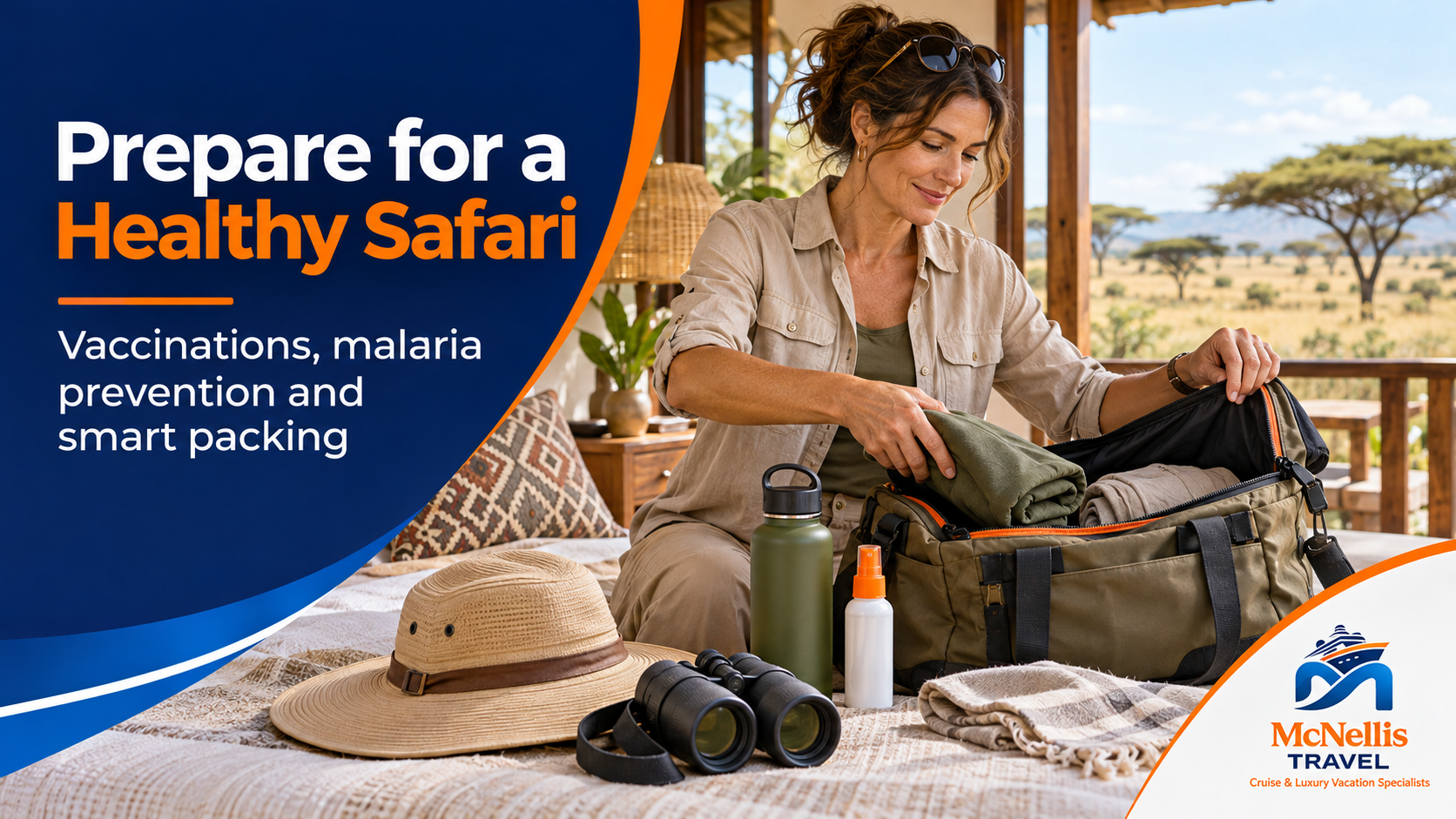
Health planning is individual. Schedule a travel-health appointment ideally at least a month before departure, and bring the exact itinerary. Recommendations can differ by country, region, season, trip length, medical history and activities.
The CDC generally advises travelers to be current on routine vaccinations. Depending on the itinerary, a clinician may discuss hepatitis A, hepatitis B, typhoid and other vaccines. Polio guidance can change when outbreaks or detections occur. Do not use an old vaccine list for a future trip.
Yellow-fever rules are especially easy to misunderstand. A vaccination certificate may not be required for a traveler arriving directly from the United States, yet it may become relevant after visiting or transiting through a country where yellow fever is a risk. Even an airport connection can matter under some entry rules. Confirm the requirements for every country in the final routing, including transit points.
Malaria risk is regional rather than identical across an entire country:
Zambia has malaria risk in safari regions.
Botswana’s risk includes northern areas such as Chobe and parts of the Okavango region, while risk is not the same in every city or southern area.
Tanzania’s safari and coastal itineraries may involve malaria-risk areas.
Namibia’s risk is concentrated in specified northern and northeastern regions rather than the entire country.
A medical professional can advise whether prescription prevention is appropriate and which medication fits your health and itinerary. Medication does not replace bite prevention. Use repellent recommended by health authorities, wear long sleeves and pants when practical, sleep under appropriate protection and follow lodge guidance.
Pack prescription medication in original labeled containers in your carry-on, with enough for delays. Bring copies of prescriptions and discuss any controlled medication with the relevant embassy or consulate before travel. Remote lodges may not have a pharmacy nearby.
Other points to discuss with a clinician include altitude on certain routes, heat, dehydration, motion sickness, gastrointestinal illness, allergies, pregnancy, mobility limitations and the physical demands of walking or canoeing.
What to Pack for Safari
Pack for comfort, changing temperatures and small-aircraft restrictions. Neutral colors are practical in the bush. Camouflage-pattern clothing may be restricted or culturally inappropriate in some destinations, so leave it at home.
Useful items include:
Lightweight, breathable layers
A warm fleece or jacket for cold early drives
A light rain layer when relevant
Comfortable closed shoes and sandals for camp
A wide-brimmed hat and sunglasses
High-SPF sunscreen and insect repellent
A soft-sided duffel that meets the internal carrier’s rules
Binoculars for each traveler when possible
Camera batteries, memory cards and charging adapters
A small day bag
Prescription medicine and a basic first-aid kit
Copies of travel documents and insurance details
Avoid overpacking safari clothes. Many camps offer laundry, although underwear may be excluded for cultural or operational reasons. Neutral does not mean buying an entirely new beige wardrobe; muted green, brown, gray and blue are generally practical. Bright white shows dust quickly, while dark blue and black may be less comfortable in heat and can attract certain biting insects in some areas.
Ask about power sockets, charging availability and whether a universal adapter is sufficient. If you use a CPAP machine or another medical device, get written confirmation about power hours, battery backup and room placement before paying a deposit.
Entry Documents, Money and Connectivity
Passport validity and blank-page requirements differ, as do visa procedures. Check official government sources for each destination and transit country. Do not rely solely on a search result or an unofficial visa service.
Carry more than one payment method. Major camps may accept cards, but connectivity can fail and small cash expenses or gratuities may require suitable currency. Ask the planner what currencies are practical for each stop and how gratuities are normally handled.
Wi-Fi ranges from strong to nonexistent. Some camps intentionally limit it to common areas. Download documents, maps and entertainment before leaving a city. Let family know that silence from a remote camp may reflect connectivity rather than an emergency.
Common First-Safari Mistakes
Trying to See Too Much
Combining too many countries creates expensive flights and lost safari time. Two well-chosen regions can be more rewarding than four rushed ones.
Choosing a Camp by Brand or Photos Alone
A beautiful room cannot compensate for the wrong location, an overcrowded vehicle or activities that do not interest you.
Expecting Guaranteed Wildlife
Guides use skill and local knowledge, but wildlife is unpredictable. Migration crossings, predator hunts and rare species can never be promised.
Ignoring Transfer Days
A short distance on a map may involve an airstrip transfer, light-aircraft flight, connection and another drive. Treat transfer days as part of the itinerary.
Leaving Health Questions Until the Last Minute
Some vaccines require time, and medication choices should be discussed with a clinician. Entry rules may also depend on the complete flight path.
Booking Nonrefundable Pieces Separately
Safari camps, charter flights and international tickets must work as one system. A change to one can affect all the others. This is one reason travelers choose professional planning; our guide to what personalized travel planning really saves you explains the value beyond simply making reservations.
Frequently Asked Questions
Is a safari appropriate for children?
It can be, but age policies vary by camp and activity. Some camps accept young children but restrict walking, mokoro or shared drives. Families may need a private vehicle. Consider attention span, early starts, heat, long flights and the ability to follow safety instructions.
Is safari suitable for travelers with limited mobility?
Often, yes—with careful planning. Vehicle steps, sandy paths, stairs, open showers and light-aircraft boarding can present challenges. Request precise measurements and assistance details rather than relying on the word “accessible.”
Do I need a professional camera?
No. A phone or compact camera can capture meaningful images. Binoculars often improve the experience more than additional camera equipment. If photography is a priority, select a vehicle layout and guide accordingly.
Will I have air conditioning?
Not always. Some lodges have full air conditioning, others use fans or evaporative cooling, and remote camps may have limited power. Confirm room-specific details.
Can I combine safari with a honeymoon or celebration?
Yes. Private dining, special activities and a slower lodge sequence can make safari highly romantic, but expectations should be discussed in advance. Explore our adventure and safari honeymoon planning for ideas.
How early should I book?
Small camps and preferred rooms can fill well in advance, particularly in peak wildlife periods. International flight schedules and charter availability also affect the route. See our 2027 vacation planning calendar for broader timing guidance.
A Better Way to Plan Your First Safari
The strongest first safari is not the itinerary with the most camps, the highest nightly rate or the longest animal checklist. It is the one that fits your pace, comfort, interests, health needs and budget.
Begin with the experience you want. Choose a destination whose landscapes and activities support it. Select camps for location and guiding, not just appearance. Build in enough nights to enjoy each area. Confirm health, entry and insurance details from current authoritative sources. Then leave space for the unpredictability that makes safari memorable.
Travel With McNellis can help compare Zambia, Botswana, Tanzania and Namibia; coordinate camps, flights and transfers; and design a route that works as a complete journey. Contact Travel With McNellis to begin planning a first African safari around the way you actually want to travel.